Quick answer: Hard water hits your dishwasher twice — it leaves a chalky white film on dishes and glassware, and it slowly scales up the machine’s internals, cutting efficiency and lifespan. Rinse aid and detergent tweaks reduce the visible spots, but the only real fix for persistent film and scale is softened water.
If every load comes out looking dirty no matter how you load it, you’re probably not dealing with a bad dishwasher — you’re dealing with hard water.
What causes hard-water film and damage
Hard water carries dissolved calcium and magnesium. When dishwasher water evaporates off your dishes, those minerals stay behind as a white, chalky deposit. That’s the cloudy film on your glasses.
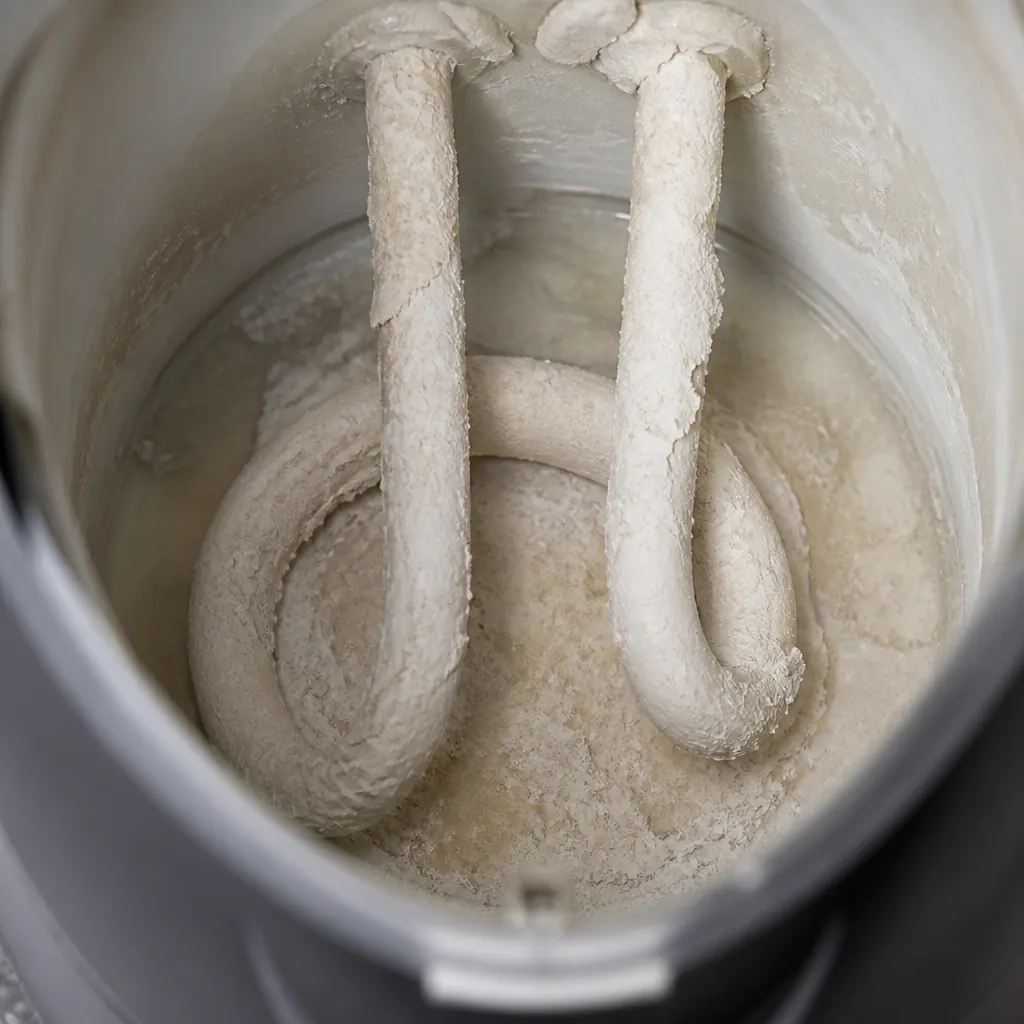
Inside the machine, the same minerals build up as limescale — a hard, crusty layer on the heating element, spray arms, and internal surfaces. Two consequences follow:
- The heating element insulates. Scale is a poor conductor, so the element has to work harder to heat the water, which shows up as higher energy use.
- Spray arms and jets clog. Mineral deposits narrow the tiny holes that spray water onto dishes, so cleaning power drops over time.
There’s also a related damage: hard water can slowly etch glass — a permanent, chemical softening of the glass surface that looks like a milky haze that won’t wipe off. Once etched, glass can’t be restored.
How bad is it, really?
Hard water’s cost to a dishwasher is concrete and measurable:
- The Water Quality Research Foundation’s field studies found hard water shortens water-using appliance life and raises energy consumption versus softened water.
- Scale on a heating element reduces heat transfer, so a “rusted out” or “burned out” element is often just a scaled-over one.
- In hard-water homes, dishwashers run through substantially more detergent and rinse aid to do the same job — a direct, recurring cost.
The pattern is the same as with your water heater: hard water forces the appliance to work harder for fewer years. A softener doesn’t just get you cleaner dishes, it protects the machine.
Signs your dishwasher has a hard-water problem
- White, chalky film or spots on glassware after a full cycle.
- Glasses that look hazy and won’t polish up even with rinse aid.
- A crusty white buildup where the spray arms or door meet the tub.
- Reduced cleaning power over time — dishes coming out with food residue in new places.
- More detergent and rinse aid used per load with no improvement.
DIY test: is hard water the culprit?
Take a cloudy glass from the dishwasher and rub the film with a cloth dipped in white vinegar. If the haze wipes off, it’s mineral scale — and softening will fix it. If it stays cloudy, the glass is etched, which is permanent (softening stops further etching but can’t reverse what’s done).
For a precise number, a hardness test strip reads your water in grains per gallon (GPG). Anything above ~7 GPG is where dishwasher film and scale become obvious. See how to test your water hardness for the full method.
How to fix it
Immediate steps (no equipment):
- Try a powder detergent over pods or gels — powders typically contain more water softeners and builders that bind minerals.
- Fill the rinse-aid dispenser and set it to a higher level. Rinse aid helps water sheet off dishes before it leaves spots.
- Run a monthly vinegar or cleaner cycle: place a cup of white vinegar upright in the top rack and run an empty hot cycle to dissolve internal scale.
- Clean the filter and spray arms regularly so mineral buildup doesn’t compound.
The real solution:
- A whole-house water softener removes the calcium and magnesium before the water reaches the dishwasher. This is the only fix that fully eliminates the film and stops the internal scaling. Dishes come out spot-free, and the machine lasts longer and runs cheaper.
- If you’re only bothered by drinking-water use, a softener is still the right answer for the dishwasher specifically — an under-sink filter won’t help the machine.
For most homes in hard-water areas, softened water pays for itself across the kitchen: cleaner dishes, less detergent, fewer dishwasher repairs, and a longer appliance life. It’s the same cost-savings logic as your water heater, just on a smaller scale.
Why detergent choice matters more in hard water
Not all dishwasher detergent is equal, and the difference shows up most sharply in hard water. Detergent relies on builders — water-softening compounds mixed into the powder, gel, or pod — to bind the minerals so the surfactants can actually clean.
- Powder detergent generally contains the most builders, so it performs best in hard water. If you’re struggling with film and spots, switching from pods to a quality powder is the single cheapest upgrade.
- Pods and gels use liquid carriers and often fewer builders per dose, which is why they underperform in very hard water.
- Rinse aid is a separate product that reduces water’s surface tension so it sheets off dishes instead of beading and drying into spots. In hard water, run the rinse-aid dispenser at its highest setting.
The upsh
Dishwasher salt and built-in softeners
Some dishwashers — and most European models — have a built-in water softener that you top up with dishwasher salt. If your machine has a salt reservoir and a hardness dial, you already have a partial solution:
- Fill the salt reservoir (this recharges the built-in softener’s resin, exactly like a whole-house unit).
- Set the hardness level on the machine’s control to match your actual water (find it via a test strip).
Many North American owners never realize their machine has this feature, or never set the hardness correctly, so the built-in softener sits idle while they fight mineral film. Check your manual for a salt reservoir or a hardness setting — it’s free to use and can eliminate the film entirely for dishwashing.
The limitation: a built-in softener only treats the water inside the dishwasher. It won’t help your washing machine, water heater, or shower. But if dishes are your only visible complaint, it may be all you need.
The relationship between hard water and glass etching
One thing worth understanding clearly, because it’s easy to misdiagnose: hard water contributes to two different kinds of cloudy glassware, and only one is fixable.
- Mineral film (reversible): calcium and magnesium deposits that sit on top of the glass. Rubs off with vinegar or an acid rinse. Softening the water prevents it.
- Glass etching (permanent): an actual chemical breakdown of the glass surface, where the alkaline detergent plus high heat permanently clouds and roughness the glass. Once etched, no cleaning or softening reverses it.
Hard water can accelerate etching indirectly — because you run hotter, longer cycles and use more aggressive detergent to compensate for the film — but etching itself is really about detergent alkalinity and temperature, not the minerals. The tell: mineral film wipes off with vinegar; etching stays cloudy. Knowing which you have stops you chasing fixes that can’t work.
How long before you’ll see a difference after softening
If you install a softener, don’t expect spotless dishes on the very next load. The machine is full of years of accumulated scale and mineral film that needs to flush out first. Here’s the realistic timeline:
- A few loads in: progressively cleaner dishes as the softened water starts rinsing the film away.
- Can be improved immediately: the film on new dishes, since they’re only ever exposed to soft water.
- Old scale inside the machine: run a vinegar or descaler cycle after the softener is installed to clear the existing buildup, so the machine starts from clean.
Give it a week, then compare. The difference is usually obvious once the softened water has had a chance to work its way through the system and the old scale has been flushed.
One last tip: if you’d rather test before you invest, buy a cheap hardness strip (a few dollars) and read your grains-per-gallon number. Below about 7 GPG, detergent and rinse-aid adjustments are usually enough; above that, a softener stops being optional and becomes the fix that actually removes the cause.
Quick reference
- The 60-second version: hard water leaves chalky film on dishes and scales up the machine, raising cost and cutting lifespan.
- A powder detergent (more builders) plus a high rinse-aid setting often clears the film without touching the water.
- Check for a built-in softener and salt reservoir — many dishwashers have one that sits idle if never filled or set.
- If the film wipes off with vinegar it’s mineral scale (fixable); if it stays cloudy it’s permanent glass etching.
The takeaway
One more layer worth knowing: not all detergent is equal in hard water, and this alone can change your results. Powder detergents generally carry the most water-softening builders and outperform pods and gels in hard water — so before you assume the dishwasher is failing, try a quality powder plus a high rinse-aid setting, and many people clear the film entirely without touching the water. Also check your manual for a built-in softener and salt reservoir — many dishwashers (especially European models) have one, and if you’ve never filled the salt or set the hardness dial, it’s been sitting idle while you fight mineral film.
Cloudy dishes and a struggling dishwasher are almost always hard water. Remove the minerals and the film disappears, the machine works better, and it lasts longer. If softening isn’t feasible, the rinse-aid, powder-detergent, and vinegar-cycle routine will keep the worst of it at bay — but it’s managing the symptom, not fixing the cause.