Quick answer: Your coffee is about 98% water, so the minerals in that water directly shape the flavor. Too-hard water mutes and muddies the cup and clogs your machine with limescale. Too-soft (or distilled) water brews thin, sour, flat coffee. The goal is balanced, moderate mineral content — and you can get there with descaling, a mineral-balanced filter, or a softener if your tap is very hard.
If your home brew never tastes as good as the café’s despite the same beans and same recipe, your water is the variable you haven’t looked at.
Why water minerals matter so much
Coffee extraction is a chemical dance. The compounds that give coffee its sweetness, acidity, and body — the acids, sugars, and aromatic oils — dissolve into water at different rates depending on the water’s chemistry.
The two minerals that matter most are calcium and magnesium (which define “hardness”) and bicarbonate (which defines “alkalinity”):
- Too much hardness (very hard water): the calcium binds to flavor compounds and pulls them out of solution, muting sweetness and aromatics. Coffee tastes flat, chalky, or overly bitter.
- Too little hardness (distilled/RO/pure soft water): there’s not enough mineral content to buffer the water, so it over-extracts the harsh acids. Coffee tastes thin, sour, and one-dimensional.
- Alkalinity imbalance: high bicarbonate buffers the acids too much and dulls brightness; low bicarbonate makes coffee aggressively sour.
It’s the same reason baristas and competition brewers obsess over “brew water” recipes — they’re literally adding measured amounts of magnesium sulfate and calcium chloride to distilled water to hit a target.
The standard: what’s “ideal” for coffee
The Specialty Coffee Association (SCA) publishes a water standard for brewing. The broad targets:
- Total hardness around 50–175 ppm (ideal often cited ~75–150 ppm)
- Alkalinity around 40–70 ppm
- A neutral-to-slightly-acidic pH
Most North American municipal tap water lands somewhere in the 40–120 ppm hardness range — which is fine to good for coffee. Problems arise at the extremes: very hard water (150+ ppm) mutes flavor and scales the machine, while very soft or distilled water brews flat and sour.
In grains per gallon terms: above ~9 GPG you’ll likely notice flat, chalky coffee; below ~2 GPG you’ll notice thin, sour coffee. Between them is the sweet spot.
Signs your water is hurting your coffee
- Coffee tastes flat, dull, or chalky no matter how you adjust the grind.
- The brew is harsh and bitter even with a medium or coarse grind.
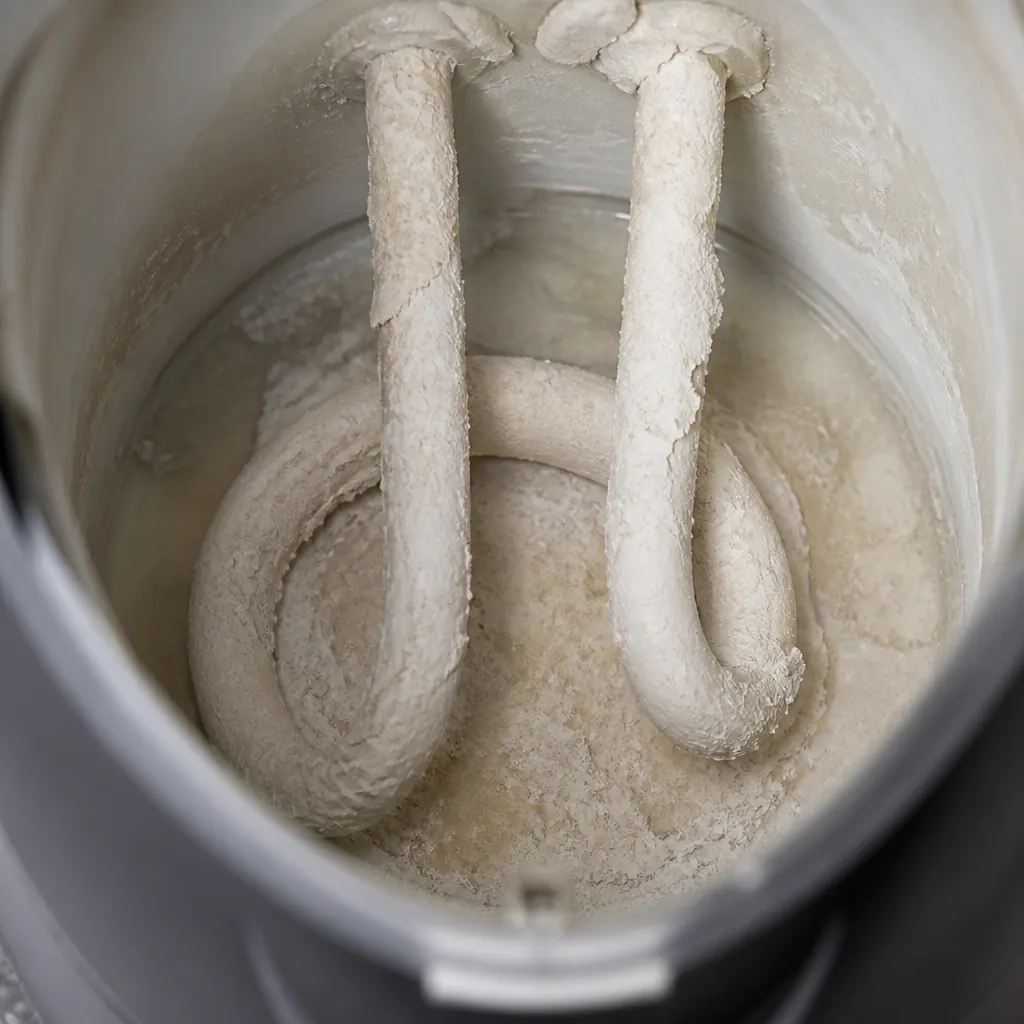
- You see white limescale building up in your kettle or machine.
- Your machine runs slower, gurgles, or needs more frequent descaling.
- You’ve matched the café’s beans and recipe but still can’t reproduce the cup.
How to fix it
If your water is very hard:
- Descale regularly — this protects the machine, but it doesn’t fix the brewing chemistry in the cup.
- Use a mineral-balanced filter, or blend your tap water with distilled water to bring hardness into range.
- A whole-house softener tames the hard water throughout the kitchen (and protects the machine), though some coffee enthusiasts find fully softened water slightly flat and re-mineralize with a filter.
If your water is very soft or you’re tempted to use distilled:
- Don’t use pure distilled or RO water alone — it brews flat and is slightly corrosive to equipment. Either blend with tap water or re-mineralize it to a balanced level.
The simplest path for most people: check your hardness number (a $10 test strip or our how to test your water hardness guide). If you’re in the 50–150 ppm sweet spot, just descale and enjoy. If you’re far outside it, a filter or softener — tuned to balance, not eliminate, minerals — is what moves the needle.
The SCA water recipe, simplified
If you want to get genuinely precise (or you’re chasing café-level consistency at home), the Specialty Coffee Association’s approach is to build your brew water from known minerals rather than hope your tap happens to be right. The full recipe is technical, but the practical version is:
- Start with distilled or reverse-osmosis water (a clean mineral blank).
- Add a small, measured amount of magnesium sulfate (Epsom salt) for hardness and sodium bicarbonate (baking soda) for alkalinity.
- Target roughly 75–150 ppm total hardness and 40–70 ppm alkalinity. The classic “Barista Hustle” and SCA-influenced formulas put you right in that window with a few drops of concentrated solution per litre.
This sounds fussy, but it’s the difference between “good enough” and a genuinely repeatable cup. For most home brewers, buying a gallon of distilled water and re-mineralizing is
The descaling routine that actually works
Limescale is the physical consequence of hard water on your gear, and it doesn’t clean itself. Here’s the routine that keeps a drip machine, espresso machine, or kettle alive for years longer:
- Kettle: half-fill with equal parts white vinegar and water, bring to a boil, let it sit 20–30 minutes, then rinse thoroughly. Do this when you first notice a chalky film.
- Drip machine: run a half-vinegar, half-water cycle through the machine, then two or three plain-water cycles to flush. Do it monthly in hard-water areas.
- Espresso machine: use a citric-acid or manufacturer-approved descaler on the boiler, and backflush the group head with the appropriate detergent. Espresso machines with boilers are the most expensive to replace, so this is where descaling discipline pays off most.
The frequency scales with your hardness. Very hard water means monthly; moderate water means quarterly. If you soften or filter your water, you can back way off — that’s part of the point.
Coffee gear vs. coffee water: where to spend first
When a cup goes flat, people reach for a better grinder or a pricier bag of beans. Both help — but neither fixes bad water, because extraction chemistry caps what any grinder or bean can achieve. A $300 grinder on tap water at 300 ppm hardness will still produce a muted, chalky cup; a $50 grinder on balanced water will taste cleaner.
The honest order of operations for better home coffee is:
- Get the water right first — it’s the cheapest and highest-leverage fix. Test your hardness, then filter, soften, or re-mineralize as needed.
- Then the grinder — a consistent burr grinder matters more than the beans.
- Then the beans — fresh, correctly-roasted beans, ground immediately before brewing.
- Then the machine — most machines are fine; the water, grinder, and beans do the real work.
Most people invert that list, spending on the machine and beans while the water quietly undermines the whole brew. Fix the water and everything downstream suddenly has a chance to shine.
Water first, gear second: the order that actually helps
When a cup goes flat, most people reach for a better grinder or a pricier bag of beans, and both help — but neither fixes bad water. Extraction chemistry caps what any grinder or bean can do, so the honest order of operations is water first (cheapest, highest leverage), then grinder (a consistent burr grinder matters more than the beans), then beans (fresh, correctly roasted), then the machine (most machines are fine). Most people invert that list, spending on the machine and beans while the water quietly undermines the whole brew. Fix the water and everything downstream suddenly has a chance to shine.
One more practical point: if you make coffee at the same time each day, your water quality can shift subtly with the seasons (mineral levels drift as the municipal or well source changes), so a hardness strip every few months is a cheap way to know when to re-tune your brew water rather than chasing a mystery off-flavor.
If you only take one thing away: check your hardness number, get it into the balanced 50–150 ppm range with a filter, softener, or re-mineralization, and the improvement in the cup will usually outweigh any other single equipment upgrade you could make.
The takeaway
A few things people get wrong about brew water before they fix anything: bottled spring water isn’t automatically better (many are too hard or too alkaline and are worse than decent tap water), a carbon or Brita-style filter doesn’t soften water (it removes chlorine, not minerals, so it won’t fix chalky coffee), and reverse osmosis alone is too pure (it brews thin and sour unless you re-mineralize it). And descaling protects the kettle but does nothing for the water chemistry that’s flattening the cup — scale is an equipment problem, mineral balance is a flavor problem.
Brew method matters too. Espresso is the most water-sensitive (short extraction, high pressure), so tuning pays off fastest there. Pour-over is also sensitive. French press and cold brew are forgiving because the long contact time smooths over imperfections. That’s why an espresso drinker and a cold-brew drinker often disagree about whether water “matters” — match your effort to your method.
Water isn’t a neutral backdrop for coffee; it’s an active ingredient that shapes every sip. If your brew tastes off and you’ve already dialed in the beans and grind, look at the water. Getting its mineral content into the balanced middle will do more for your cup than a more expensive grinder — and it’ll keep your machine alive longer too.
Remember that the goal isn’t to remove all minerals — it’s to land in the balanced middle where extraction is clean and the machine stays scale-free. Too hard mutes flavor; too soft brews sour; the sweet spot gives you coffee that tastes like the bean actually should.
In summary, the simplest fix is almost always the right one: if your coffee tastes flat, bitter, or just “off” and you live in a hard-water area, start with your water — not your beans, not your grinder, and not your technique.