Quick answer: Iron in well water is almost always a cosmetic, not a health, problem — but it stains everything orange, makes water taste metallic, and can clog pipes and pumps. The fix depends on the type: dissolved “clear-water” iron, precipitated “red-water” rust, or slime-forming iron bacteria. Test your water first, then match the treatment — usually an iron filter, a softener for low levels, or shock chlorination for bacteria.
Well water isn’t treated by a city plant, so everything in it is yours to manage. Iron is one of the most common — and most visible — things private-well owners deal with.
Where well-water iron comes from
Iron is one of the most abundant elements in the earth’s crust, so it leaches into groundwater almost everywhere to some degree. Water dissolves iron as it moves through iron-bearing rock and soil underground. When that water sits in a well and is pumped up, the iron comes up with it.
Because wells draw from groundwater that has been in contact with rock for a long time, private wells are far more prone to iron than municipal surface-water supplies. Rural and older wells, and wells in certain geological areas, are especially likely to see high iron.
The three types of iron (they need different fixes)
Iron in well water shows up in three forms, and mixing them up is how people spend money on the wrong fix:
- Ferrous (“clear-water”) iron — completely dissolved, so water comes out crystal clear at first. It’s only when it hits air that it oxidizes and turns rusty. Common at low to moderate levels.
- Ferric (“red-water”) iron — already oxidized into solid rust particles, so water is visibly rusty or brown right out of the tap. This is the classic “rust water.”
- Iron bacteria — living organisms that feed on iron and form a slimy, rust-colored biofilm inside wells, pipes, and toilet tanks. Not a health hazard, but it clogs systems and produces a swampy odor.
The treatment for each is different, which is why a proper water test (ideally a lab test, not just a strip) is the first step.
Health effects: mostly an aesthetic problem
Here’s the honest picture: iron is not a health hazard at drinking-water levels. Both the U.S. EPA and Health Canada classify iron as a secondary (aesthetic) concern, not a regulated contaminant, because:
- The human body requires iron as an essential nutrient.
- The amount in water is far below what would cause iron overload in healthy people.
- The objection is to taste (metallic), staining (orange/brown on fixtures, laundry, and hair), and physical buildup (clogged pipes, pumps, water heaters).
The one genuine secondary risk: iron bacteria create an environment that can also harbor other organisms and produce a foul odor. And iron in water stains permanently if baked on — especially in the laundry — which is the frustration most people actually care about.
Signs you have an iron problem
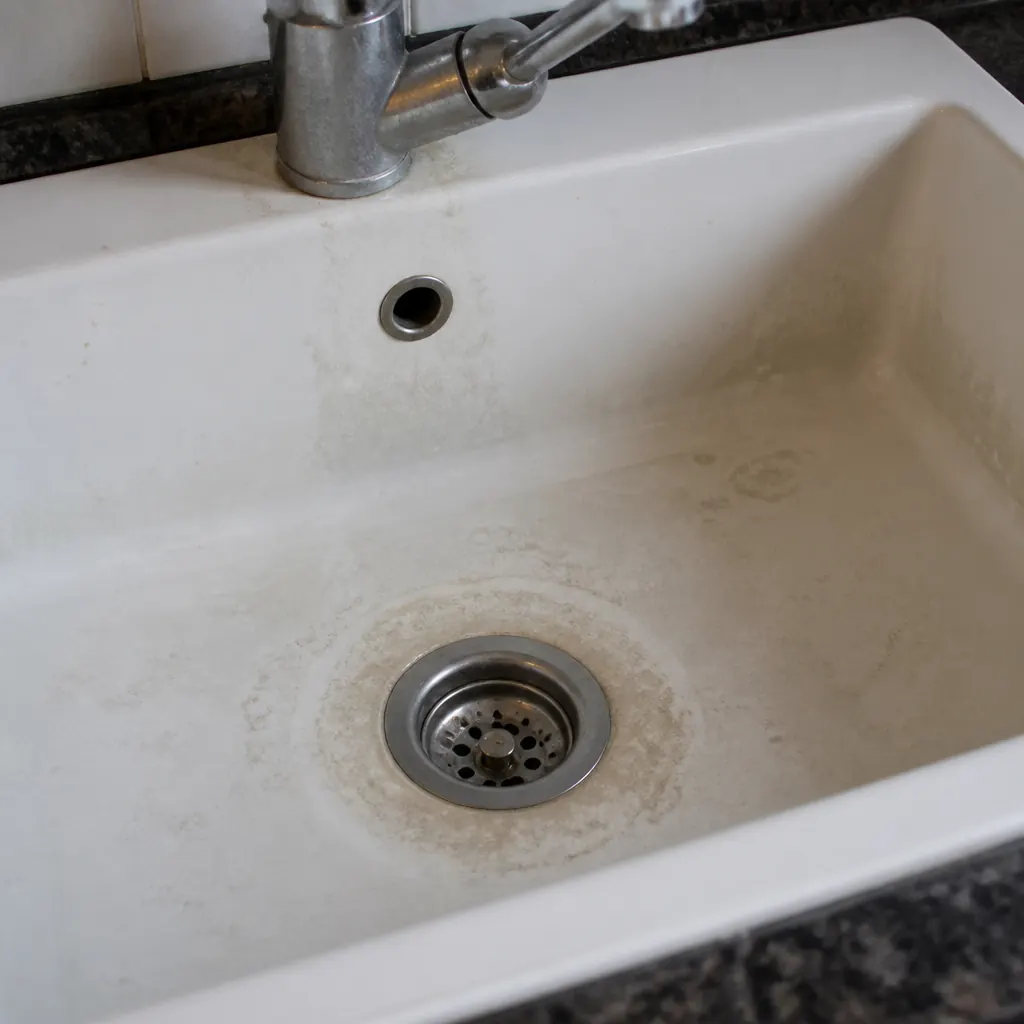
- Orange, red, or brown staining on sinks, tubs, toilets, and fixtures.
- Rust-colored or “dirty” water that clears or settles after standing.
- A metallic or bitter taste.
- Laundry that comes out with yellow-orange staining after washing.
- A slimy, rust-brown film in the toilet tank (iron bacteria).
- Reduced water pressure from scale and biofilm buildup in pipes.
DIY tests for iron
- The glass test: fill a clear glass with water straight from the tap. If it’s clear at first but turns rusty after a few minutes of air exposure, you have ferrous (clear-water) iron. If it’s rusty immediately, that’s ferric (red-water) iron.
- **The toilet tank check:
How to fix it
Match the treatment to the type:
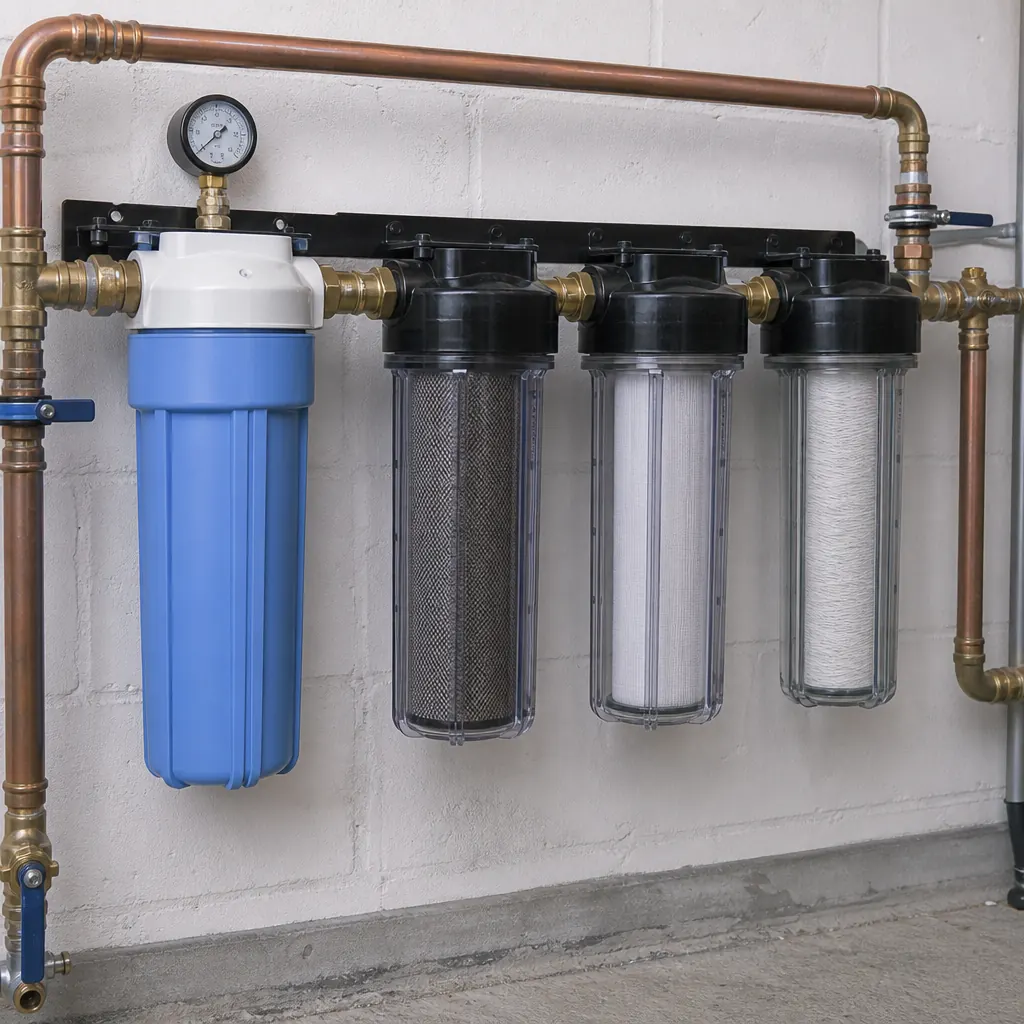
- Ferrous (clear-water) iron → An iron filter (typically an oxidizing greensand or air-injection/manganese-dioxide filter) converts dissolved iron to a solid and traps it. This is the standard fix for moderate-to-high iron.
- Low iron + hardness → A water softener can remove both hardness and modest dissolved iron (roughly up to 2–3 ppm), killing two birds with one stone. Above that, iron fowls the softener resin.
- Ferric (red-water) iron → Because it’s already solid particles, a sediment or cartridge filter can strain it out — but the particles are fine, so you usually want an oxidizing filter for reliable removal at the source.
- Iron bacteria → Shock chlorination of the well (a high-dose chlorine treatment) kills the bacteria, followed by flushing. Recurrence often needs ongoing chemical treatment or a dedicated system.
The most common all-around solution for a problem well is an iron filter for the whole house, often followed by a softener to polish hardness. Because every well is different, the right answer starts with a real water test — treating the wrong type of iron is the single biggest mistake people make.
Understanding your iron test result
Getting a water test back with an iron number only helps if you know what to do with it. Most lab reports list total iron in mg/L (milligrams per litre, same as ppm). Here’s how to read it:
- Below 0.3 mg/L — effectively no iron problem. You might see faint staining only in extreme cases.
- 0.3–1.0 mg/L — noticeable: metallic taste, light staining on fixtures and laundry.
- 1.0–3.0 mg/L — significant: obvious rust staining, clear metallic taste, frequent need to clean fixtures.
- Above 3.0 mg/L — heavy: water is visibly rusty or brown, serious staining, plumbing buildup. A dedicated iron filter is clearly worth it.
Many labs also report ferrous vs. ferric iron separately, or flag the water’s clarity, which tells you whether you’re dealing with dissolved or precipitated iron — the key input for choosing a filter. If your report only gives a single “total iron” number, do the glass test yourself to determine which form dominates.
Iron filters, compared head-to-head
When it’s time to buy a filter, the landscape can look confusing because several different technologies all claim to “remove iron.” Here’s the straight comparison:
- Air-injection oxidizing filter — injects air to oxidize dissolved iron into particles, then traps them in a media bed. Excellent for clear-water iron, no chemicals, low maintenance (periodic backwash). The most popular whole-house choice.
- Greensand / manganese-dioxide (KMnO4) filter — a catalytic media that oxidizes iron (and often manganese and hydrogen sulfide at the same time). Powerful, but the potassium-permanganate regeneration needs regular attention.
- Water softener — removes low dissolved iron (roughly 1–3 mg/L) plus hardness in one unit, but iron above that fowls the resin and shortens its life.
- Sediment / cartridge filter — only catches already-solid (ferric) iron. Cheap, but fine rust particles slip through and it doesn’t touch dissolved iron.
For most high-iron wells, an air-injection or greensand iron filter sized to your iron level and flow rate is the reliable answer, sometimes followed by a softener for hardness. Match the technology to the iron type and amount from your test, not to the sales pitch.
The role of pH in iron treatment
One factor people overlook is pH, and it can make or break an iron filter. The oxidation that converts dissolved iron into removable particles happens more efficiently in slightly alkaline water. If your well water is acidic (low pH):
- Iron stays dissolved longer, so an oxidizing filter has to work harder.
- Manganese (which often accompanies iron) becomes especially stubborn.
If your iron filter underperforms despite being correctly sized, check the pH. You may need to correct the pH (typically with a calcite or neutralizing filter) before the iron filter, so the oxidation step works. This is why a proper diagnosis covers pH, not just iron — the two are linked.
Iron bacteria treatment, step by step
If you’ve confirmed iron bacteria (the slimy rust film in the toilet tank, a swampy odor, or recurring loss of well yield), the treatment is different from regular iron:
- Shock chlorinate the well — introduce a strong chlorine dose down the well to kill the bacteria throughout the casing and the surrounding formation.
- Circulate and hold — run the chlorinated water out to all the fixtures and let it sit to ensure thorough contact.
- Flush thoroughly — pump the chlorinated water out (not into a septic system or pond) until the chlorine odor clears.
- Prevent recurrence — iron bacteria often comes back, so ongoing treatment (periodic re-chlorination, or a continuous-feed chlorine or ozone system) is common for wells with a history of it.
Shock chlorination alone is rarely a permanent fix for iron bacteria — expect to repeat it, or pair it with ongoing disinfection. It’s the chemical equivalent of a reset, not a one-and-done.
Quick reference
- The 60-second version: iron in well water is an aesthetic problem (staining, taste), not a health hazard, but it clogs and stains persistently.
- Match the fix to the type: an iron filter for clear-water iron, a softener for low iron, and shock chlorination for iron bacteria.
- Test pH too — acidic water makes iron harder to remove, so correct pH before the iron filter.
- Check the iron number on your lab report in mg/L; above ~3 mg/L, a dedicated iron filter is clearly worth it.
The takeaway
Iron in well water is a nuisance, not a toxin — but it’s a persistent, staining, clogging nuisance that only compounds over time. The key is identifying which form of iron you have, then matching a filter or softener to it. Do that once, correctly, and the rusty stains, metallic taste, and clogged fixtures stop for good.