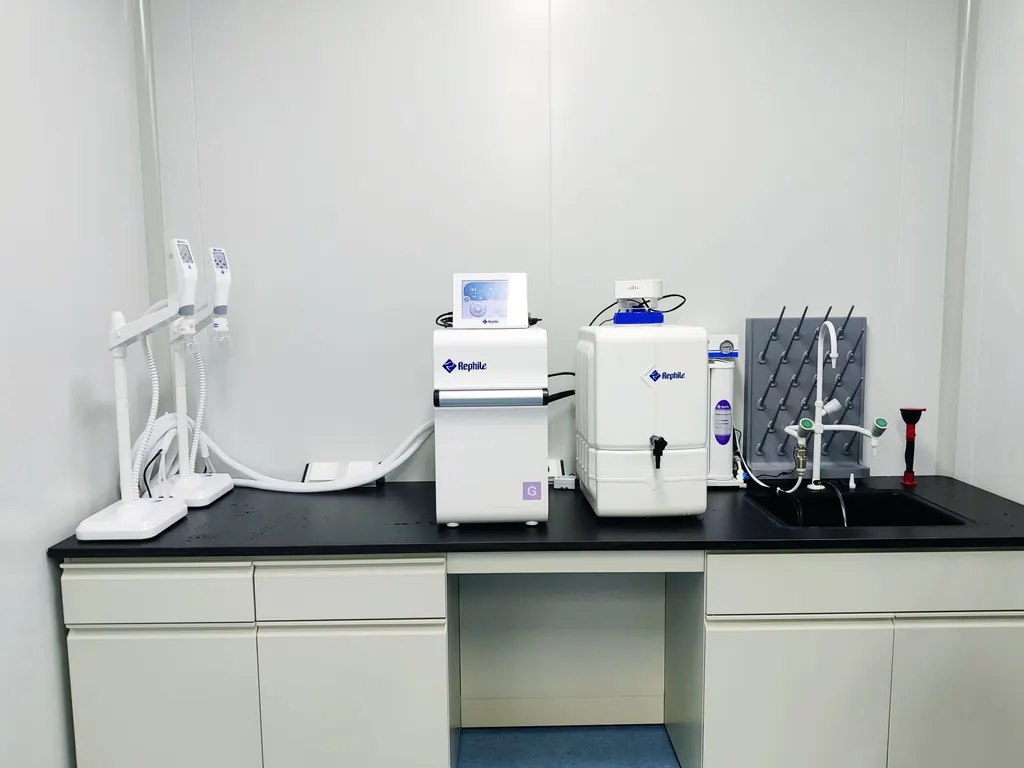
Quick answer: The main water purification methods are filtration (sediment and carbon), reverse osmosis (the most thorough all-around), UV disinfection (for microorganisms), distillation (the purest, but slow), and softening (for hardness specifically). There’s no single “best” — each removes a specific class of contaminant, so the right choice depends on what a test says is actually in your water.
“Water purification” is an umbrella term covering a half-dozen distinct technologies that do different, often non-overlapping jobs. Choosing correctly means matching the method to a tested problem. Here’s each method, what it removes, and where it fits.
The methods, side by side
| Method | Removes | Leaves / limits |
|---|---|---|
| Sediment filtration | Dirt, rust, sand, particles | Only particles |
| Activated carbon | Chlorine, taste, odor, some organics/lead | Most dissolved minerals |
| Reverse osmosis (RO) | Dissolved solids, minerals, most contaminants | Wastes water, slow, strips minerals |
| UV disinfection | Bacteria, viruses, protozoa | Doesn’t remove chemicals/solids |
| Distillation | Nearly everything, including minerals | Slow, energy-heavy, strips minerals |
| Water softening | Calcium + magnesium (hardness) | Only hardness |
Sediment filtration
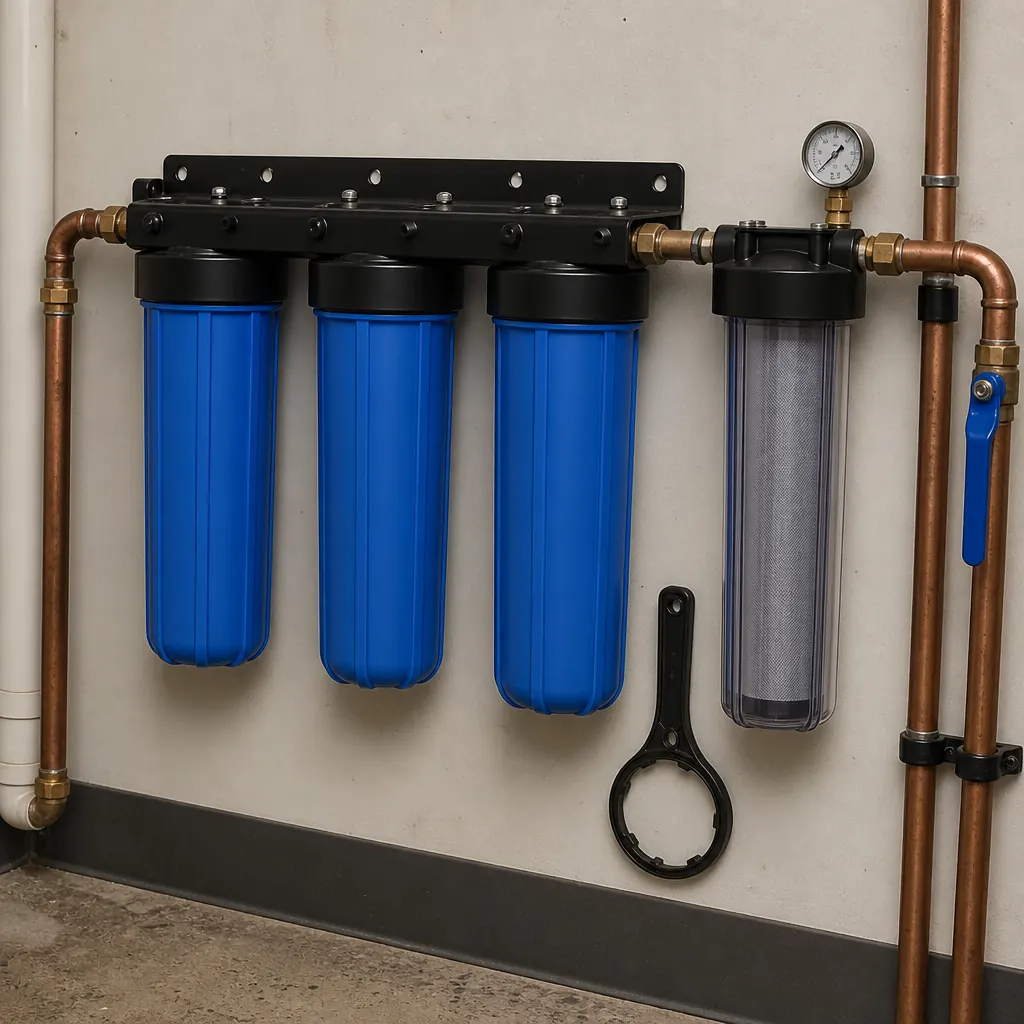
The first stage in almost every system. A physical barrier (often a pleated or spun cartridge) traps suspended particles — dirt, rust flakes, sand, sediment from a well.
- Best for: cloudy or particulate-heavy water, and protecting downstream equipment.
- Doesn’t: remove dissolved contaminants, chlorine, or hardness.
- Typical role: pre-filter ahead of carbon, RO, or a softener.
Activated carbon
The workhorse for taste and odor. Carbon’s vast surface area adsorbs (binds) chlorine, chloramines (with catalytic carbon), many organic chemicals (VOCs, some pesticides), and certain metals.
- Best for: chlorine taste/smell, improving aesthetic quality on municipal water.
- Doesn’t: remove dissolved minerals (hardness) or microorganisms, and it can’t remove every chemical.
- Typical role: whole-house or pitcher-level treatment for municipal customers.
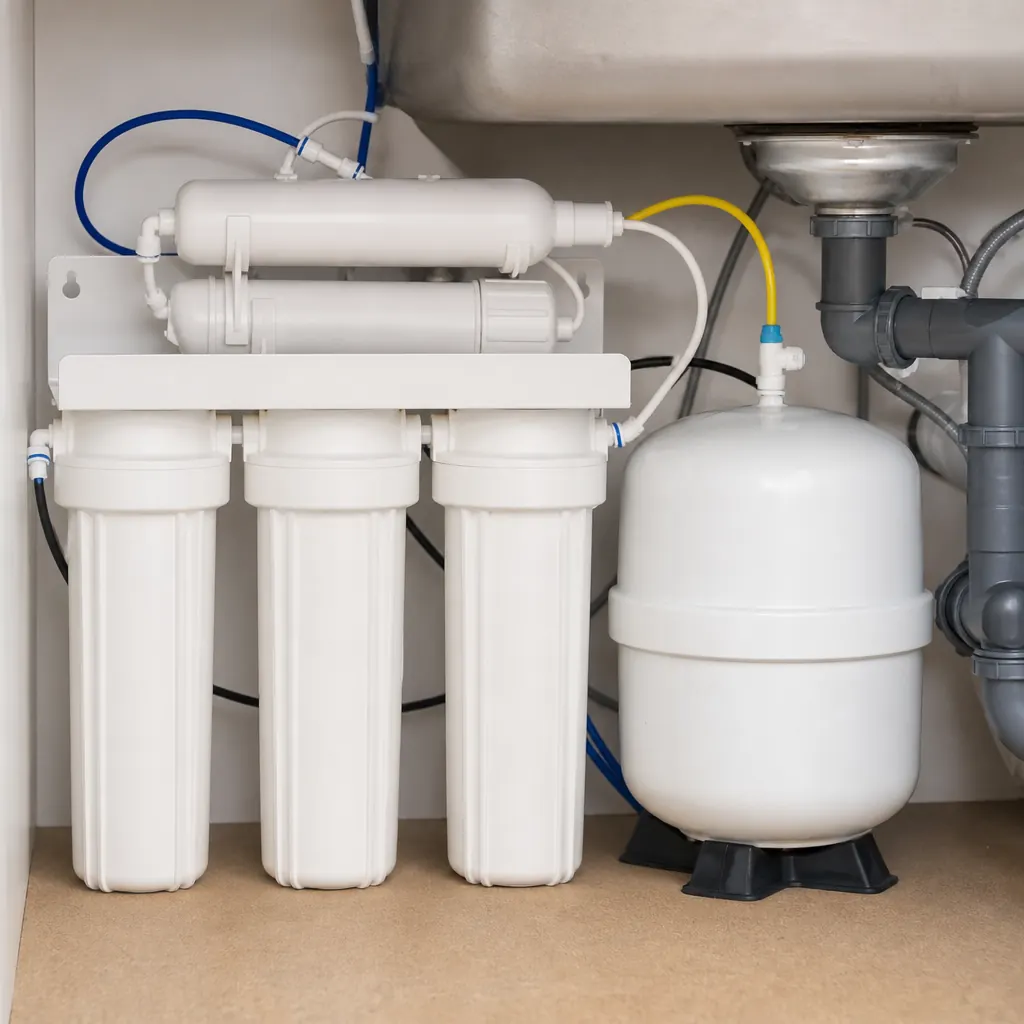
Reverse osmosis (RO)
The most thorough common method. Water is forced through a semi-permeable membrane that rejects nearly all dissolved solids — minerals, salts, and most contaminants — leaving very pure water.
- Best for: drinking and cooking water where you want maximum purity.
- Trade-offs: wastes several gallons per gallon produced (a reject stream), is slow (fills a tank, not a whole house), and removes beneficial minerals too.
- Typical role: under-sink point-of-use for the kitchen tap.
RO also removes hardness minerals, so RO water is very soft — but for whole-house scale control, a softener is more practical than running RO on every fixture.
UV disinfection
Ultraviolet light inactivates microorganisms — bacteria, viruses, and protozoan cysts — by scrambling their DNA so they can’t reproduce. The EPA and CDC list UV among the accepted point-of-use disinfection methods for private wells and other non-municipal supplies, always pairing it with filtration.
- Best for: wells or any source with a microbial risk.
- Doesn’t: remove chemicals, chlorine, sediment, or dead organisms (so it’s always paired with filtration upstream and often a filter downstream).
- Typical role: a disinfection stage in a treatment train, not a stand-alone “purifier.”
Distillation
Boils water and condenses the vapor, leaving nearly everything behind. Produces the purest water of the methods here.
- Best for: applications needing extreme purity (medical, lab, some households).
- Trade-offs: slow, energy-intensive, and strips beneficial minerals, producing a flat taste many dislike for everyday drinking.
- Typical role: countertop purification or specialty use, not whole-house.
Water softening (the special case)
Technically a treatment rather than a purification step: ion exchange swaps hardness minerals (calcium and magnesium) for sodium. It addresses scale and spotting — not safety or purity. (Water softener vs salt-free conditioner breaks it down.)
It belongs in the conversation because people routinely confuse “purifying” with “softening.” They solve different problems, and many homes need both in series.
The “treatment train” concept
Real-world water treatment is almost never a single stage — it’s a train, where each device does one job and hands off to the next. Knowing this mental model is what prevents buying the wrong single device.
A typical private-well treatment train looks like:
Sediment filter → activated carbon → (softener, if hard) → UV disinfection → under-sink RO for drinking
Each stage exists because the previous one can’t do its job. Here’s why the order matters:
- Sediment first — so dirt doesn’t clog or blind the carbon and shorten the RO membrane.
- Carbon before UV — UV only inactivates microbes; if the water is cloudy, microbes can “hide” behind particles. Clear water means effective disinfection.
- Softener before RO (or bypassed) — RO also removes hardness, but pre-softening protects the membrane and extends its life.
- RO last, point-of-use — the high-purity stage is reserved for the drinking tap, not the laundry.
The takeaway: if a single product claims to do everything, it’s almost certainly doing everything mediocrely. A train of matched stages beats one magical box every time.
Chlorine vs chloramine: a distinction that trips people
If you’re on municipal water and want to remove the chlorine, know that there are two forms — and they behave differently:
- Chlorine — the classic disinfectant. Standard activated carbon removes it easily.
- Chloramine — a chlorine-ammonia compound increasingly used by utilities because it lasts longer in the distribution system. It requires catalytic carbon (a specialty media) to remove effectively; standard carbon only partially addresses it and can even release ammonia.
Your utility’s CCR will tell you which disinfectant it uses. If it’s chloramine, make sure any carbon filter you buy is rated for chloramine removal — otherwise you’ll still taste it and won’t know why. This is a classic “right tool, wrong spec” failure.
When boiling is (and isn’t) enough
Boiling gets recommended for everything, so it’s worth stating the boundaries. Boiling reliably kills most disease-causing organisms — which is why it’s the go-to after a boil-water advisory. But it does not:
- Remove dirt, sediment, or cloudiness.
- Remove dissolved chemicals, heavy metals, or lead.
- Remove hardness (beyond the temporary hardness that precipitates as kettle scale).
In fact, boiling concentrates anything dissolved and non-volatile — if your water has nitrates or lead, boiling makes them slightly worse per unit volume. Treat boiling as a disinfection emergency measure, not a purification method for routine use.
How to choose
The decision is a function of a test, not a preference:
- Test your water — a free CCR for municipal, or a lab panel for a well. (How to read your water quality report)
- Name the problem — chlorine? sediment? bacteria? hardness? dissolved solids?
- Match the method to that specific contaminant.
- Layer as needed — a typical well setup is sediment → carbon → softener (hardness) + UV (microbes) + under-sink RO (drinking).
No single box does everything, and claims that one does are the clearest red flag.
Remember that a filter is not a purifier, a softener is not a filter, and none of them substitutes for a water test. Get the test first, and the rest of the decision falls into place on its own.
The principle that simplifies all of it
Strip away the technical vocabulary and water purification reduces to one idea: every method removes a specific class of thing, and nothing removes everything. Sediment stops particles; carbon stops chlorine and taste; RO stops dissolved solids; UV stops microbes; distillation stops nearly everything at the cost of speed and energy; softening stops scale specifically.
Once you internalize that, you stop asking “what’s the best purifier?” and start asking “what’s actually in my water, and what removes that?” — which is the only question that leads to a system that works.
The complete method-to-problem map
For quick reference, here’s every method mapped to the problem it actually solves:
| Your problem | The method that fixes it |
|---|---|
| Dirt, rust, cloudy water | Sediment filtration |
| Chlorine taste/smell | Activated carbon |
| Chloramine taste/smell | Catalytic carbon |
| Bacteria / viruses (well) | UV disinfection |
| Dissolved solids, most contaminants | Reverse osmosis |
| Maximum purity, slow/no whole-house | Distillation |
| Hardness / scale | Water softening |
| Lead / specific heavy metals | Specialty adsorptive media or RO |
Print that table mentally and you’ll never mis-buy again — because you’ll match the method to the tested contaminant instead of buying whatever the ad calls a “purifier.” Each method is one specific tool for one specific job, and the honest systems are built by stacking the right tools in the right order — never by finding a single box that claims to do everything at once.
Bottom line
A closer look at reverse osmosis (the method everyone asks about)
Reverse osmosis deserves a dedicated section, because it’s the most-requested and most-misunderstood method. Here’s the full picture, beyond the one-liner.
RO works by forcing water under pressure through an extremely fine semi-permeable membrane. The membrane’s pores are small enough to reject dissolved salts, minerals, and most contaminants while allowing water molecules through. What’s left behind — the “reject” or “brine” stream — carries the removed contaminants to the drain.
What RO removes well: dissolved solids, hardness minerals, heavy metals (lead, arsenic, copper), nitrate, fluoride, and many organic contaminants — which is why it’s the standard for high-purity drinking water.
What RO’s trade-offs are:
- Water waste — a typical home unit sends 3–4 gallons to the drain for every gallon purified (some newer high-efficiency units bring this to 1:1). For a drinking-only tap, that’s acceptable; for a whole house, it’s prohibitive.
- Removes beneficial minerals — RO strips calcium and magnesium along with the bad stuff, which is why some systems add a remineralization stage back in for taste and mineral content.
- Slow — it fills a pressurized storage tank (typically 2–4 gallons) rather than flowing on demand.
That’s why RO is the drinking-tap solution, not the whole-house one: it’s the most thorough method for a glass of water, and the least practical for a shower. (Best whole-house water filters covers the house side.)
Bottom line
The purification methods each solve a specific problem: sediment for particles, carbon for chlorine and taste, RO for maximum drinking purity, UV for microbes, distillation for extreme purity, and softening for hardness. Test first, name the contaminant, then match the tool — and remember that the best system is usually a series of the right methods, not a single magical filter.