Quick answer: Water hardness is a measure of dissolved calcium and magnesium, expressed in grains per gallon (GPG) or parts per million (ppm). It’s set by the geology your water passes through, not by your treatment plant. It has no bearing on drinking safety — but it drives scale, spotting, and appliance wear above roughly 7 GPG.
“Hard water” gets thrown around as a catch-all, but it’s a specific, measurable thing. Understanding the units and where the number comes from is the difference between making an informed decision and buying a softener you don’t need. This is the fundamentals page — the “why” behind every city page on this site.
What hardness actually measures
When water falls as rain, it’s close to pure. Its journey to your tap is what changes it. As groundwater surfaces through soil and rock, it dissolves minerals — and the two that define hardness are calcium (Ca²⁺) and magnesium (Mg²⁺).
Technically, hardness is reported “as calcium carbonate” (CaCO₃), even though the actual dissolved substances are a mix of calcium and magnesium compounds. It’s a standardized way to express a concentration of scale-forming minerals using one reference.
The key chemical distinction:
- Temporary (carbonate) hardness — minerals that precipitate out when water is boiled. This is the white crust in your kettle.
- Permanent (non-carbonate) hardness — minerals that stay dissolved even after boiling. This is what a water softener targets.
Both are harmless to drink. Both matter for your plumbing.
The geology that decides your number
This is the single most useful thing to understand: your hardness is a map of the rock under your region.
- Limestone, chalk, and dolomite bedrock — rich in calcium carbonate — produces hard water. The American Midwest, the Southwest, and much of Texas and the Plains sit on this geology, which is why those regions dominate the “hardest water” lists.
- Granite, sandstone, and other igneous/metamorphic rock — low in soluble calcium — produces soft water. The Pacific Northwest, New England, and parts of the Southeast draw from such terrain, giving them famously soft tap water.
- Surface water vs groundwater — rivers and reservoirs fed by snowmelt (Seattle, Portland) tend soft; deep aquifers in mineral-rich rock (parts of the Midwest) tend hard.
Because geology varies block by block, hardness can differ within a single city depending on which source supplies your neighborhood. That’s why a city-level number is a starting point, not a verdict for your exact tap.
GPG vs PPM: the two units, decoded
You’ll see hardness in two units. They’re the same measurement in different clothes.
- Grains per gallon (GPG) — the traditional U.S. plumbing unit. One grain = 64.8 mg of calcium carbonate in a gallon.
- Parts per million (ppm) or mg/L — the metric unit used in water-quality reports and lab results.
Convert either way with the fixed factor: 1 GPG = 17.1 ppm.
So Phoenix at ~12 GPG is ~205 ppm. Seattle at ~2 GPG is ~34 ppm. When a softener is “rated for 10 GPG,” that’s 171 ppm.
Memorize the anchor points and you can eyeball any number:
| GPG | PPM | Reading |
|---|---|---|
| 1 | 17 | Soft |
| 3.5 | 60 | Moderate threshold |
| 7 | 120 | Hard threshold — scale gets obvious |
| 10.5 | 180 | Very hard threshold |
| 15 | 257 | Very hard — softener strongly recommended |
The classification tiers
Most utilities and the USGS use a four- or five-band scale. We use a clean four-tier version across the site:
- Soft — under 3.5 GPG. Lathers easily, no scale. Treatment rarely justified.
- Moderate — 3.5–7 GPG. Spotting begins, some scale. Conditioner or softener optional.
- Hard — 7–10.5 GPG. Visible scale, appliance stress. Softener pays off.
- Very hard — over 10.5 GPG. Heavy scale, shortened appliance life. Softener recommended.
These thresholds are the same ones softener manufacturers use to size equipment, which is why your GPG number is the first thing any sizing calculation asks for.
Is hardness a health concern?
No — and this deserves emphasis because a lot of softener marketing implies otherwise. The U.S. Environmental Protection Agency classifies hardness as a secondary (aesthetic) contaminant, meaning it affects taste, appearance, and plumbing but is not a regulated health hazard. The USGS describes the calcium and magnesium in hard water as minerals that contribute to dietary intake.
Hardness and contaminants are two different things. Soft water can still contain lead, nitrates, or disinfection byproducts; hard water can be otherwise clean. Don’t let “hard” and “unsafe” blur together — hard water vs soft water separates the two cleanly.
How to find your number
Three reliable ways, in order of precision:
- Your utility’s Consumer Confidence Report (CCR). Published annually and often listing hardness directly. The authoritative, free starting point. (How to read your water quality report)
- A home test. Test strips (~$10) or a TDS/titration kit for a live number at your tap. (How to test your water hardness)
- Our city directory. We’ve compiled utility-reported hardness for cities across the U.S. and Canada — search yours.
Why hardness changes with the seasons
If you test your water in different months and get different numbers, that’s not the test failing — it’s real. Hardness commonly shifts seasonally for a concrete reason: source blending.
Utilities often draw from multiple sources — a surface reservoir and a well, or two reservoirs — and shift the blend seasonally. In summer, demand peaks and surface sources (usually softer) dominate; in winter, many systems lean on groundwater (often harder) or a different reservoir. A city that reports “6–12 GPG seasonally” isn’t being va
This is why a city-level number is a range, not a single immutable value — and why your own test at your own tap is always the most trustworthy figure for the treatment decision.
Hardness and your appliances: the practical fallout
Understanding hardness as a number is half the picture; the other half is what it does to your stuff. The mechanism is simple and well-documented:
- Water heater — scale forms on the heating element and tank wall, insulating it. The Water Quality Research Foundation found up to 48% efficiency loss at 26 GPG; the DOE notes a quarter-inch of scale can force up to 40% more energy. Hard water can cut a heater’s life from 12–15 years down to 6–8.
- Dishwasher / washing machine — spray arms, heating elements, and valves accumulate scale; many warranties are voided in very hard areas.
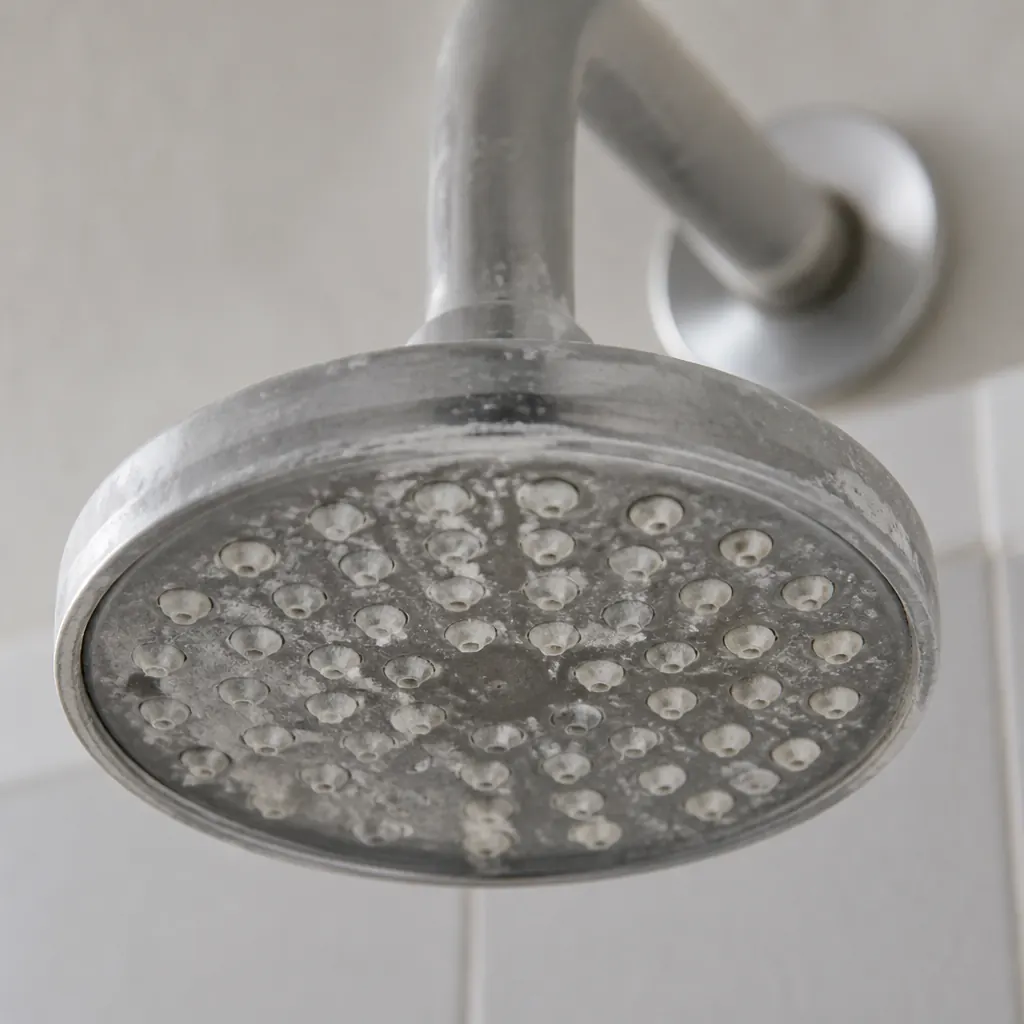
- Pipes & fixtures — over years, scale narrows pipes and crusts faucet aerators and showerheads.
- Cleaning — the Water Quality Association’s studies show soft water needs up to 50% less detergent and 70% less soap.
That’s the economic case for caring about your number: it’s not the water you notice, it’s the appliances and the cleaning bill.
A quick reference for the number in front of you
When you finally get a GPG figure, here’s the plain-language translation:
| Reading | What it means for you |
|---|---|
| 0–3.5 GPG | Soft. No treatment needed; lathers freely. |
| 3.5–7 GPG | Moderate. Spotting starts; conditioner or softener optional. |
| 7–10.5 GPG | Hard. Scale visible; a softener pays off in appliance life. |
| 10.5+ GPG | Very hard. Heavy scale; softener strongly recommended. |
And remember the two conversions that unlock every chart you’ll ever read: 1 GPG = 17.1 ppm, and to go the other way, ppm ÷ 17.1 = GPG.
The sentence to remember
Hardness is dissolved calcium and magnesium, measured in GPG or ppm, and set by the rock your water passes through. It’s harmless to drink and expensive to ignore. Know your number, understand that it can shift with the seasons and your source, and let the geology — not a sales pitch — tell you whether you need treatment at all.
The two numbers to lock in
If you take nothing else from this, write down two things: your city’s reported hardness (a starting range) and your own tested hardness (your actual number). The first tells you what to expect; the second tells you what you’re actually dealing with at your tap. Most decisions — softener or conditioner, yes or no — resolve cleanly once both numbers are in front of you. (Look up your city, then test your own water.)
Bottom line
Hardness vs total dissolved solids (the TDS confusion)
Because both hardness and TDS are reported in ppm, they’re easy to conflate — but they measure different things, and the distinction changes your treatment decision.
- Hardness is specifically calcium and magnesium — the scale-forming minerals. It’s a subset of TDS.
- Total dissolved solids (TDS) is everything dissolved in the water: calcium, magnesium, sodium, chloride, sulfate, bicarbonate, and more. A TDS meter can’t tell the difference; it just adds them all up.
Why it matters: a high TDS reading can be driven by sodium and chloride (soft, salty water) with almost no hardness, or by calcium and magnesium (genuinely hard water). Two homes can read the same TDS yet need completely different treatment — one a softener, one reverse osmosis. (How to test your water hardness explains why the TDS meter alone can mislead.)
The practical rule: if your goal is scale control, you need the hardness number specifically (GPG or calcium/magnesium ppm), not a raw TDS figure. If your goal is overall purity or salinity reduction, then TDS is the number you care about — and RO is the tool.
Bottom line
Water hardness is dissolved calcium and magnesium, measured in GPG or ppm, and dictated by the rock your water passes through. It’s harmless to drink but expensive to ignore — above ~7 GPG, scale and appliance wear make a softener a rational purchase. Start by knowing your actual number, then let the geology, not a sales pitch, guide the decision.
If you remember nothing else from this explainer, carry this: hardness is calcium and magnesium dissolved from rock, it is not a health hazard, and the number on your test matters only because it predicts scale, soap usage, and appliance wear. Everything else is detail built on that foundation.