Nashville Water Is Moderate — Here's What It Costs You Each Year
4.4 GPG · 75.3 ppm · -40% vs US average · 2025 report
Source: Metro Water Services, 2025 report
ModerateNashville water is moderate at 4.4 GPG (75.3 ppm). That is soft-to-moderate water; most homes here don't need a softener.
How we calculate this: based on the Battelle Memorial Institute study commissioned by the Water Quality Association (WQA), hard water is estimated to cost the average affected household roughly $800/year in 2010 dollars (~$1,230 today, after ~54% inflation). We scale that by 4.4 GPG versus a ~10 GPG reference. The percentages above come from the Battelle Memorial Institute study (commissioned by WQRF), the US Department of Energy, and the Water Quality Association. This is an estimate — not a certified per-household figure — and actual savings vary by water use, fuel type, and local rates.
Hardness
Parts per million
vs US average
Contaminants in water
How Nashville Compares
Water hardness scale
| Classification | Grains per gallon (GPG) | mg/L (ppm) | What it means |
|---|---|---|---|
| Soft | 0–3.5 | 0–60 | No scale; softener unnecessary. |
| Slightly Hard← your water | 3.5–7 | 60–120 | Minor spotting; conditioning optional. |
| Hard | 7–10.5 | 120–180 | Visible scale; softener recommended. |
| Very Hard | 10.5+ | 180+ | Heavy scale; whole-home softener strongly recommended. |
Why Is Nashville Water So Moderate?
Nashville’s water sits at 4.4 GPG (75.3 ppm), which puts it in the “moderate” tier. That’s not an accident of treatment. It’s a direct result of where Metro Water Services pulls its supply: the Cumberland River and the J. Percy Priest Reservoir on the Stones River. Both are surface water sources, and surface water simply doesn’t have the same opportunity to pick up hardness minerals as groundwater does.
Here’s the mechanics of it. Rain falls across Middle Tennessee, runs over the ground, and eventually finds its way into the Cumberland and Stones River watersheds. That runoff carries some dissolved minerals, sure, but it hasn’t spent decades sitting in underground rock formations the way well water has. Groundwater gets its hardness from prolonged contact with calcium and magnesium-rich rock, often limestone or dolomite. Surface water gets a much shorter, shallower exposure. The Cumberland River does flow through limestone-rich terrain in parts of its basin, which is why Nashville’s water isn’t soft like rain. But the contact time is brief, and the water is constantly being diluted by fresh rainfall and runoff. The result is a moderate reading that lands well below the USGS threshold of 7 GPG for “hard” and far below the 10.5 GPG mark for “very hard.”
The J. Percy Priest Reservoir adds another layer to the story. Reservoirs act like settling ponds. They give suspended sediment time to drop out, and they tend to have more stable chemistry than a free-flowing river. That stability matters because it means the hardness level you see at the tap today is probably close to what you’ll get next month. Surface water can swing with the seasons, but a reservoir-fed system like Nashville’s tends to stay fairly consistent. You’re not dealing with the wild fluctuations that some river-only systems experience after a heavy rain.
One more thing worth understanding: the Cumberland River’s geology isn’t uniform. Upstream, the river cuts through a mix of limestone, shale, and sandstone. Limestone contributes calcium, which is the main driver of hardness. But the shale and sandstone contribute less, and the overall mix keeps the dissolved mineral content moderate rather than extreme. If Nashville drew exclusively from a deep limestone aquifer, you’d likely see numbers in the 10 to 15 GPG range. Instead, you get a surface water system that reflects the average of everything upstream, diluted by the reservoir, and that lands at a very manageable 4.4 GPG.
How Nashville Compares to Nearby Cities
The honest answer is that Nashville’s moderate hardness is fairly typical for a city drawing from the Cumberland River system, but it can look quite different from communities that rely on groundwater. If you live in Nashville proper, you’re getting the same basic source water as other Metro Water Services customers. The utility serves a wide area, and while treatment and distribution can cause minor variations, the source is the source. Your neighbor across town is probably seeing something close to your 4.4 GPG.
The bigger contrast shows up when you leave the Cumberland River basin. Many smaller towns and rural communities in Middle Tennessee rely on wells or smaller aquifers. Those groundwater systems often produce harder water, sometimes pushing into the 10 GPG range or beyond, because the water has had years to dissolve calcium and magnesium from the region’s limestone bedrock. If you’ve visited family in a nearby county with well water and noticed their water heater scaling up faster or their soap not lathering well, that’s the difference between surface water and groundwater in a limestone region.
Within the immediate Nashville area, though, you’re unlikely to see dramatic swings. Cities and towns that also pull from the Cumberland River or from the same reservoir system will report similar moderate hardness. The differences you might notice are more likely due to local treatment practices than geology. Some utilities blend sources, some add corrosion control chemicals that can slightly alter the mineral balance, and some simply have older pipes that contribute other minerals. But the fundamental hardness character, driven by the river and reservoir, stays in the same moderate ballpark.
That’s the whole story. Nashville isn’t a hard-water city, and it isn’t a soft-water city. It sits in the middle because the Cumberland River and J. Percy Priest Reservoir deliver a moderate mineral load, and that’s exactly what you’d expect from a surface water system in this part of Tennessee.
How does Nashville stack up against the rest of Tennessee? It's moderate at 4.4 GPG — Memphis, Knoxville, and Murfreesboro sit nearby with different numbers. See the full hardest-water ranking for context.
See where Nashville sits on the Tennessee water hardness map →
Want the broader explainer on what hardness actually is and how it behaves? Read hard water vs. soft water, explained.
What 4.4 GPG Actually Does to a Nashville Home
At 4.4 GPG, the effects in a Nashville home are real but gradual:
- Light spotting on glassware and shower doors — mineral film that appears after water evaporates.
- Reduced lather — soap and shampoo don't foam as freely, so you use slightly more.
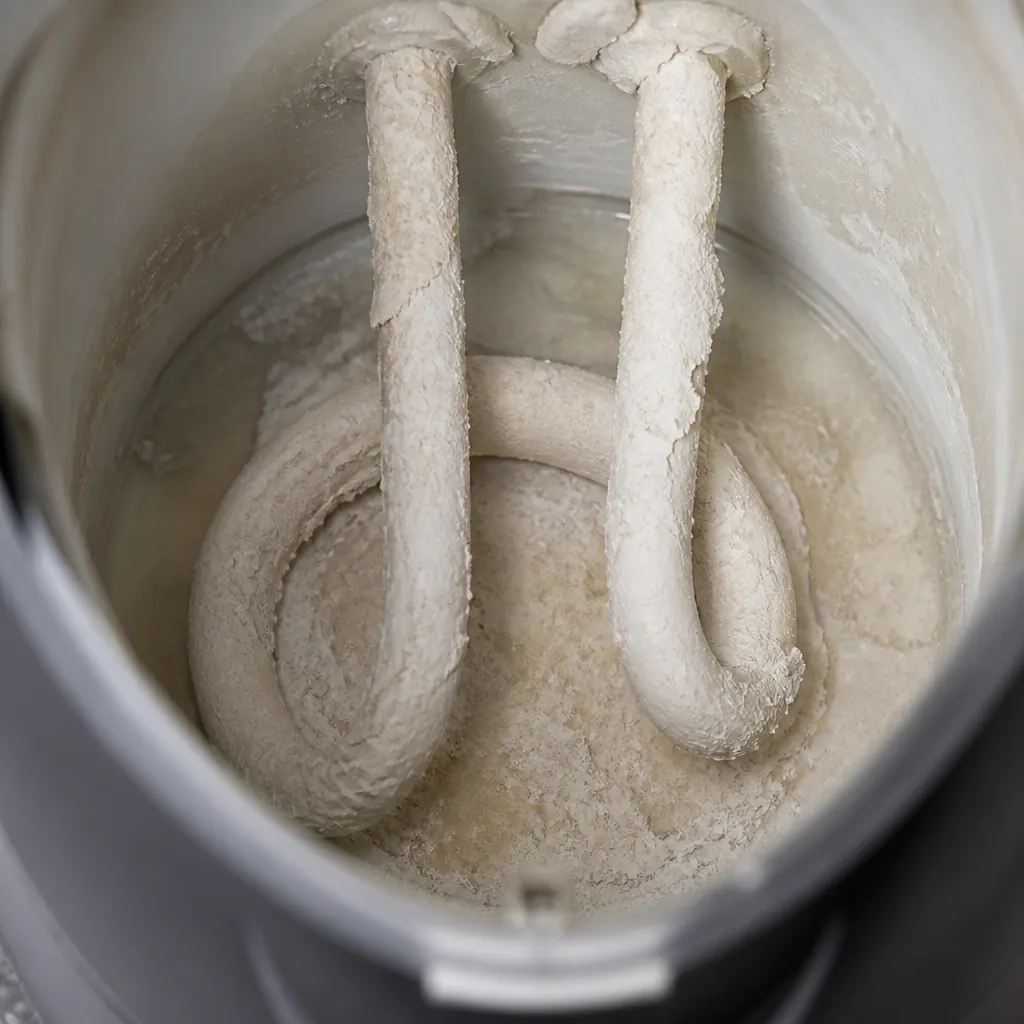
- Slow scale inside the water heater. The Battelle Memorial Institute found efficiency losses begin to register around 5 GPG; at 4.4 GPG your heater works roughly 4% harder than it would on soft water.
None of this is an emergency. But it is a measurable cost — soft water would save you the extra detergent, the descaling, and the incremental energy loss year over year. Scaled to your household, that runs roughly $541/year for an average 3–4 person home (adjust household size in the calculator above to see your number).
Do You Need a Water Softener in Nashville?
Optional — and a salt-free conditioner is usually the right call here. At 4.4 GPG, Nashville water causes spotting and minor scale, but nothing a traditional softener's ion-exchange process strictly needs to remove.
A salt-free conditioner prevents scale from adhering to surfaces without adding sodium to your water — the better fit at moderate hardness. For the full trade-off, see water softener vs. salt-free conditioner. If you want fully soft water (for skin, hair, or spotless glass), a traditional softener works too, but the payback period is longer because the annual damage is lower.
What Size Softener Does Nashville Need?
At 4.4 GPG, most Nashville homes that want treatment choose a salt-free conditioner rather than a softener — and conditioners don't need grain-capacity sizing the way softeners do. A whole-house conditioner is sized to your peak water flow (typically 10–15 gallons per minute for an average home), not to hardness.
If you instead want fully soft water, a 24,000–32,000-grain softener is more than enough at this hardness for a family of four.
What Are the Signs of Water Issues in Nashville?
At 4.4 GPG, Nashville water is in the moderate range, so signs are subtle: light spotting on glassware, a faint film on shower doors, slightly reduced soap lather. The USGS classifies Nashville's water as moderate — below the threshold where aggressive treatment is typically needed.
Best Treatment for Nashville Homes
At moderate hardness, a salt-free conditioner is usually the better fit than a full softener:
Aquasana Salt-Free Water Conditioner
At Nashville's moderate hardness the goal is usually to stop scale, not strip minerals. This salt-free conditioner uses TAC (template-assisted crystallization) to prevent scale without salt, brine, a drain line, or electricity — ideal for septic systems and zero-maintenance homes.
check current price
See on Aquasana →Aquasana Rhino Whole-House Water Filter
If Nashville's contaminant profile (chlorine, disinfection byproducts, sediment) matters more than hardness, a whole-house carbon filter treats every tap. Pairs with a softener or salt-free conditioner installed on the same line.
check current price
See on Aquasana →
If you opt for a traditional softener over a salt-free conditioner, expect it to pay for itself in roughly 22 months at Nashville's moderate hardness — longer than in a hard-water home, because the annual damage is lower.
How Do You Test Water Hardness in Nashville?
This page reports Nashville's system-wide average (4.4 GPG), but your tap can vary slightly by neighborhood, pipe age, and in-home filtration. For a step-by-step, see how to test your water hardness at home — it walks through test strips, the free soap-shake check, TDS meters, titration kits, and certified lab tests.
- Test strips (~$10) give a GPG reading in about 30 seconds and are accurate enough to decide whether to invest in treatment.
- TDS meter (~$15) measures total dissolved solids, a rough hardness proxy — but it doesn't separate hardness from other minerals.
- Lab test — most water treatment companies in Nashville offer free in-home tests (expect a sales pitch); for an independent result, the EPA maintains a list of certified labs.
Note: the EPA doesn't regulate hardness (it's a nuisance, not a health hazard), but the EWG Tap Water Database tracks contaminants above health guidelines for Nashville's utility — see our Nashville water-quality report for what's actually been detected.
What about Nashville water quality?
Hardness is separate from safety. Nashville's water meets all EPA legal limits — 7 detected contaminants, none above the limit.
The ones people actually ask about:
Compare Nashville to Other Tennessee Cities
Other Moderate Water Cities
Explore More
Frequently asked questions
Is Nashville water hard or soft?
Nashville, Tennessee water is moderate at 4.4 grains per gallon (75.3 ppm). That is generally considered soft to moderately hard.
How much does hard water cost the average Nashville household?
Based on the WQA-commissioned Battelle Memorial Institute study, hard water is estimated to cost the average affected household roughly $800/year in 2010 dollars (~$1,230 today after ~54% inflation) — an estimate, not a measured per-household figure. Scaled to Nashville's 4.4 GPG hardness, that works out to about $541/year (or ~$45.08/month) for a typical home — see the calculator on this page for the full breakdown.
Does Nashville need a water softener?
Probably not — at 4.4 GPG your water is mild enough that a test kit is a better first step than a full softener.
Why is Nashville's water hard?
Hardness comes from the geology of Nashville's water source. Cumberland River + J. Percy Priest Reservoir (Stones River) dissolves calcium and magnesium as water moves through the ground, and those dissolved minerals are what "hard water" means.
How do I test my water hardness in Nashville?
Use a home test kit (test strips for a quick read, or a TDS meter for dissolved solids), or check your utility's annual Consumer Confidence Report (CCR). For lab-accurate results, send a sample to a certified lab.
Who supplies Nashville's water?
Nashville water is supplied by Metro Water Services. Its annual water quality report (Consumer Confidence Report) is the authoritative source for local hardness and contaminant levels.
What's the difference between grains per gallon and ppm?
1 GPG (grains per gallon) equals 17.1 ppm (mg/L). To convert: 4.4 GPG × 17.1 = ~75.3 ppm. Water is "hard" above roughly 7 GPG (120 ppm).
Sources & data
Hardness and water-quality data compiled from authoritative public sources.
Recommended solutions for Nashville
We may earn a commission when you buy through links on our site. This doesn't affect our recommendations. Full disclosure.
💧 Don’t rely on old numbers
These numbers change as new data comes out. Get notified when they get updated, and get our take on what to do about it. Unsubscribe anytime.
💧 Water treatment pros: this page is yours to share
This page helps customers understand their water's risks and costs — so they can weigh whether service is worth it. We recommend sharing this page along with our hard water vs soft water guide in your next quote or follow-up to fully explain the value of your services.