Kilworth Water Is Moderate — Here's What It Costs You Each Year
6.2 GPG · 106 ppm · -5% vs Canadian average · 2026 report
Source: Huron Elgin Water (Lake Huron Primary Water Supply System), 2026 report
ModerateKilworth water is moderate at 6.2 GPG (106 ppm). That is soft-to-moderate water; most homes here don't need a softener.
How we calculate this: based on the Battelle Memorial Institute study commissioned by the Water Quality Association (WQA), hard water is estimated to cost the average affected household roughly $800/year in 2010 dollars (~$1,230 today, after ~54% inflation). We scale that by 6.2 GPG versus a ~10 GPG reference. The percentages above come from the Battelle Memorial Institute study (commissioned by WQRF), the US Department of Energy, and the Water Quality Association. This is an estimate — not a certified per-household figure — and actual savings vary by water use, fuel type, and local rates.
Hardness
Parts per million
vs Canadian average
Contaminants in water
How Kilworth Compares
Water hardness scale
| Classification | Grains per gallon (GPG) | mg/L (ppm) | What it means |
|---|---|---|---|
| Soft | 0–3.5 | 0–60 | No scale; softener unnecessary. |
| Slightly Hard← your water | 3.5–7 | 60–120 | Minor spotting; conditioning optional. |
| Hard | 7–10.5 | 120–180 | Visible scale; softener recommended. |
| Very Hard | 10.5+ | 180+ | Heavy scale; whole-home softener strongly recommended. |
Why Is Kilworth Water So Moderate?
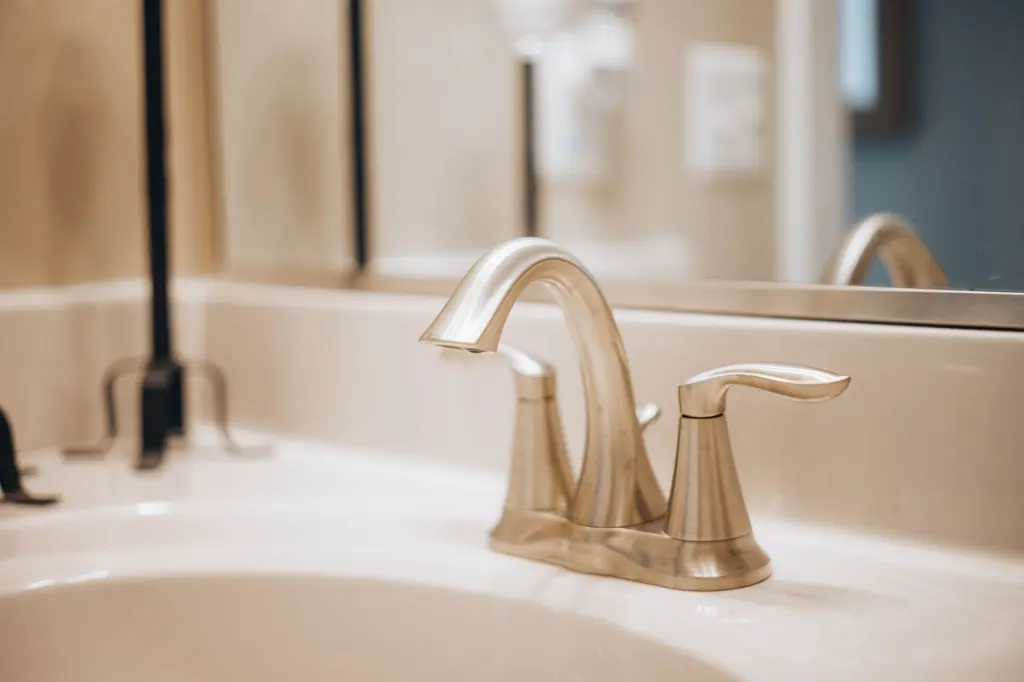
Kilworth sits on the Lake Huron Primary Water Supply System, which means your tap water starts as surface water from Lake Huron. That distinction matters. You’re not drawing from deep limestone aquifers or wells. You’re drinking treated lake water, and lakes behave differently than groundwater when it comes to hardness.
Lake Huron’s water picks up its calcium and magnesium the slow way. Rain and snowmelt run across the Canadian Shield and the surrounding sedimentary terrain, filtering through soil and over rock before they ever reach the lake. Along the way, that water comes into contact with dolomite and limestone deposits common in the Great Lakes basin. Those rocks are essentially compressed calcium and magnesium carbonate. Water is a decent solvent, and given enough time, it dissolves small amounts of those minerals and carries them into the lake.
Here’s the thing about lakes, though. They’re big, well-mixed bodies of water, and they dilute whatever minerals flow into them. Unlike groundwater, which sits in prolonged contact with rock and can become heavily saturated, Lake Huron’s volume keeps mineral concentrations relatively modest. Your measured hardness of 6.2 GPG (106 ppm) reflects that dilution. It’s above the 7 GPG threshold that USGS classifies as “hard,” but not by much. You’re sitting right at the edge, in what’s honestly a moderate range. The water is hard enough to leave some scale on fixtures and make soap less effective, but it’s nowhere near the 10.5 GPG “very hard” category that plagues communities drawing from deep aquifers.
The fluoride, calcium, and magnesium detected in the supply are all consistent with Great Lakes surface water. Calcium and magnesium are the hardness minerals themselves, and fluoride occurs naturally in low concentrations in the basin. None of this is unusual or alarming. It’s just the fingerprint of water that traveled across the region’s geology before settling into one of the largest freshwater lakes on Earth.
How Kilworth Compares to Nearby Cities
If you’re in Kilworth, you’re part of a regional system, and that’s the short version of the comparison story. The Lake Huron Primary Water Supply System serves a broad swath of southwestern Ontario, and every community connected to it draws from the same source. That means your neighbors in London, Komoka, and Delaware are drinking essentially the same water you are. Same lake, same treatment, same mineral profile. Their hardness readings will land in the same moderate ballpark as yours, give or take a fraction of a grain per gallon depending on seasonal mixing in the lake and treatment adjustments.
That’s a meaningful contrast to other Ontario communities. Towns that rely on groundwater, particularly those tapping into the limestone-rich aquifers of the province’s southern tier, routinely see hardness levels well above 10 GPG. They’re dealing with “very hard” water by USGS standards, and they face the full consequences: faster scale buildup in water heaters, more detergent needed for laundry, and shorter appliance lifespans. Kilworth doesn’t have that problem to the same degree. Your 6.2 GPG reading is a genuine advantage over those groundwater communities, even if it’s not soft water by any stretch.
The practical difference shows up in the numbers. Based on the WQA-commissioned Battelle Memorial Institute study, hard water is estimated to cost the average affected household more each year in extra energy, premature appliance wear, and additional cleaning products — see the cost calculator on this page for the number scaled to this city’s actual hardness. Communities with very hard groundwater feel that cost more acutely. Kilworth, sitting at moderate hardness from a surface water source, lands on the lighter end of that burden. You’ll still notice scale on your kettle and soap scum in the shower, but you’re not fighting the mineral load that groundwater users deal with.
One more thing worth knowing. Because you’re on a shared surface water system, your hardness is more stable than a well user’s. Lake water doesn’t fluctuate the way aquifers do during dry spells or heavy rains. What you get today is close to what you’ll get next year. That consistency makes it easier to set your appliances and cleaning routines once, rather than chasing a moving target.
How does Kilworth stack up against the rest of Ontario? It's moderate at 6.2 GPG — Woodstock, Guelph, and Ingersoll sit nearby with different numbers. See the full hardest-water ranking for context.
See where Kilworth sits on the Ontario water hardness map →
Want the broader explainer on what hardness actually is and how it behaves? Read hard water vs. soft water, explained.
What 6.2 GPG Actually Does to a Kilworth Home
At 6.2 GPG, the effects in a Kilworth home are real but gradual:
- Light spotting on glassware and shower doors — mineral film that appears after water evaporates.
- Reduced lather — soap and shampoo don't foam as freely, so you use slightly more.
- Slow scale inside the water heater. The Battelle Memorial Institute found efficiency losses begin to register around 5 GPG; at 6.2 GPG your heater works roughly 5% harder than it would on soft water.
None of this is an emergency. But it is a measurable cost — soft water would save you the extra detergent, the descaling, and the incremental energy loss year over year. Scaled to your household, that runs roughly $763/year for an average 3–4 person home (adjust household size in the calculator above to see your number).
Do You Need a Water Softener in Kilworth?
Optional — and a salt-free conditioner is usually the right call here. At 6.2 GPG, Kilworth water causes spotting and minor scale, but nothing a traditional softener's ion-exchange process strictly needs to remove.
A salt-free conditioner prevents scale from adhering to surfaces without adding sodium to your water — the better fit at moderate hardness. For the full trade-off, see water softener vs. salt-free conditioner. If you want fully soft water (for skin, hair, or spotless glass), a traditional softener works too, but the payback period is longer because the annual damage is lower.
What Size Softener Does Kilworth Need?
At 6.2 GPG, most Kilworth homes that want treatment choose a salt-free conditioner rather than a softener — and conditioners don't need grain-capacity sizing the way softeners do. A whole-house conditioner is sized to your peak water flow (typically 10–15 gallons per minute for an average home), not to hardness.
If you instead want fully soft water, a 24,000–32,000-grain softener is more than enough at this hardness for a family of four.
What Are the Signs of Water Issues in Kilworth?
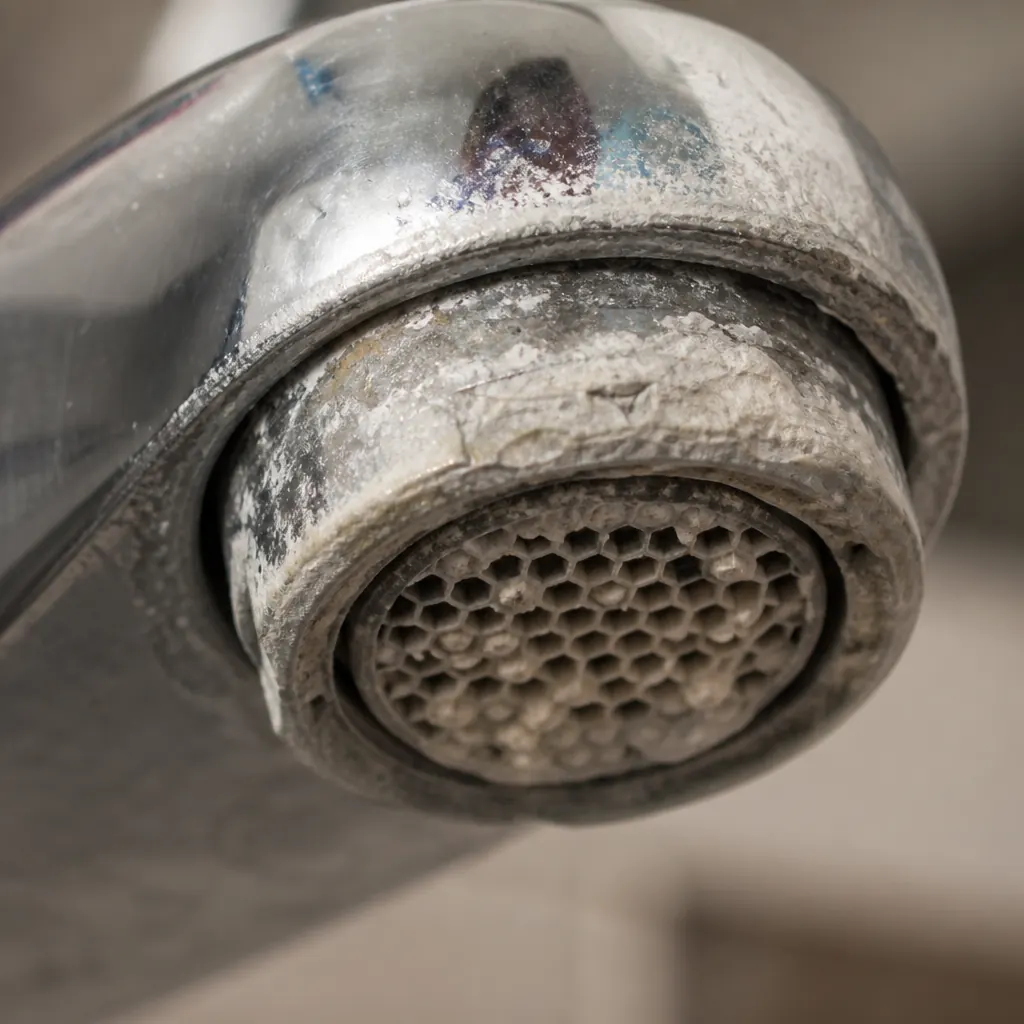
At 6.2 GPG, Kilworth water is in the moderate range, so signs are subtle: light spotting on glassware, a faint film on shower doors, slightly reduced soap lather. The USGS classifies Kilworth's water as moderate — below the threshold where aggressive treatment is typically needed.
Best Treatment for Kilworth Homes
At moderate hardness, a salt-free conditioner is usually the better fit than a full softener:
Aquasana Salt-Free Water Conditioner
At Kilworth's moderate hardness the goal is usually to stop scale, not strip minerals. This salt-free conditioner uses TAC (template-assisted crystallization) to prevent scale without salt, brine, a drain line, or electricity — ideal for septic systems and zero-maintenance homes.
check current price
See on Aquasana →Aquasana Rhino Whole-House Water Filter
If Kilworth's contaminant profile (chlorine, disinfection byproducts, sediment) matters more than hardness, a whole-house carbon filter treats every tap. Pairs with a softener or salt-free conditioner installed on the same line.
check current price
See on Aquasana →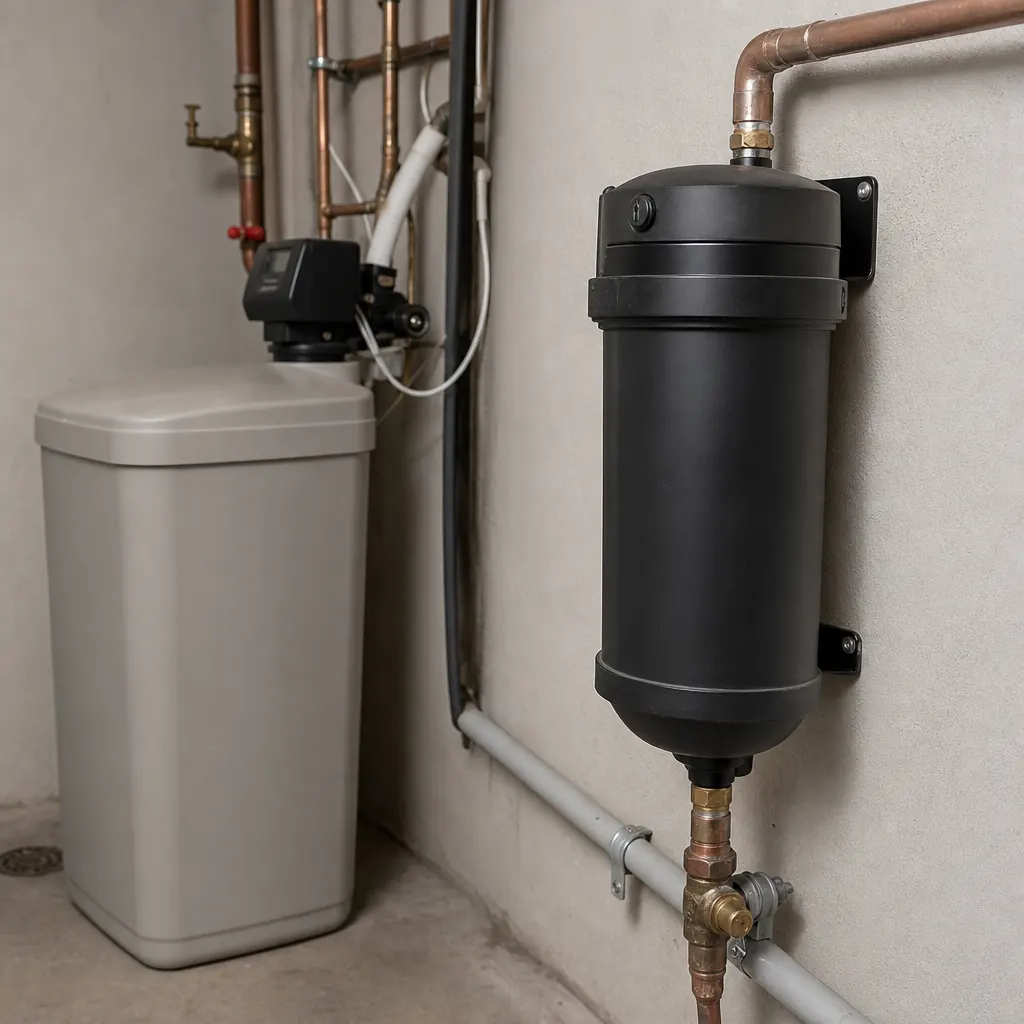
If you opt for a traditional softener over a salt-free conditioner, expect it to pay for itself in roughly 16 months at Kilworth's moderate hardness — longer than in a hard-water home, because the annual damage is lower.
How Do You Test Water Hardness in Kilworth?
This page reports Kilworth's system-wide average (6.2 GPG), but your tap can vary slightly by neighborhood, pipe age, and in-home filtration. For a step-by-step, see how to test your water hardness at home — it walks through test strips, the free soap-shake check, TDS meters, titration kits, and certified lab tests.
- Test strips (~$10) give a GPG reading in about 30 seconds and are accurate enough to decide whether to invest in treatment.
- TDS meter (~$15) measures total dissolved solids, a rough hardness proxy — but it doesn't separate hardness from other minerals.
- Lab test — most water treatment companies in Kilworth offer free in-home tests (expect a sales pitch); for an independent result, the EPA maintains a list of certified labs.
Note: the EPA doesn't regulate hardness (it's a nuisance, not a health hazard), but the EWG Tap Water Database tracks contaminants above health guidelines for Kilworth's utility — see our Kilworth water-quality report for what's actually been detected.
What about Kilworth water quality?
Hardness is separate from safety. Kilworth's water meets all Health Canada legal limits — 3 detected contaminants, none above the limit.
The ones people actually ask about:
Compare Kilworth to Other Ontario Cities
Other Moderate Water Cities
Explore More
Frequently asked questions
Is Kilworth water hard or soft?
Kilworth, Ontario water is moderate at 6.2 grains per gallon (106 ppm). That is generally considered soft to moderately hard.
How much does hard water cost the average Kilworth household?
Based on the WQA-commissioned Battelle Memorial Institute study, hard water is estimated to cost the average affected household roughly $800/year in 2010 dollars (~$1,230 today after ~54% inflation) — an estimate, not a measured per-household figure. Scaled to Kilworth's 6.2 GPG hardness, that works out to about $763/year (or ~$63.58/month) for a typical home — see the calculator on this page for the full breakdown.
Does Kilworth need a water softener?
Probably not — at 6.2 GPG your water is mild enough that a test kit is a better first step than a full softener.
Why is Kilworth's water hard?
Hardness comes from the geology of Kilworth's water source. Lake Huron Primary Water Supply System (Lake Huron surface water) dissolves calcium and magnesium as water moves through the ground, and those dissolved minerals are what "hard water" means.
How do I test my water hardness in Kilworth?
Use a home test kit (test strips for a quick read, or a TDS meter for dissolved solids), or check your utility's annual Consumer Confidence Report (CCR). For lab-accurate results, send a sample to a certified lab.
Who supplies Kilworth's water?
Kilworth water is supplied by Huron Elgin Water (Lake Huron Primary Water Supply System). Its annual water quality report (Consumer Confidence Report) is the authoritative source for local hardness and contaminant levels.
What's the difference between grains per gallon and ppm?
1 GPG (grains per gallon) equals 17.1 ppm (mg/L). To convert: 6.2 GPG × 17.1 = ~106 ppm. Water is "hard" above roughly 7 GPG (120 ppm).
Sources & data
Hardness and water-quality data compiled from authoritative public sources.
- Huron Elgin Water (Lake Huron Primary Water Supply System) — primary hardness/water-quality source
- Huron Elgin Water (Lake Huron Primary Water Supply System) — annual water quality report (CCR)
- Health Canada — Guidelines for Canadian Drinking Water Quality
- Government of Canada — Water quality
- USGS — Water Hardness
- Water Quality Association — Scale & Hardness
- EPA — Drinking Water Regulations
Recommended solutions for Kilworth
We may earn a commission when you buy through links on our site. This doesn't affect our recommendations. Full disclosure.
💧 Don’t rely on old numbers
These numbers change as new data comes out. Get notified when they get updated, and get our take on what to do about it. Unsubscribe anytime.
💧 Water treatment pros: this page is yours to share
This page helps customers understand their water's risks and costs — so they can weigh whether service is worth it. We recommend sharing this page along with our hard water vs soft water guide in your next quote or follow-up to fully explain the value of your services.