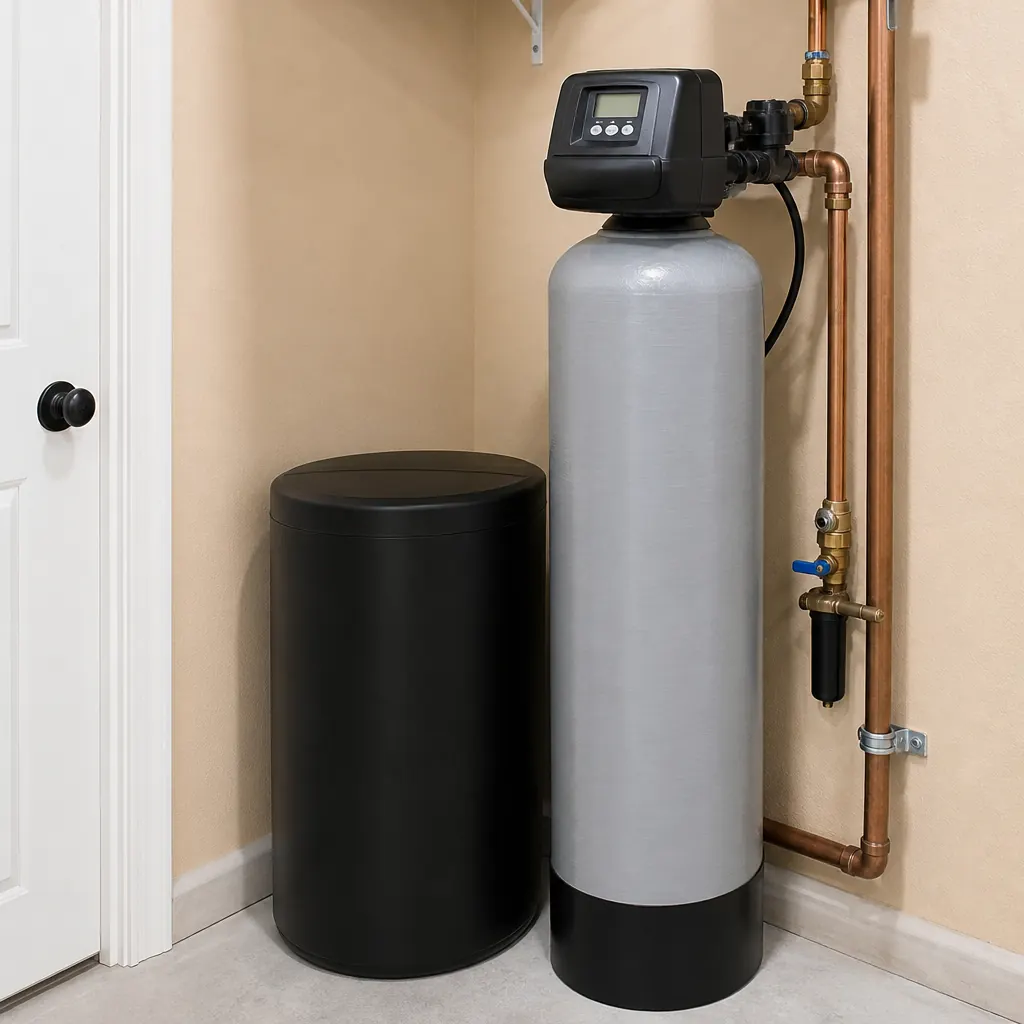
Quick answer: If your water softener stopped softening, the culprit is almost always one of four things: a salt bridge (crusted salt that never reaches the water), a clogged brine injector, resin exhaustion (old or damaged), or the regeneration cycle not firing at all. Work through them in that order — and test your water, not just the machine, to confirm the problem.
Before you call a plumber or replace the unit, most softener failures are cheap, mechanical fixes you can do yourself in under an hour.
First: confirm it’s actually broken
The machine can “look” like it’s running while producing hard water. Before troubleshooting anything, verify with a real check:
- Test the water. Use a hardness test strip on water from a softened tap. It should read at or near 0 GPG. If it matches your incoming (unsoftened) hardness, the softener isn’t doing its job. This is the Water Quality Association’s recommended first diagnostic — confirm the symptom at the tap before opening the unit.
- Check the bypass valve. If the softener’s bypass is open, water flows around the unit entirely — the softener “runs” but your taps get hard water. Make sure the bypass is closed (service position).
- Confirm regeneration is happening. If the display shows an error, or you haven’t seen/heard a regen cycle in a while, that’s your clue.
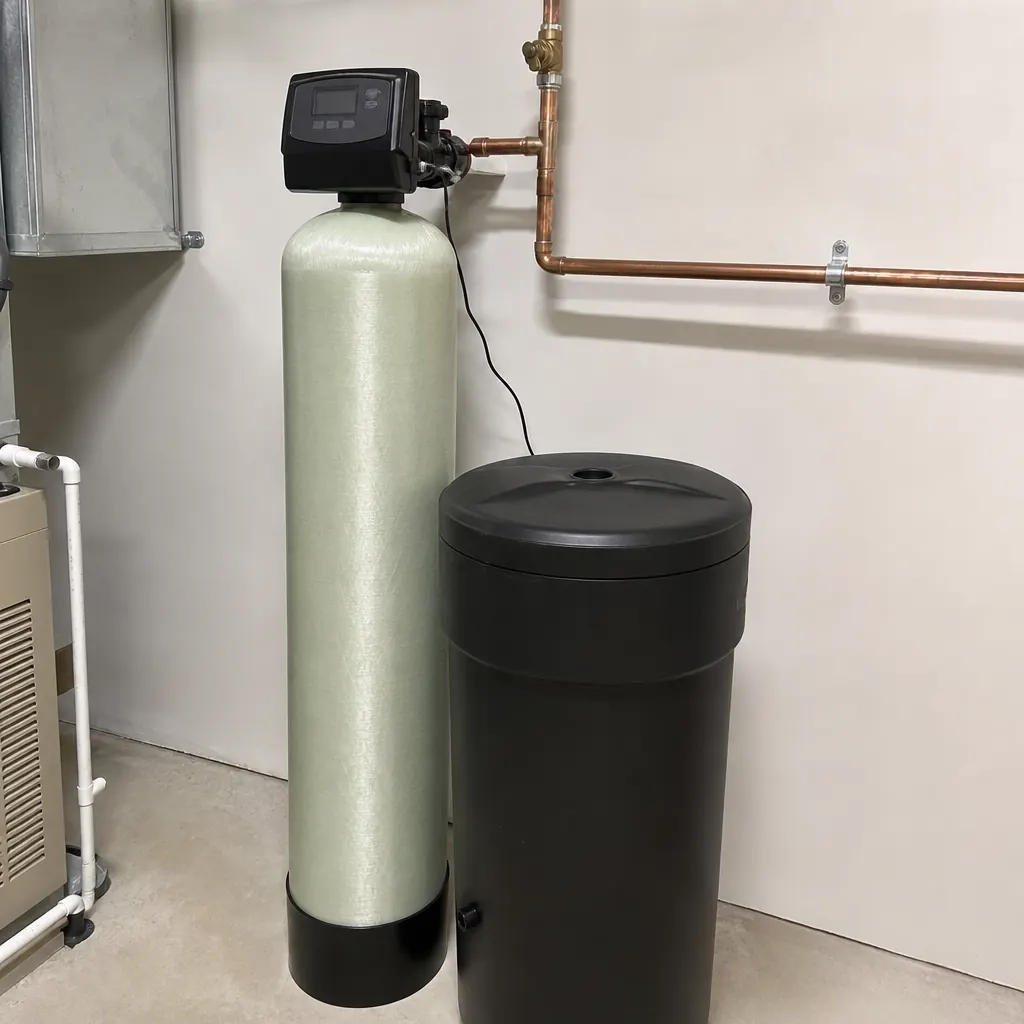
Cause 1: Salt bridge (most common)
A salt bridge is a hard crust that forms across the top of the salt in the brine tank, leaving a hollow space underneath. The softener “uses” no salt because the salt never actually sits in the water to make brine.
How to fix: Take a broom handle or similar and gently push down through the top of the salt. If you feel it “break through” a crust, that’s a bridge. Break it up thoroughly and remove the chunks. To prevent recurrence, keep the tank only about half to two-thirds full and avoid pellet salt bridging in humid basements.
Cause 2: Clogged brine injector / venturi
The injector draws brine from the tank during regeneration. If it’s plugged with debris or mineral scale, the softener can’t pull brine, so the resin never gets recharged.
How to fix: Locate the injector/venturi (usually behind a small cover on the valve head). Remove it, clean the screen and nozzle with warm water — gently, using a soft brush to clear scale — then reassemble. This is one of the most overlooked and cheapest fixes.
Cause 3: Clogged drain line or stuck float
If the drain line is kinked, frozen, or clogged, the regeneration water can’t flush out, and the cycle fails. A stuck float in the brine tank can likewise prevent proper fill.
How to fix: Straighten and clear the drain line, verify it’s draining during regen, and check that the float moves freely and isn’t stuck in a raised position.
Cause 4: Exhausted resin
Resin beads do the actual ion exchange, and they don’t last forever — typically 10–15 years, less if your water has high iron or chlorine.
How to tell: If the softener regenerates normally, has salt, the injector is clean, and the water is still hard, the resin is the likely suspect — especially on an older unit. Resin replacement is a bigger job (you open the tank and swap the media), but it’s far cheaper than a whole new softener.
Cause 5: Settings / timer problems
Sometimes nothing is mechanically wrong — the softener is just misconfigured:
- Regeneration frequency too low for your water use or hardness.
- Clock or calendar wrong, so regen fires at odd times or not at all.
- Capacity setting too high, so the softener runs past exhaustion before regenerating.
How to fix: Check the owner’s manual against your actual water hardness and household size, and adjust the regeneration schedule. Our water softener sizing guide explains how to match capacity to your home.
When to call a professional
If you’ve cleared the salt bridge, cleaned the injector, verified the drain line and settings, and the water still tests hard — especially with a younger unit — you may have a failing control valve or a deeper resin-bed problem. That’s the point to call a licensed water-treatment technician rather than keep guessing.
Diagnosing by symptom, not by guess
Softeners fail in a few repeatable ways, and the symptom usually points at the cause. Use this map:
- Water is hard, and the salt level never drops → salt bridge, or regeneration isn’t actually firing (timer/valve problem). Break the bridge first, then check the regen schedule.
- Water is hard, salt IS being used → the brine is being drawn but the resin isn’t exchanging (exhausted resin), or the brine injector is partially clogged so it’s not drawing enough. Check the injector, then consider resin age.
- Water is soft at some taps, hard at others → almost always a bypass valve left partially open, or an unsoftened outside/kitchen line you didn’t know about. This is a plumbing-valve issue, not a softener failure.
- Water is soft but you see spotting anyway → you may be testing the wrong tap, the water heater has old scale flush
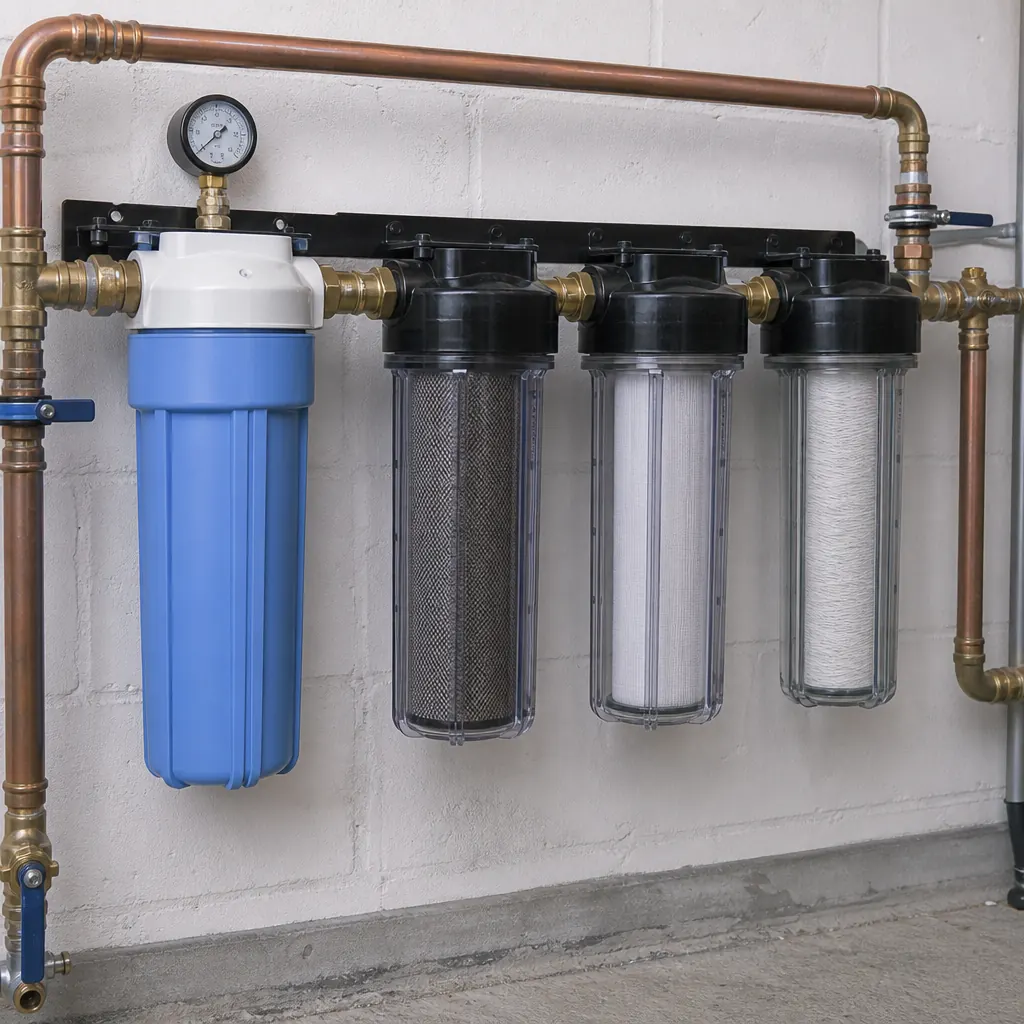
Working from symptoms instead of guessing saves you from replacing parts that were never broken.
The bypass valve: the most-missed simple fix
It’s worth zeroing in on the bypass valve because it’s the single most common “softener stopped working” cause that isn’t really a softener problem at all.
- A bypass valve has three positions: service (water flows through the softener), bypass (water flows around it), and sometimes a partial position.
- During installation, repairs, or simply by accident, the valve can end up in bypass — and the softener runs every day while your whole house drinks unsoftened water.
- Some setups have three separate valves (two isolation valves and a bypass) that must all be in the right position.
Before you touch anything else, find the bypass and confirm water is actually passing through the resin tank. It’s a 10-second check that resolves a surprising number of “the softener isn’t working” calls.
Testing your softener’s output, the right way
The machine showing “regenerating” or blinking lights doesn’t prove it’s softening. The only test that matters is the water itself:
- Draw water from a softened inside tap (not an outside hose bib, which is often left unsoftened, and not through an RO system).
- Use a hardness test strip or drop kit and read the number.
- Compare it to your incoming (unsoftened) hardness, either from a pre-softener tap or your municipal report/well test.
A working softener should take water from whatever it is (say 15 GPG) down to near 0 GPG (usually 0–1 GPG). If the output reads the same as the input, the softener isn’t exchanging — go back to the salt bridge → injector → resin diagnosis. If it reads 0, the softener is fine and any remaining “hard water” symptoms are coming from something else (old scale in the pipes, or a specific unsoftened fixture).
Maintaining a softener so this doesn’t happen again
Most softener failures are preventable with a light maintenance habit:
- Keep the salt tank half to two-thirds full, and avoid letting it empty — an empty tank means no brine, which means no regeneration, which means hard water.
- Use quality salt (evaporated or solar salt) and avoid letting pellet bridges form in humid rooms.
- Clean the brine tank once a year — empty it, scrub out any salt sludge or “mush,” and rinse.
- Check the injector and screen periodically and clean them when they show scale.
- Test your water a couple of times a year, not just when something feels off — catching a slow resin decline early is cheaper than a failed appliance downstream.
A softener is a mechanical system like a water heater. It doesn’t need constant attention, but a little regular care keeps it working for its full life instead of quietly failing and leaving you wondering why your dishes are spotting again.
And a final note on timing: don’t diagnose a softener right after a regeneration cycle, when the resin is freshly recharged and output is naturally softest. Test a day or two after regen to get a representative reading of your actual day-to-day water — that’s the number that tells you whether the softener is doing its job.
If you work through these checks and the water still runs hard, the unit is either too old (spent resin) or has a failing control valve, and it’s time to consult a treatment professional — but only after the cheap fixes are ruled out.
Quick reference
- The 60-second version: most softener failures are a salt bridge, clogged injector, exhausted resin, or the regeneration not firing.
- Work the diagnosis in order: salt bridge, then brine injector, then resin age, then settings.
- Check the bypass valve first — a surprising number of “broken” softeners are just running in bypass.
- Test a softened tap, not the machine — a working softener should read near 0 GPG after treatment.
The takeaway
A softener that “stopped working” is rarely dead. Four out of five times it’s a salt bridge, a clogged injector, a drain-line issue, or a settings problem — all fixable in under an hour for little cost. Test the water first to confirm the failure, work the causes in order, and only replace resin or call a pro once the simple stuff is ruled out.