Surprise Water Is Soft — Here's What It Costs You Each Year
2.9 GPG · 49 ppm · -60% vs US average · 2016 report
Source: Surprise, 2016 report
SoftSurprise water is soft at 2.9 GPG (49 ppm). That is soft-to-moderate water; most homes here don't need a softener.
How we calculate this: based on the Battelle Memorial Institute study commissioned by the Water Quality Association (WQA), hard water is estimated to cost the average affected household roughly $800/year in 2010 dollars (~$1,230 today, after ~54% inflation). We scale that by 2.9 GPG versus a ~10 GPG reference. The percentages above come from the Battelle Memorial Institute study (commissioned by WQRF), the US Department of Energy, and the Water Quality Association. This is an estimate — not a certified per-household figure — and actual savings vary by water use, fuel type, and local rates.
Hardness
Parts per million
vs US average
Contaminants in water
How Surprise Compares
Water hardness scale
| Classification | Grains per gallon (GPG) | mg/L (ppm) | What it means |
|---|---|---|---|
| Soft← your water | 0–3.5 | 0–60 | No scale; softener unnecessary. |
| Slightly Hard | 3.5–7 | 60–120 | Minor spotting; conditioning optional. |
| Hard | 7–10.5 | 120–180 | Visible scale; softener recommended. |
| Very Hard | 10.5+ | 180+ | Heavy scale; whole-home softener strongly recommended. |
Why Is Surprise Water So Soft?
Surprise water hardness is 2.9 grains per gallon (GPG), which is 49 parts per million (ppm). That puts it squarely in the “soft” tier, and it’s a far cry from the rock-hard groundwater that plagues so much of the rest of Arizona. The reason comes down to where the water actually comes from, and it’s not the same story you hear from Phoenix or Scottsdale.
The key here is that Surprise doesn’t rely on deep, mineral-laden wells the way many older Valley communities do. Instead, its supply is dominated by surface water from the Central Arizona Project (CAP), which pulls Colorado River water across the desert. That water starts its journey high in the Rocky Mountains, where snowmelt runs off granite and other crystalline rock that simply doesn’t dissolve much calcium or magnesium. Granite is stingy with minerals. Unlike limestone, which readily breaks down and loads water up with hardness, the hard, igneous rock of the upper Colorado basin gives up very little. By the time that water travels down the river and into the CAP canal, it’s still carrying a light mineral load. The result is water that lands around 2.9 GPG, which is genuinely soft by any national standard.
That’s the whole story in a nutshell: soft water in the desert isn’t a miracle, it’s a matter of sourcing. The Colorado River’s surface water is naturally low in hardness, and the CAP delivers it to Surprise without the water spending centuries soaking through limestone aquifers. Compare that to cities that pump from the Salt River or Verde River watersheds, or worse, from deep wells tapping the basin-fill aquifers, and you’ll see why hardness numbers diverge so wildly across the Valley. Surprise’s water is soft because it’s river water, not groundwater. It hasn’t had the chance to pick up the dissolved rock that makes other Arizona tap water feel slippery and leave crusty rings on your shower door.
Now, soft water isn’t the same as pure water. The city’s annual water quality report does show trace detections of things like arsenic, hexavalent chromium, and total trihalomethanes (TTHMs), all of which are regulated by the EPA and monitored against health-based limits. But hardness itself is a different animal entirely. The EPA doesn’t regulate hardness as a health hazard; it’s purely an aesthetic issue, covered under a Secondary Maximum Contaminant Level. So when you hear that Surprise water is soft, that’s a statement about mineral content, not purity. The two are separate conversations.
How Surprise Compares to Nearby Cities
Surprise’s 2.9 GPG reading makes it one of the softer water supplies in the northwest Valley, and that’s a direct result of its reliance on Colorado River surface water. Neighboring communities that share the same CAP supply will land in a similar soft-to-moderate range, because they’re all drawing from the same source. If you live in El Mirage or Youngtown, you’re likely getting water from the same regional infrastructure, and your hardness numbers probably won’t be dramatically different from Surprise’s. The water doesn’t change its chemistry just because it crosses a city line.
But the comparison gets interesting when you look east toward Phoenix or Glendale. Those cities blend Colorado River water with Salt River Project water, and the Salt River runs through different geology. It picks up more dissolved minerals along the way, which pushes hardness up. So while Surprise sits comfortably in the soft tier, a home just a few miles away in central Phoenix might be dealing with moderately hard water. That’s not a knock on either supply; it’s just a reflection of the source mix. And if you go further out to cities that depend heavily on groundwater wells, like parts of Buckeye or Queen Creek, you’ll find hardness numbers that can double or triple Surprise’s reading. Those wells pull from ancient aquifers where water has had millennia to dissolve calcium and magnesium out of the surrounding rock.
The practical difference shows up in your appliances and your cleaning routine. According to the Water Quality Association and Battelle Memorial Institute’s 2010 detergent study, soft water can require up to 50% less laundry detergent and up to 70% less dish soap compared to hard water. The Battelle Memorial Institute and WQRF also found that hard water causes roughly a 4% loss in gas water-heater efficiency for every 5 GPG of hardness, and the Department of Energy notes that just a quarter-inch of scale can cut water-heater efficiency by up to 40%. Surprise residents, with water under 3 GPG, simply don’t face those scale problems. You’re not imagining it if your dishes spot less and your soap lathers better than it did at a relative’s house in a hard-water town. That’s the soft-water advantage, and it’s baked into the source.
How does Surprise stack up against the rest of Arizona? It's soft at 2.9 GPG — Scottsdale, Yuma, and Mesa sit nearby with different numbers. See the full hardest-water ranking for context.
See where Surprise sits on the Arizona water hardness map →
Want the broader explainer on what hardness actually is and how it behaves? Read hard water vs. soft water, explained.
What 2.9 GPG Actually Does to a Surprise Home
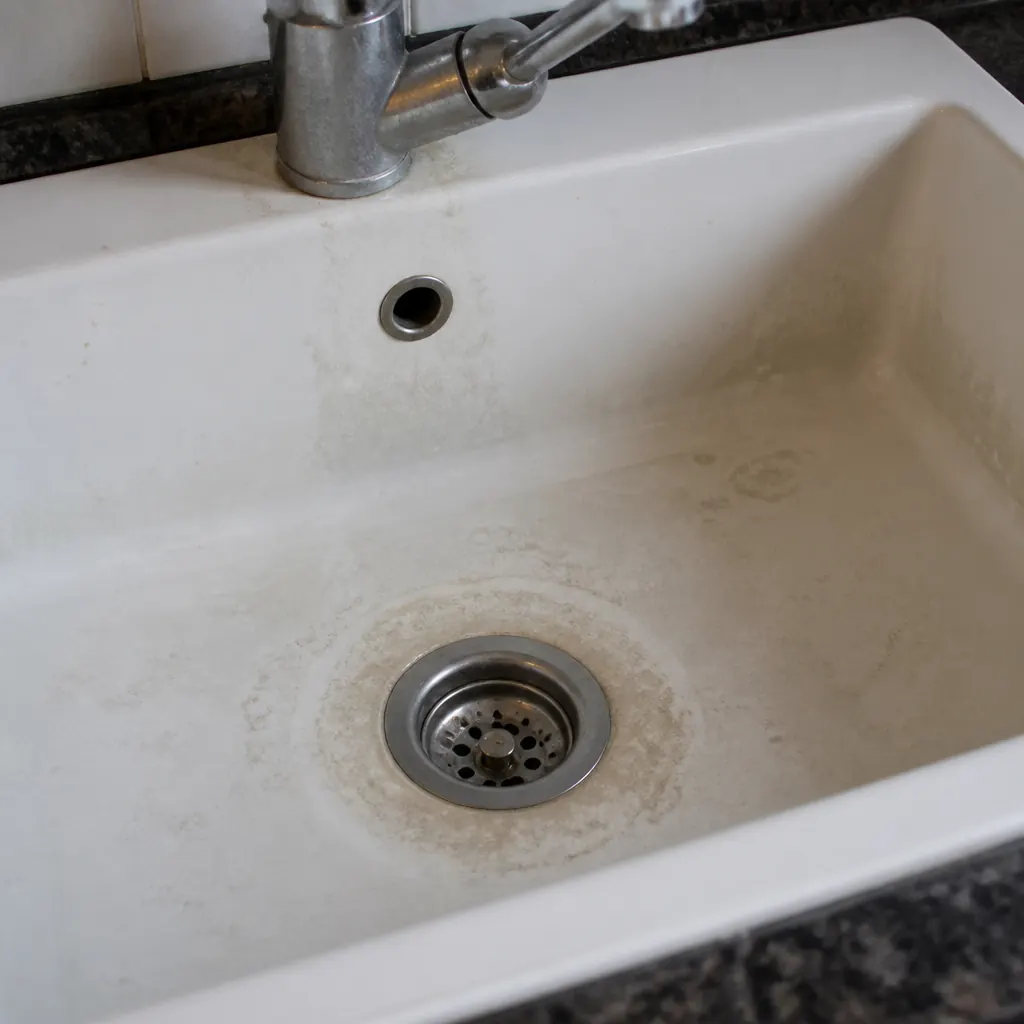
Honestly — not much. At 2.9 GPG (49 ppm), Surprise water will lather normally, leave little to no scale, and your water heater will run at full efficiency for its entire rated life. You won't see white crust on faucets or film on glassware.
The one caveat: municipal hardness averages can vary slightly by neighborhood and season, so if you suspect your specific tap reads higher, a $10 test strip settles it in 30 seconds (see the testing section below).
Do You Need a Water Softener in Surprise?
No. At 2.9 GPG, a whole-house water softener would be solving a problem Surprise doesn't have. Spend the money — roughly $800–$1,200 installed — only if your own tap test shows something unusual, or if contaminants (see our Surprise water-quality report) push you toward a filtration system instead.
What Size Softener Does Surprise Need?
You don't need a softener at 2.9 GPG, so sizing is moot. If a contaminant concern leads you to add a filter, size it to your household's drinking-water use — an under-sink RO rated for 50 gallons per day easily covers a family of four.
What Are the Signs of Water Issues in Surprise?
At 2.9 GPG, Surprise water is in the soft range, so signs are subtle: light spotting on glassware, a faint film on shower doors, slightly reduced soap lather. The USGS classifies Surprise's water as soft — below the threshold where aggressive treatment is typically needed.
Best Treatment for Surprise Homes
Your water is soft — no softener needed for hardness.
Aquasana SmartFlow Reverse Osmosis (drinking water)
The under-sink RO handles everything you drink. Removes lead, arsenic, fluoride, mercury, and PFOA/PFOS — then remineralizes for taste. The higher-purity companion to a whole-house softener or filter.
check current price
See on Aquasana →
How Do You Test Water Hardness in Surprise?
This page reports Surprise's system-wide average (2.9 GPG), but your tap can vary slightly by neighborhood, pipe age, and in-home filtration. For a step-by-step, see how to test your water hardness at home — it walks through test strips, the free soap-shake check, TDS meters, titration kits, and certified lab tests.
- Test strips (~$10) give a GPG reading in about 30 seconds and are accurate enough to decide whether to invest in treatment.
- TDS meter (~$15) measures total dissolved solids, a rough hardness proxy — but it doesn't separate hardness from other minerals.
- Lab test — most water treatment companies in Surprise offer free in-home tests (expect a sales pitch); for an independent result, the EPA maintains a list of certified labs.
Note: the EPA doesn't regulate hardness (it's a nuisance, not a health hazard), but the EWG Tap Water Database tracks contaminants above health guidelines for Surprise's utility — see our Surprise water-quality report for what's actually been detected.
What about Surprise water quality?
Hardness is separate from safety. Surprise's water meets all EPA legal limits — 7 detected contaminants, none above the limit.
The ones people actually ask about:
Compare Surprise to Other Arizona Cities
Other Soft Water Cities
Explore More
Frequently asked questions
Is Surprise water hard or soft?
Surprise, Arizona water is soft at 2.9 grains per gallon (49 ppm). That is generally considered soft to moderately hard.
How much does hard water cost the average Surprise household?
Based on the WQA-commissioned Battelle Memorial Institute study, hard water is estimated to cost the average affected household roughly $800/year in 2010 dollars (~$1,230 today after ~54% inflation) — an estimate, not a measured per-household figure. Scaled to Surprise's 2.9 GPG hardness, that works out to about $357/year (or ~$29.75/month) for a typical home — see the calculator on this page for the full breakdown.
Does Surprise need a water softener?
Probably not — at 2.9 GPG your water is mild enough that a test kit is a better first step than a full softener.
Why is Surprise's water hard?
Hardness comes from dissolved calcium and magnesium picked up as water passes through rock and soil before reaching Surprise's treatment plant.
How do I test my water hardness in Surprise?
Use a home test kit (test strips for a quick read, or a TDS meter for dissolved solids), or check your utility's annual Consumer Confidence Report (CCR). For lab-accurate results, send a sample to a certified lab.
Who supplies Surprise's water?
Surprise's water comes from municipal supplies; contact your utility for its annual water quality report (Consumer Confidence Report).
What's the difference between grains per gallon and ppm?
1 GPG (grains per gallon) equals 17.1 ppm (mg/L). To convert: 2.9 GPG × 17.1 = ~49 ppm. Water is "hard" above roughly 7 GPG (120 ppm).
Sources & data
Hardness and water-quality data compiled from authoritative public sources.
Recommended solutions for Surprise
We may earn a commission when you buy through links on our site. This doesn't affect our recommendations. Full disclosure.
💧 Don’t rely on old numbers
These numbers change as new data comes out. Get notified when they get updated, and get our take on what to do about it. Unsubscribe anytime.
💧 Water treatment pros: this page is yours to share
This page helps customers understand their water's risks and costs — so they can weigh whether service is worth it. We recommend sharing this page along with our hard water vs soft water guide in your next quote or follow-up to fully explain the value of your services.