Quick Answer: Jacksonville water is approximately 5 gpg — moderately hard — sourced from the Floridan Aquifer and treated by JEA with chloramine disinfectant. The main concern is chloramine taste/odor, best addressed with catalytic carbon filtration or reverse osmosis.
Jacksonville, Florida presents a different water quality story from cities like Phoenix or Las Vegas. The water here is relatively soft — just about 5 grains per gallon — but that doesn't mean residents should stop paying attention to their tap water. JEA (Jacksonville Electric Authority), the city's water utility, uses chloramines as the primary disinfectant, a practice that creates its own set of challenges that most Jacksonville residents don't fully understand.
This guide explains the Floridan Aquifer source, the science of chloramine treatment, what the JEA annual report reveals, and the best solutions for Jacksonville homeowners and renters.
Where Does Jacksonville Get Its Water?
JEA serves approximately 300,000 water accounts in Jacksonville and surrounding areas. The primary water source is the Floridan Aquifer System:
- Floridan Aquifer System: The primary source for most of Jacksonville. The Floridan Aquifer is one of the most productive aquifer systems in the world, extending across much of Florida, Georgia, Alabama, and South Carolina. In Jacksonville, JEA withdraws water from the Upper Floridan Aquifer through hundreds of production wells across the service area.
- Surficial Aquifer: Used in some service areas, particularly in older parts of the system. Shallower and more susceptible to contamination from surface activities.
- Water Reclamation: JEA also operates water reclamation facilities that treat wastewater to high standards for reuse in irrigation, reducing demand on the aquifer.
Why Is Jacksonville Water Soft?
The Floridan Aquifer in the Jacksonville area contains primarily calcium carbonate limestone, but the water residence time and chemistry differ significantly from Southwest aquifer systems. The shallower sections of the Floridan that JEA taps in Duval County produce water with lower total dissolved solids than the deeper Edwards Aquifer in San Antonio, for example. The result is moderately soft water at approximately 5 gpg — far less than Phoenix or Las Vegas, though still above the "soft" threshold.
Jacksonville Water Quality Data
Jacksonville (JEA) Water Profile
What Are Chloramines and Why Does Jacksonville Use Them?
Chloramines are formed when chlorine is combined with a small amount of ammonia. They have become the disinfectant of choice for many US water utilities because:
- They persist longer in the distribution system than free chlorine, maintaining disinfection protection across Jacksonville's extensive 3,400-mile pipe network.
- They produce fewer regulated trihalomethanes (TTHMs) — the cancer-associated byproducts formed when free chlorine reacts with organic matter. The EPA limits TTHMs to 80 ppb, and chloramination helps utilities stay below this limit.
- They meet EPA disinfection requirements for large utilities serving populations over 100,000.
The Trade-Offs of Chloramine Treatment
Chloramines come with their own set of concerns that water utilities don't always advertise prominently:
- They produce different byproducts: While chloramines reduce TTHMs, they increase iodoacetic acids and iodo-trihalomethanes — some of which are more toxic than TTHM byproducts in lab studies (though at lower concentrations).
- They cannot be removed by standard carbon filters: Unlike free chlorine, which readily adsorbs onto activated carbon and off-gases naturally, chloramines require catalytic carbon or reverse osmosis to be effectively removed.
- They are harmful to aquarium fish and other aquatic animals: Chloramines are toxic to fish even at the low concentrations found in tap water. Aquarium owners in Jacksonville must treat water with a specific dechlorinator that removes chloramines, not just chlorine.
- They can cause issues in dialysis: Chloramines must be completely removed from water used in dialysis treatments. Dialysis facilities have specialized equipment for this, but home dialysis patients must verify their water treatment systems handle chloramines.
- They increase nitrification risk in pipes: The ammonia component of chloramines can fuel bacterial growth in old pipes under certain conditions, potentially reducing water quality between the treatment plant and your tap.
JEA Annual Water Quality Report: Key Findings
Disinfection Byproducts
- TTHMs: 12–38 ppb (EPA limit: 80 ppb). Lower than many cities using free chlorine, due to chloramine treatment.
- HAA5s: 10–28 ppb (EPA limit: 60 ppb). Also relatively low for the same reason.
- Note: Haloacetic acids and iodoacetic acids (which are not included in the regulated HAA5 group) may be present and are not fully captured in the required report.
Naturally Occurring Contaminants from the Floridan Aquifer
- Radon: The Floridan Aquifer can contain dissolved radon gas. JEA aerates water to remove radon before distribution. Current reports show radon levels after treatment are within acceptable ranges, though radon is not currently a federally regulated contaminant in drinking water.
- Hydrogen Sulfide: Some Jacksonville-area well water (and occasionally municipal water during distribution anomalies) contains trace hydrogen sulfide, producing a rotten-egg odor. Aeration at treatment plants largely removes this.
- Nitrates: 0.5–2 mg/L (EPA limit: 10 mg/L). Low levels from agricultural and urban runoff into recharge zones.
Health Considerations for Jacksonville Residents
Chloramine Sensitivity
Some Jacksonville residents — particularly those with chemical sensitivities, skin conditions, or respiratory issues — report reactions to chloramine-treated water. Symptoms can include itchy or dry skin after showering, eye irritation, and in some cases respiratory effects when hot shower steam is inhaled. While research is limited, chloramine-sensitive individuals may benefit significantly from a whole-home catalytic carbon filter.
Copper Leaching Risk
Jacksonville's relatively soft water (low pH, low mineral content) can be slightly corrosive to copper plumbing. Soft, acidic water is more likely to leach copper from pipes and fittings than hard, alkaline water. In homes with copper plumbing, this can result in low-level copper exposure at the tap. JEA treats water with corrosion inhibitors, but the risk is higher in older plumbing. Running the tap for 30 seconds before using water for drinking (especially first thing in the morning) helps flush standing water from pipes.
Recommended Solutions for Jacksonville Homes
Catalytic Carbon Whole-Home Filter (Priority #1 for Jacksonville)
Unlike most US cities where standard carbon filtration is effective, Jacksonville's chloramine treatment requires catalytic carbon specifically. Catalytic carbon has a modified surface that promotes the catalytic decomposition of chloramine molecules. Look for whole-home filters explicitly rated for chloramine removal — many standard filters are not.
Under-Sink Reverse Osmosis (Drinking Water)
For drinking and cooking, a 5-stage RO system physically blocks chloramines, removes any remaining disinfection byproducts, and reduces TDS. RO is the most thorough treatment for Jacksonville's drinking water concerns.
Water Softener (Optional for Jacksonville)
Unlike Phoenix or Las Vegas homeowners, Jacksonville residents don't need a water softener as urgently. At 5 gpg, scale damage is minimal. However, a softener can reduce soap consumption, improve skin feel, and extend appliance life. If you have hard skin or hair issues, a softener combined with a catalytic carbon filter is a good pairing.
How Does Jacksonville Compare to Other Cities?
| City | Hardness (gpg) | Classification |
|---|---|---|
| Las Vegas, NV | 16–18 | Extremely Hard |
| Phoenix, AZ | ~16 | Extremely Hard |
| San Antonio, TX | ~15 | Very Hard |
| Houston, TX | ~12 | Very Hard |
| Indianapolis, IN | ~12 | Hard |
| Jacksonville, FL | ~5 | Moderately Hard |
| Seattle, WA | ~1 | Soft |
Frequently Asked Questions About Jacksonville Water Quality
📚 Official Sources & Further Reading
- 🏛️ JEA — Jacksonville Water Quality Report
- 🔬 EWG Tap Water Database — Jacksonville
- 💧 USGS Water Science School — Understanding Water Hardness
- 📋 EPA National Primary Drinking Water Regulations
- 📊 Hard Water Statistics 2026 — National Data
- ⭐ Best Water Softeners 2026 — Reviewed
- 🧪 How to Test Your Water Hardness at Home
⭐ Recommended Treatment
APEC ROES-50 Reverse Osmosis System
For drinking water quality improvement. Removes chlorine taste, any detected contaminants, and dissolved minerals. Under-sink install.
$180–$220
Check Price on Amazon →Water Hardness Test Strips
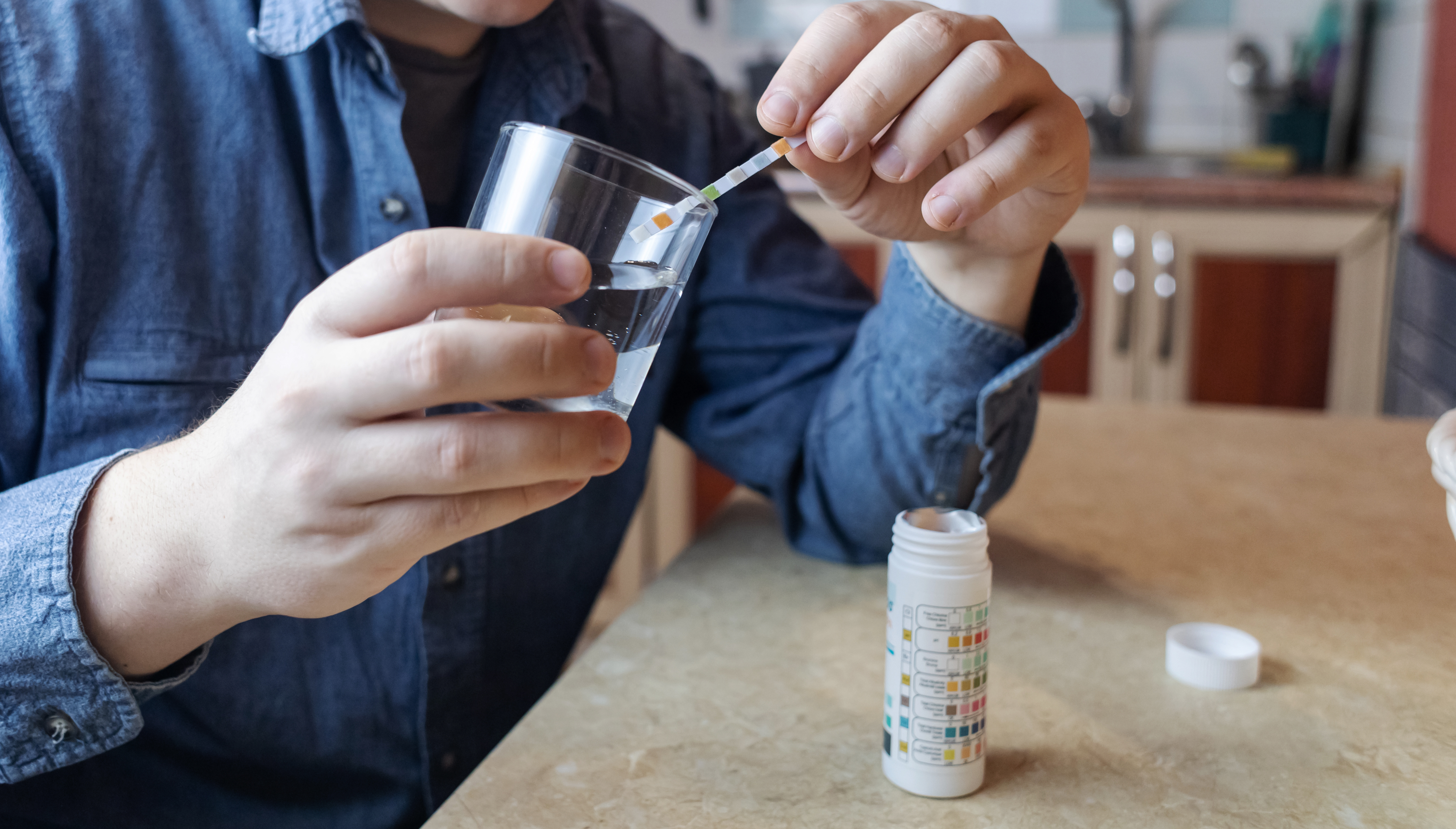
Confirm your hardness level at your tap — utility averages vary by neighbourhood. 30 seconds, under $10.
~$10
Check Price on Amazon →Related Resources
- PFAS-free and toxin-free material guides Clean water starts with clean materials too.