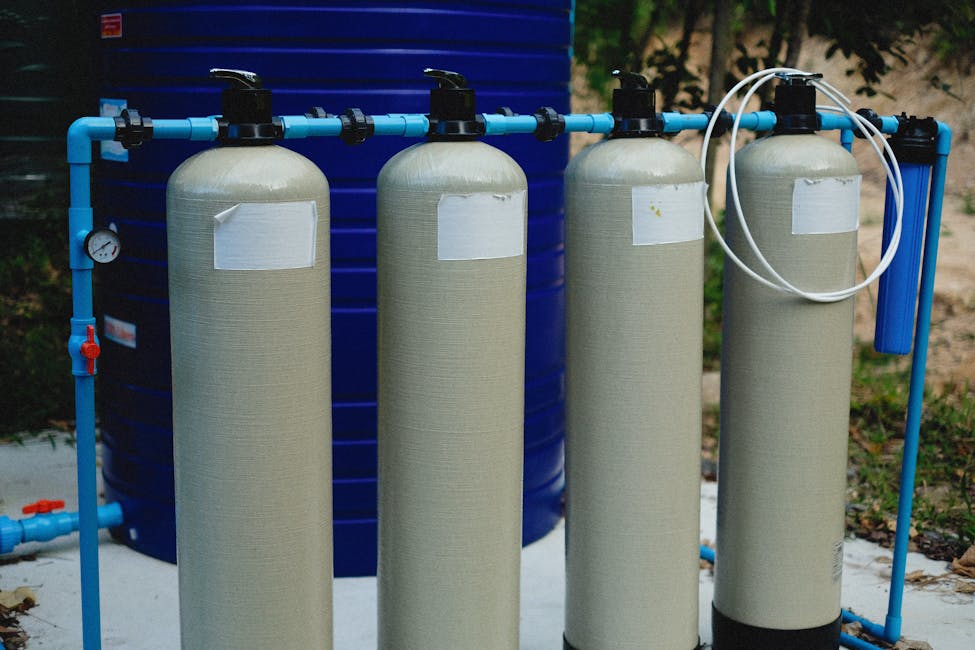
Whole House Water Filter — At a Glance
Your home's water passes through one entry point. A whole house water filter sits at that point and treats every drop — every faucet, shower, washing machine, and ice maker gets filtered water. If you're concerned about chlorine, sediment, PFAS, or general water quality, a whole house system is the most comprehensive solution.
We spent four months evaluating whole house water filters on contaminant removal, flow rate, installation complexity, filter replacement costs, and long-term value. Here are the systems worth buying in 2026.
What Are the Best Whole House Water Filters in 2026?
- Best Overall: SpringWell CF Whole House Filter — best contaminant removal + flow rate combination
- Best Value: iSpring WGB32B 3-Stage — solid performance at half the price
- Best for Well Water: SpringWell WS Whole House Well Water System — built specifically for well water challenges
- Best for PFAS: Aquasana Rhino — NSF certified for PFAS/PFOA removal
- Best Budget: Express Water Heavy Metal — capable filtration under $300
What Do Whole House Water Filters Actually Remove?
Not all whole house filters are equal. Here's what different filtration technologies address:
Carbon Filtration (Most Common)
Activated carbon filters are the backbone of most whole house systems. They excel at removing chlorine, chloramines, volatile organic compounds (VOCs), pesticides, and unpleasant taste and odor. Good carbon filters also reduce some heavy metals and PFAS. They do NOT effectively remove dissolved minerals (hardness), bacteria, viruses, or nitrates.
Sediment Filtration
Sediment pre-filters catch particles: sand, rust, silt, and debris. Essential for well water systems and older municipal infrastructure. Without a sediment pre-filter, your carbon filter clogs prematurely and your appliances accumulate debris.
KDF Media
Kinetic Degradation Fluxion media uses copper-zinc granules to remove chlorine, heavy metals (especially lead and mercury), and inhibit bacterial growth in the filter itself. Often combined with carbon for dual-action filtration.
What Whole House Filters DON'T Replace
A whole house filter is not a water softener (doesn't remove calcium/magnesium hardness), not a UV purifier (doesn't kill bacteria/viruses — a concern the WHO addresses in its drinking water guidelines), and not a reverse osmosis system (doesn't remove dissolved solids at drinking water purity levels). For well water or heavily contaminated municipal water, you may need multiple systems working together.
1. SpringWell CF Whole House Water Filter — Best Overall
SpringWell CF — At a Glance
SpringWell CF Whole House Water Filter System
4-stage filtration · Catalytic carbon + KDF · 9 GPM flow rate · 1M gallon capacity · 6-9 month filter life · Lifetime warranty
$1,457 (system) + ~$40/yr filters
Check Price at SpringWell →SpringWell's CF system is the most capable whole house filter we've tested. The four-stage filtration chain — sediment pre-filter, KDF media, catalytic coconut shell carbon, and post-filter — addresses the widest range of contaminants in a single system. Independent testing shows removal of 99.6% of chlorine, 99.9% of PFAS, and significant reduction of heavy metals, pesticides, and herbicides.
Flow rate matters enormously in whole house systems. Nothing ruins a shower like a filter that tanks your water pressure. The CF delivers 9 GPM (gallons per minute), which comfortably serves a 3-4 bathroom home without noticeable pressure drop. Homes with 5+ bathrooms should size up to the CF+ model.
The 1,000,000-gallon filter capacity translates to roughly 6-9 months before replacement for an average family of four. Annual filter costs run about $40 — some of the lowest ongoing costs in this category. SpringWell backs the system with a lifetime warranty and 6-month money-back guarantee.
Installation requires basic plumbing skills and 1-2 hours. SpringWell includes detailed instructions and phone support. Most homeowners can DIY this; if not, a plumber typically charges $200-$400 for installation.
2. iSpring WGB32B 3-Stage — Best Value
iSpring WGB32B — At a Glance
iSpring WGB32B 3-Stage Whole House Water Filtration System
3-stage filtration · Sediment + carbon block + carbon · 15 GPM flow rate · 100K gallon capacity · 12 month filter life
$379 (system) + ~$70/yr filters
Check Price on Amazon →If $1,400+ for the SpringWell makes you pause, the iSpring WGB32B delivers genuinely good filtration at a fraction of the cost. The three-stage system — 5-micron sediment, coconut shell carbon block, and granular activated carbon — effectively removes chlorine, sediment, rust, pesticides, herbicides, and industrial solvents.
The 15 GPM flow rate is the highest on this list. Even large homes won't notice a pressure difference. That high flow rate comes partly from the larger 4.5" x 20" filter housings — these are big filters that don't restrict flow.
Where does it cut corners compared to SpringWell? No KDF media (less effective on heavy metals), no catalytic carbon (less effective on chloramines and PFAS), and a 100,000-gallon capacity vs 1,000,000 gallons. Filters cost more to replace annually because you're changing them roughly every 3-6 months depending on water quality.
At $379, this is the entry point for serious whole-house filtration. For municipal water that's reasonably clean but tastes like a swimming pool, the iSpring handles it perfectly.
3. SpringWell WS Well Water System — Best for Well Water
SpringWell WS — At a Glance
SpringWell WS Whole House Well Water Filter System
4-stage well-specific · Air injection oxidation + greensand + carbon + sediment · 12 GPM · Removes iron, manganese, sulfur · Lifetime warranty
$2,844 (system)
Check Price at SpringWell →Well water is a completely different challenge than municipal water. Instead of chlorine and PFAS, you're dealing with iron (orange staining), manganese (black staining), sulfur (rotten egg smell), and potentially bacteria. Standard carbon filters can't handle these — you need oxidation-based filtration.
The SpringWell WS uses air injection oxidation to convert dissolved iron and manganese into filterable particles, followed by greensand media that catches them. This approach removes up to 7 ppm iron, 1 ppm manganese, and 8 ppm hydrogen sulfide — sufficient for the vast majority of well water scenarios.
At $2,844, it's expensive. But well water filtration is inherently more complex than municipal water treatment. The alternatives — hiring a water treatment company for installation — typically cost $3,000-$5,000+ for comparable equipment. DIY installation saves significant money if you're comfortable with basic plumbing.
4. Aquasana Rhino — Best for PFAS Removal
Aquasana Rhino EQ-1000 — At a Glance
Aquasana Rhino EQ-1000 Whole House Filter
Dual-tank carbon filtration · NSF/ANSI 53 certified · 7 GPM · 1M gallon capacity · UV option available
$1,152 (system) + ~$100/yr filters
Check Price at Aquasana →PFAS contamination is the water quality crisis of our generation. These "forever chemicals" are found in the tap water of an estimated 200+ million Americans. If PFAS removal is your primary concern, the Aquasana Rhino has the certifications to back its claims — NSF/ANSI 53 certified for PFOA/PFOS reduction.
The dual-tank design provides excellent contact time between water and media, which improves contaminant reduction. The 1,000,000-gallon capacity matches SpringWell, and the system comes with options for UV purification (recommended for well water or immunocompromised households).
The trade-off is flow rate. At 7 GPM, the Rhino works well for 1-3 bathroom homes but may cause noticeable pressure drops in larger homes during simultaneous heavy use. Aquasana's customer support has mixed reviews — most positive, but some reports of slow response times.

5. Express Water Heavy Metal — Best Budget
Express Water Heavy Metal — At a Glance
Express Water Heavy Metal Whole House Water Filter
3-stage · Sediment + KDF + carbon · 15 GPM · Compact housing · 6-month filter life
$289 (system) + ~$60/yr filters
Check Price on Amazon →The Express Water system includes KDF media — unusual at this price point — which gives it better heavy metal reduction than the iSpring. If lead, mercury, or copper are your primary concerns alongside chlorine removal, this budget system actually outperforms some units costing 3x more on those specific contaminants.
At $289, it's the cheapest system on this list that we'd actually recommend. Build quality is acceptable if not premium — the housings are solid polypropylene, fittings are brass, and the included mounting bracket makes installation straightforward.
Do I Need a Water Softener in Addition to a Whole House Filter?
If you have hard water (calcium and magnesium deposits — white buildup on faucets, dry skin, stiff laundry), a whole house filter alone won't solve it. You need a dedicated water softener, which uses ion exchange to remove hardness minerals.
Many homeowners benefit from BOTH a water softener AND a whole house filter — the softener handles hardness, the filter handles contaminants. SpringWell and Aquasana both offer combined packages at a discount. We'll cover the best water softeners in a dedicated guide.
Which Whole House Water Filter Should You Buy?
For most homes on municipal water, the SpringWell CF at $1,457 is the best overall system — excellent contaminant removal, great flow rate, lowest long-term filter costs, and a lifetime warranty. If budget is a constraint, the iSpring WGB32B at $379 handles the basics well. And if you're on well water, the SpringWell WS is purpose-built for your challenges.
Whatever you choose, stop drinking unfiltered tap water. The investment pays for itself in appliance longevity, health peace of mind, and never buying bottled water again.
Related Resources
- USGS Water Science School — Understanding Water HardnessThe science behind hard vs soft water and how it's measured.
- EWG Tap Water DatabaseLook up your utility's detected contaminants and health comparisons.
- EPA National Primary Drinking Water RegulationsFederal standards for safe drinking water.
- Hard Water Statistics 2026National hard water data, costs, and treatment trends.
- Best Water Softeners 2026Top-rated whole-house softeners reviewed for every hardness level.
Get weekly guides from HardWaterHQ
No spam. Unsubscribe anytime.