If you've ever noticed white residue on your Jacksonville showerhead or that your soap doesn't lather well, you've experienced hard water firsthand. Jacksonville draws most of its tap water from the Floridan Aquifer — one of the most productive underground water systems in the world — where water naturally absorbs calcium and magnesium from limestone rock over thousands of years.
This guide breaks down exactly what's in Jacksonville's tap water in 2026, where it comes from, how JEA treats it, and which filtration options make the most difference for your home and health.
Where Does Jacksonville Get Its Water?
Jacksonville's drinking water is managed by JEA (Jacksonville Electric Authority), the city-owned utility that also provides electricity. JEA operates one of the largest publicly owned water systems in Florida, serving over 1.2 million people across Duval County and portions of surrounding counties.
The vast majority of Jacksonville's water — roughly 95% — comes from the Upper Floridan Aquifer. JEA operates more than 100 production wells that tap into this underground reservoir at depths ranging from 500 to 1,100 feet. The Floridan Aquifer spans approximately 100,000 square miles across Florida, Georgia, Alabama, and South Carolina, and is classified by the USGS as one of the highest-yielding aquifer systems in the world.
Because the aquifer sits in porous limestone and dolomite rock formations, water naturally picks up calcium, magnesium, and other minerals as it percolates through — which is why Jacksonville consistently registers higher hardness levels than cities drawing from surface water sources like lakes or rivers.
JEA also treats a portion of water drawn from the St. Johns River at its surface water treatment facilities. This surface water undergoes more intensive treatment to remove organic matter, turbidity, and pathogens before entering the distribution system.
How Hard Is Jacksonville's Water?
Jacksonville tap water hardness typically measures in the range of 150–250 mg/L as CaCO3, which corresponds to approximately 8–15 grains per gallon (GPG). The U.S. Geological Survey classifies water above 120 mg/L as "hard" and above 180 mg/L as "very hard" — so Jacksonville sits squarely in hard territory, with some areas trending very hard depending on which aquifer zones supply their part of the distribution grid.
Here's how Jacksonville's hardness compares on the standard scale:
| Classification | mg/L (ppm) | Grains/Gallon |
|---|---|---|
| Soft | 0–60 | 0–3.5 |
| Moderately Hard | 61–120 | 3.5–7 |
| Hard | 121–180 | 7–10.5 |
| Very Hard | 181+ | 10.5+ |
| Jacksonville (typical) | 150–250 | 8–15 GPG |
In practical terms, that hardness level translates to:
- White scale deposits on showerheads, faucet aerators, and around drains
- Reduced soap and shampoo lather — calcium ions bind to soap molecules and reduce foaming
- Spotty dishes and glassware after washing
- Scale buildup inside water heaters, reducing efficiency by up to 29% (U.S. Department of Energy estimate)
- Clogged dishwasher spray arms over time
- Dry, itchy skin and brittle hair after showering
To understand your specific tap water hardness, you can test your water hardness at home with an inexpensive dip strip kit — results are available in under a minute.
What's Actually in Jacksonville's Water? (CCR Highlights)
JEA publishes an annual Consumer Confidence Report (CCR) — also called a Water Quality Report — as required by the EPA. Here's a summary of what the most recent reports show:
Disinfection Byproducts (DBPs)
The most notable contaminants in Jacksonville's water are disinfection byproducts — compounds formed when chloramine (or chlorine) reacts with naturally occurring organic matter. JEA's CCR reports detectable levels of two classes:
- Total Trihalomethanes (TTHMs): Detected at levels typically in the 30–60 µg/L range, well below the EPA MCL of 80 µg/L
- Haloacetic Acids (HAA5): Typically measured in the 20–40 µg/L range, below the EPA MCL of 60 µg/L
While these levels are legally compliant, the EPA's MCLs represent maximum legal limits — not zero-risk thresholds. Long-term exposure to TTHMs has been associated with increased cancer risk in epidemiological studies. Many health-conscious households choose to filter DBPs as a precaution.
Fluoride
JEA adds fluoride to Jacksonville water at approximately 0.7 mg/L — the level recommended by the U.S. Public Health Service for dental health benefits. The EPA's MCL for fluoride is 4.0 mg/L; Jacksonville consistently tests well below that limit.
pH
Jacksonville's tap water typically registers a pH of 7.2–8.0, which is slightly alkaline. This range is within the EPA's secondary standard of 6.5–8.5. Slightly alkaline water tends to be less corrosive to pipes.
Iron and Manganese
Because the Floridan Aquifer passes through iron-bearing geological formations, some Jacksonville neighborhoods see elevated iron levels — particularly those served by older portions of the distribution system or private wells. Iron levels above 0.3 mg/L (EPA secondary standard) can cause reddish-brown staining on fixtures, laundry, and sinks. If you notice rust-colored staining, removing iron from your water may be worth addressing separately from standard hardness treatment.
Lead and Copper
Jacksonville's water source itself is essentially lead-free. Lead enters water from lead service lines and interior plumbing in older homes (pre-1986). JEA's Lead and Copper Rule compliance sampling consistently shows results below the EPA's action level of 15 µg/L for lead and 1,300 µg/L for copper. If your home was built before 1986, testing for lead at your tap specifically is still recommended — source water compliance doesn't guarantee zero lead at your faucet.
Why Chloramine Matters for Your Filter Choice
JEA uses chloramine — a combination of chlorine and ammonia — as its primary disinfectant for the distribution system. This is a significant detail that most Jacksonville residents don't know, and it directly affects which water filters actually work for your tap water.
Chloramine was adopted by many utilities as an alternative to free chlorine because it's more stable in the distribution system, doesn't evaporate as quickly, and produces lower levels of some types of disinfection byproducts (particularly TTHMs) compared to free chlorine treatment.
However, chloramine creates a specific filtration challenge:
- Standard activated carbon filters (like basic Brita pitchers) are designed primarily to reduce free chlorine. They have limited effectiveness against chloramines.
- Carbon block filters with extended contact time — particularly those rated NSF/ANSI 42 and 53 — are significantly more effective at reducing chloramines and chloramine-derived DBPs.
- Reverse osmosis systems remove virtually all chloramine-related contaminants.
- Chloramine cannot be removed by simply letting water sit out, unlike free chlorine which evaporates over time.
For an in-depth comparison of how different filtration methods compare, see our guide on reverse osmosis vs. water softeners — which also covers how each handles disinfectants.
Common Complaints from Jacksonville Residents
Forums, Reddit's r/jacksonville, and home improvement communities consistently surface the same Jacksonville water complaints:
- "My showerhead is always clogged." Calcium scale from 150–250 mg/L hardness builds up rapidly in small orifices.
- "My water has a chemical smell." Chloramine produces a distinct smell some describe as "bleachy" or "chemical" — more persistent than free chlorine odor because it doesn't off-gas as readily.
- "My skin is dry after showering." Hard water calcium disrupts the skin's natural oil layer and soap doesn't rinse fully — a combination that leads to dryness.
- "My dishwasher leaves white film on everything." Mineral deposits bake onto dishes and glassware at dishwasher temperatures.
- "My water heater died early." Scale accumulation inside tank water heaters reduces efficiency and, over 8–12 years, leads to premature failure. Scale-related efficiency losses of 10–30% have been documented in DOE research.
- "Filtered water tastes way better." Any carbon block or RO filter dramatically improves the taste of Jacksonville tap water by removing chloramine and DBPs.
Best Filters for Jacksonville Water
The right filtration approach depends on what problem you're trying to solve:
For Taste, Odor, and DBP Removal
A carbon block filter rated NSF/ANSI 42 and 53 is the minimum effective solution. Look for filters specifically listed as effective for chloramine reduction — the product specification sheet or NSF certification database will confirm this. Options include undersink carbon block systems (Aquasana, iSpring) or a whole-house carbon filter as a first stage.
For Scale Buildup on Appliances and Fixtures
A water softener is the most effective solution. Ion-exchange softeners replace calcium and magnesium ions with sodium ions, eliminating scale entirely. See our roundup of the best water softeners in 2026 for vetted options across different budgets. If you prefer to avoid adding sodium to your water, a salt-free water softener alternative can condition water to reduce scale without ion exchange.
For Whole-House Treatment
A whole-house filtration system combining a sediment pre-filter, carbon block stage, and optional softener handles all incoming water. The best whole-house water filters range from $300–$1,200 installed, depending on flow rate and filtration stages needed.
For Drinking Water Only
A reverse osmosis system under the kitchen sink is the gold standard for drinking and cooking water. RO removes essentially everything — hardness minerals, DBPs, chloramines, lead, PFAS, nitrates, and more. Most 5-stage under-sink RO systems cost $150–$400. The best whole-house water softeners often pair well with a point-of-use RO system at the kitchen sink.
When Should You Test Your Own Jacksonville Water?
JEA's annual CCR gives you a system-wide average — but your water at the tap can differ, especially if your home has older plumbing, a private well for irrigation, or is at the end of a long distribution line. Consider testing your own water if:
- Your home was built before 1986 (elevated lead risk from plumbing)
- You have a private well on your property
- You notice taste, odor, or staining that seems worse than your neighbors'
- You have an infant, pregnant person, or immunocompromised individual in the household
- You want baseline data before installing a filtration system
Home test options range from basic hardness test strips ($10–15) to comprehensive mail-in panels from certified labs like National Testing Laboratories or SimpleLab Tap Score, which test 40–100+ parameters for $100–200.
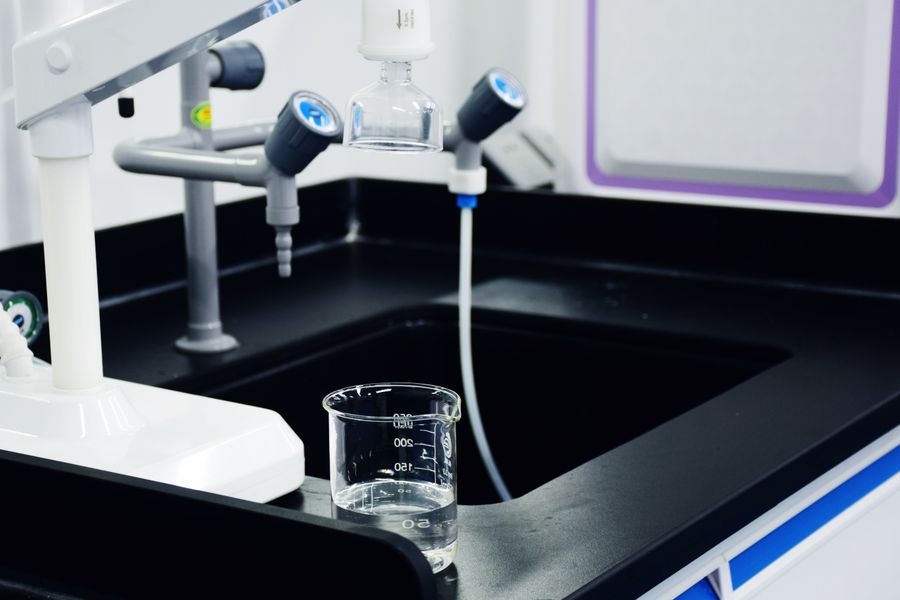
Understanding exactly what's in your water — at your specific tap — is the most informed basis for any filtration decision. JEA's CCR is a solid starting point, but your home's plumbing, age, and location within the distribution system all affect what's actually coming out of your faucet.
Frequently Asked Questions
How hard is Jacksonville, FL tap water?
Jacksonville tap water measures roughly 150–250 mg/L as CaCO3 (8–15 grains per gallon), putting it in the moderately hard to hard range. The Floridan Aquifer — Jacksonville's primary water source — naturally dissolves calcium and magnesium from limestone, which drives up hardness.
Does Jacksonville use chlorine or chloramines to treat water?
JEA switched to chloramine disinfection. Chloramines are more stable than free chlorine and reduce trihalomethane (THM) formation in the distribution system. However, chloramines require a carbon block filter rated specifically for chloramine removal — standard pitcher filters are often insufficient.
Is Jacksonville water safe to drink?
Yes. JEA's water consistently meets all EPA Safe Drinking Water Act standards. Annual Consumer Confidence Reports show regulated contaminants well below action levels. However, detectable levels of disinfection byproducts (haloacetic acids, trihalomethanes) are present, which some health-conscious residents prefer to filter out.
What filter works best for Jacksonville tap water?
An NSF/ANSI 42+53 certified carbon block filter removes chloramine taste, odor, and disinfection byproducts. For scale buildup on appliances and fixtures, a water softener or salt-free conditioner addresses hardness. Pairing a whole-house carbon filter with a point-of-use reverse osmosis system at the kitchen tap gives the most complete solution.
Does Jacksonville have hard water scale problems?
Yes. At 150–250 mg/L, Jacksonville residents commonly notice white scale on showerheads and faucets, reduced soap lather, spotty dishes and glassware, and mineral buildup inside water heaters and appliances. A water softener or whole-house conditioner can prevent most of these issues.
Where does Jacksonville get its drinking water?
Jacksonville's primary drinking water source is the Floridan Aquifer, one of the most productive aquifer systems in the world. JEA draws water from more than 100 production wells across the region. A smaller portion comes from the St. Johns River, treated at JEA's surface water treatment plants.
How do I test Jacksonville water hardness at home?
The easiest method is a dip-strip test kit, available at hardware stores for $10–15, giving results in grains per gallon (GPG) or mg/L in under a minute. For a complete picture including DBPs, heavy metals, and bacteria, a mail-in lab test from a certified lab (National Testing Laboratories, Tap Score) gives detailed results within a week.
📧 Get Weekly Water Quality Tips
Join readers who test smarter, filter better, and stop buying bottled water.
Subscribe Free →