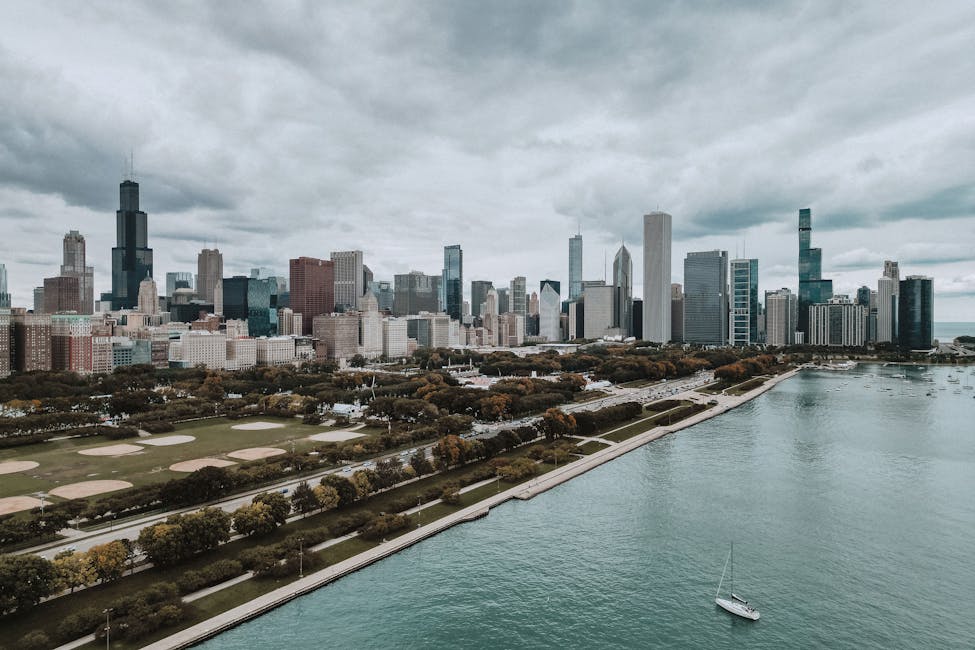
💧 Chicago, IL Water Quality at a Glance
Chicago's Lake Michigan source is relatively clean, but aging lead service lines in older neighborhoods create lead contamination risk at the tap.
Is Chicago Water Hard or Soft?
At 8.0 GPG (136 PPM), Chicago tap water is hard — firmly in the range where scale buildup damages appliances and a water softener delivers clear ROI within 2-3 years.
Water hardness is measured in grains per gallon (GPG) or parts per million (PPM). The EPA's informal guidance considers water above 7 GPG (121 PPM) "hard," and above 10 GPG (171 PPM) "very hard." Here's where Chicago falls:
| Classification | GPG | PPM | Chicago Status |
|---|---|---|---|
| Soft | < 1 | < 17 | — |
| Moderately Hard | 3.5–7 | 61–120 | — |
| Hard | 7–10 | 121–171 | ← Chicago is here |
| Very Hard | > 10 | > 171 | — |
What Contaminants Are in Chicago Water?
The following contaminants have been detected in Chicago's municipal water supply. 2 of these exceed EWG health guidelines (note: EWG guidelines are stricter than EPA legal limits — exceeding them doesn't mean illegal, but indicates elevated risk worth filtering):
- Lead
- Total Trihalomethanes
- Haloacetic acids
- Manganese
For the full current data, check the EWG Tap Water Database and your utility's annual Consumer Confidence Report (EPA.gov).
How Does Chicago Water Taste?
Clean flavor from lake source, faint chlorine, mild scale in older buildings. Hard water at 137 PPM has a slight mineral character that most people tolerate well. For coffee and tea, filtered water will improve flavor extraction.
What's the Best Water Filter for Chicago?
Recommendation: Lead filter (NSFI/ANSI 53 certified) critical for older homes; softener for 8+ GPG hardness.
Here's how to think about filtration in Chicago:
- For scale/hardness (137 PPM): A salt-based water softener is the most effective solution. At 8.0 GPG, untreated water will shorten the life of water heaters, dishwashers, and washing machines significantly. A whole-house softener pays for itself in 3–5 years in appliance savings alone.
- For drinking water quality: A pitcher or faucet-mount carbon filter is sufficient for taste improvement. Brita, ZeroWater, or Pur are popular choices.
- For PFAS: PFAS has not been detected in Chicago's main supply — standard carbon filtration is adequate.
- For lead: Lead at 7.0 ppb indicates some risk, especially in older homes with lead service lines. Use an NSF/ANSI 53-certified lead reduction filter — not all filters remove lead.
See our detailed review: Best Water Softeners 2026 and Reverse Osmosis vs Water Softener — Which Do You Need?
Chicago Water Quality FAQ
Related Resources
- USGS Water Science School — Understanding Water HardnessThe science behind hard vs soft water and how it's measured.
- EWG Tap Water DatabaseLook up your utility's detected contaminants and health comparisons.
- EPA National Primary Drinking Water RegulationsFederal standards for safe drinking water.
- Hard Water Statistics 2026National hard water data, costs, and treatment trends.
- Best Water Softeners 2026Top-rated whole-house softeners reviewed for every hardness level.
Is Chicago water safe to drink?
Chicago tap water meets all EPA legal standards. However, 2 contaminants exceed EWG health guidelines. For most healthy adults, the water is safe to drink as-is. For infants, pregnant women, or immunocompromised individuals, a certified water filter adds meaningful protection.
Does Chicago have hard water?
Chicago water tests at 137 PPM (8.0 GPG), which is classified as Hard. This is significantly above the 7 GPG threshold where water softeners deliver clear financial benefit through appliance and plumbing protection.
Where does Chicago get its water?
Chicago's water supply comes from Lake Michigan. Chicago's Lake Michigan source is relatively clean, but aging lead service lines in older neighborhoods create lead contamination risk at the tap.
Should I get a water softener in Chicago?
Yes — strongly recommended. At 137 PPM (8.0 GPG), untreated water will cause accelerated scale buildup in water heaters (reducing efficiency by up to 48%), clog showerheads, leave spots on dishes, and shorten appliance lifespans. The cost of a mid-range softener ($500–1,500) is typically recovered within 2–4 years in appliance savings.
Sources: EWG Tap Water Database · USGS Water Hardness Guide
Recommended Products
Get weekly guides from HardWaterHQ
No spam. Unsubscribe anytime.