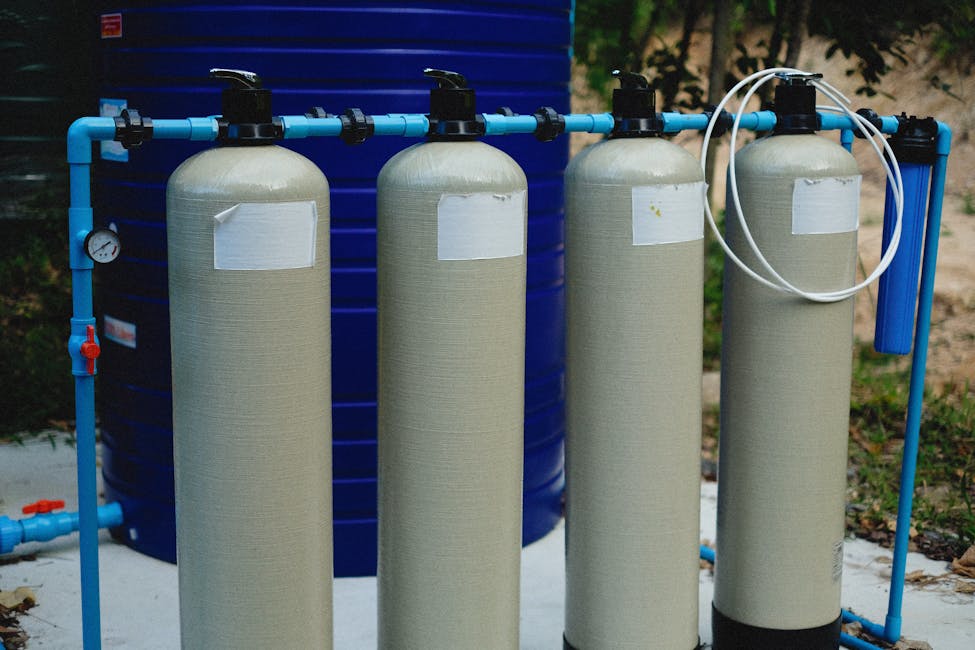
Well Water in the U.S. — Key Facts
About 43 million Americans — roughly 15% of the population — rely on private wells for their drinking water, according to the EPA's ground water program. Unlike municipal water, well water isn't treated, regulated, or tested by anyone unless you do it yourself. That means the filtration burden falls entirely on you.
The good news: well water is often mineral-rich and free of chlorine. The bad news: it can contain iron, manganese, hydrogen sulfide, bacteria, nitrates, arsenic, and other contaminants that municipal systems treat before water reaches your tap. The right filtration system handles all of it — but "right" depends entirely on what's in YOUR water.
What Should You Test in Well Water Before Buying a Filter?
This is non-negotiable. Don't buy a filter until you know what you're filtering. A well water test should check for:
- Iron — Causes orange/red staining, metallic taste. Acceptable: < 0.3 ppm. Common in wells: 1-10+ ppm.
- Manganese — Causes black staining. Acceptable: < 0.05 ppm.
- Hardness — Calcium + magnesium. Causes scale buildup. Measured in GPG (grains per gallon). Soft: < 3.5 GPG. Hard: 7-10.5 GPG. Very hard: > 10.5 GPG.
- pH — Acidic water (< 6.5) corrodes pipes and leaches metals. Alkaline water (> 8.5) causes scale.
- Bacteria — Total coliform and E. coli. ANY detection means your well needs disinfection.
- Nitrates — Common near agricultural areas. Safe limit: < 10 ppm. Critical for infants.
- Hydrogen sulfide — Rotten egg smell. Even at 0.05 ppm it's noticeable.
- Arsenic — Naturally occurring in some regions. No safe level; EPA limit: < 10 ppb.
Where to test: The USGS water science guide recommends certified lab testing for all private wells. Tap Score ($150-$300 for comprehensive well water panel) provides the most detailed residential well water testing. Your local county health department may offer free or low-cost basic testing. Labs like National Testing Laboratories ($100-$200) are another solid option.
How Do You Choose the Right Filter Based on Your Test Results?
If Your Main Issue Is Iron + Manganese (Most Common)
You need an oxidation filter system — NOT a standard carbon filter. Oxidation converts dissolved iron and manganese into solid particles that can be physically filtered out. See our complete guide to iron removal from well water for treatment tiers by concentration level. The two main technologies are air injection (chemical-free) and chemical injection (chlorine or hydrogen peroxide).
SpringWell WS Whole House Well Water System (Our Top Pick)
Air injection oxidation · Greensand media · Up to 7 ppm iron, 1 ppm manganese, 8 ppm H₂S · 12 GPM · Automatic backwash
$2,844
Check Price at SpringWell →SpringWell's WS system is our top pick for well water because it handles the Big Three — iron, manganese, and sulfur — in one unit using chemical-free air injection. No chlorine, no hydrogen peroxide, no chemical costs. The automatic backwash cycle cleans the media without manual intervention.
If Your Main Issue Is Bacteria
Bacteria in well water requires disinfection, not just filtration. The two safest approaches (the WHO recommends UV disinfection as a chemical-free option for private wells):
- UV purification: UV light destroys 99.99% of bacteria, viruses, and parasites with zero chemicals. Add a UV system after your sediment and carbon filters. The Viqua D4 ($400-$600) is the industry standard for residential wells.
- Chlorine injection: Continuous chlorination kills bacteria at the source. More complex to install and maintain, but effective for severely contaminated wells. Follow with a carbon filter to remove the chlorine before it reaches your faucets.
If Your Main Issue Is Hardness
Hard water requires a water softener — a completely different type of system than a water filter. Softeners use ion exchange resin to swap calcium and magnesium ions for sodium ions. They're highly effective but add a small amount of sodium to your water.
SpringWell SS Salt-Based Water Softener
Ion exchange · Digital metered valve · 32,000-80,000 grain capacity · Bluetooth app control
$1,299 - $1,799 (by capacity)
Check Price at SpringWell →Most well water homes need BOTH a softener and a filter — the softener handles hardness, the filter handles contaminants. Install the softener first in the water line, then the filter. This protects the filter media from scale buildup.
If Your Water Has Arsenic or Fluoride
Standard carbon filters don't remove arsenic or fluoride. You need either a whole-house reverse osmosis system (expensive, $3,000-$8,000) or a point-of-use RO system for your kitchen tap ($200-$500). For most homes, a point-of-use RO at the kitchen sink paired with a whole-house carbon filter for the rest of the home is the most cost-effective approach.
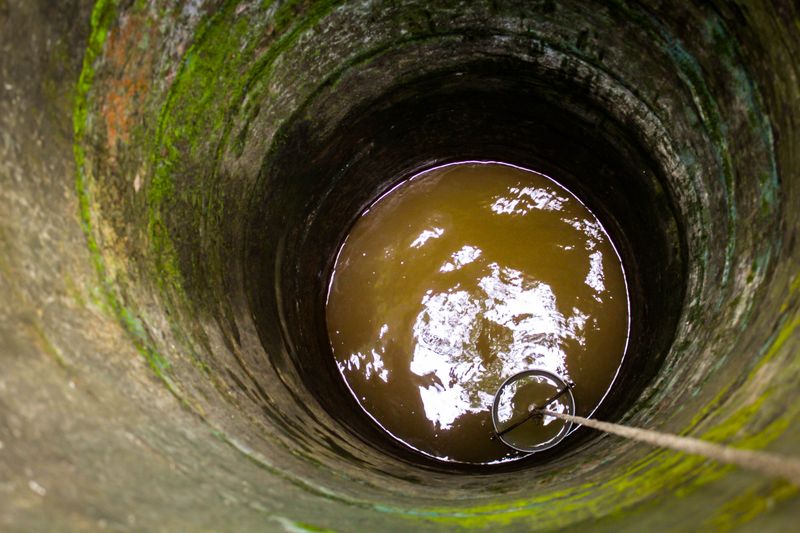
What Is the Complete Well Water Filtration Stack?
Full Well Water Treatment Stack — Estimated Costs
Based on hundreds of well water test results, here's the filtration stack that addresses the most common well water issues:
- Sediment pre-filter (5 micron) — Catches sand, silt, and debris. Protects downstream equipment. Cost: $20-$50 per filter, changed every 3-6 months.
- Water softener — Removes hardness minerals. Necessary if hardness exceeds 7 GPG. Cost: $1,000-$2,000.
- Iron/manganese oxidation filter — Removes dissolved iron and sulfur. Necessary if iron exceeds 0.3 ppm. Cost: $1,500-$3,000.
- Activated carbon filter — Removes VOCs, pesticides, taste/odor issues. Good practice for all wells. Cost: $400-$1,500.
- UV purifier — Kills bacteria and viruses. Recommended for all wells; essential if bacteria detected. Cost: $400-$600.
- Point-of-use RO (kitchen tap) — Final drinking water polishing. Removes any remaining contaminants. Cost: $200-$500.
Total cost for a complete well water treatment system: $3,500-$8,000. Sounds expensive — but it's comparable to what a water treatment company would charge for similar equipment, and you're avoiding their $200-$500 annual service contracts.
How Often Should You Service Well Water Filters?
Well water systems require more maintenance than municipal water setups. Here's what to expect:
- Sediment pre-filter: Replace every 3-6 months ($15-$30 per filter)
- Carbon filter: Replace every 6-12 months or per manufacturer spec ($40-$100)
- Iron filter: Automatic backwash handles most maintenance. Replace media every 5-8 years ($200-$400)
- Softener salt: Add salt every 4-8 weeks ($5-$10 per 40lb bag)
- UV lamp: Replace annually ($40-$80). UV sleeve cleaning every 6 months.
- Annual water test: $100-$200 to confirm your system is performing. Non-negotiable.
Estimated annual maintenance cost: $300-$500. Compare that to bottled water for a family ($600-$1,200/year) or a water delivery service ($400-$800/year). Home filtration pays for itself.
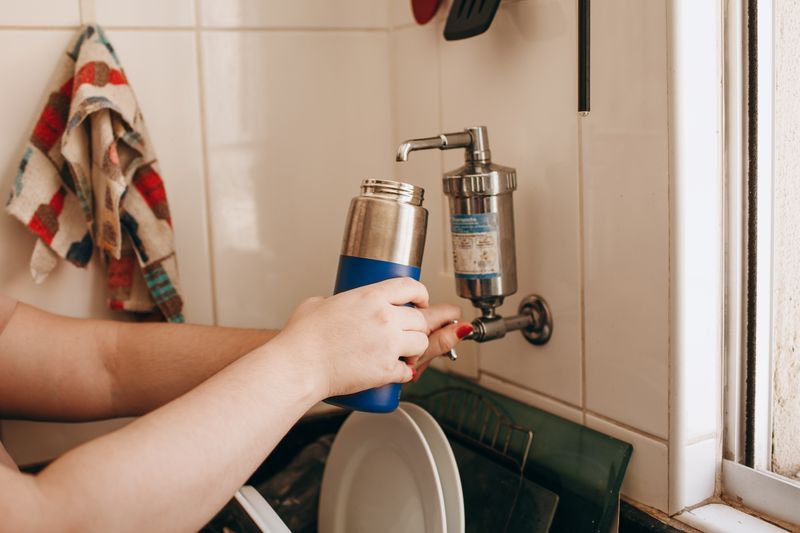
What Are the Most Common Well Water Filter Mistakes?
Mistake #1: Buying a filter without testing water first
A carbon filter won't fix iron. A softener won't fix bacteria. You have to test first, then buy equipment that matches your specific contaminants.
Mistake #2: Ignoring your well's condition
If your well casing is damaged, your well cap isn't sealed, or surface water is infiltrating, no filter can keep up. Fix the well first, then add filtration.
Mistake #3: Oversizing or undersizing
Too small = pressure drops and premature filter failure. Too large = wasted money upfront. Match system capacity to your household size and peak water demand.
The Bottom Line
Well water filtration isn't optional — it's essential. Start with a comprehensive water test, then build your filtration stack to match your specific contaminants. For most wells, the SpringWell WS iron/manganese system plus a UV purifier and sediment pre-filter covers the critical bases. Add a softener if hardness is high, and a point-of-use RO for the best possible drinking water.
Your well water can be cleaner than municipal water — it just takes the right equipment and annual testing to get there.
Related Resources
- USGS Water Science School — Understanding Water HardnessThe science behind hard vs soft water and how it's measured.
- EWG Tap Water DatabaseLook up your utility's detected contaminants and health comparisons.
- EPA National Primary Drinking Water RegulationsFederal standards for safe drinking water.
- Hard Water Statistics 2026National hard water data, costs, and treatment trends.
- Best Water Softeners 2026Top-rated whole-house softeners reviewed for every hardness level.
Get weekly guides from HardWaterHQ
No spam. Unsubscribe anytime.