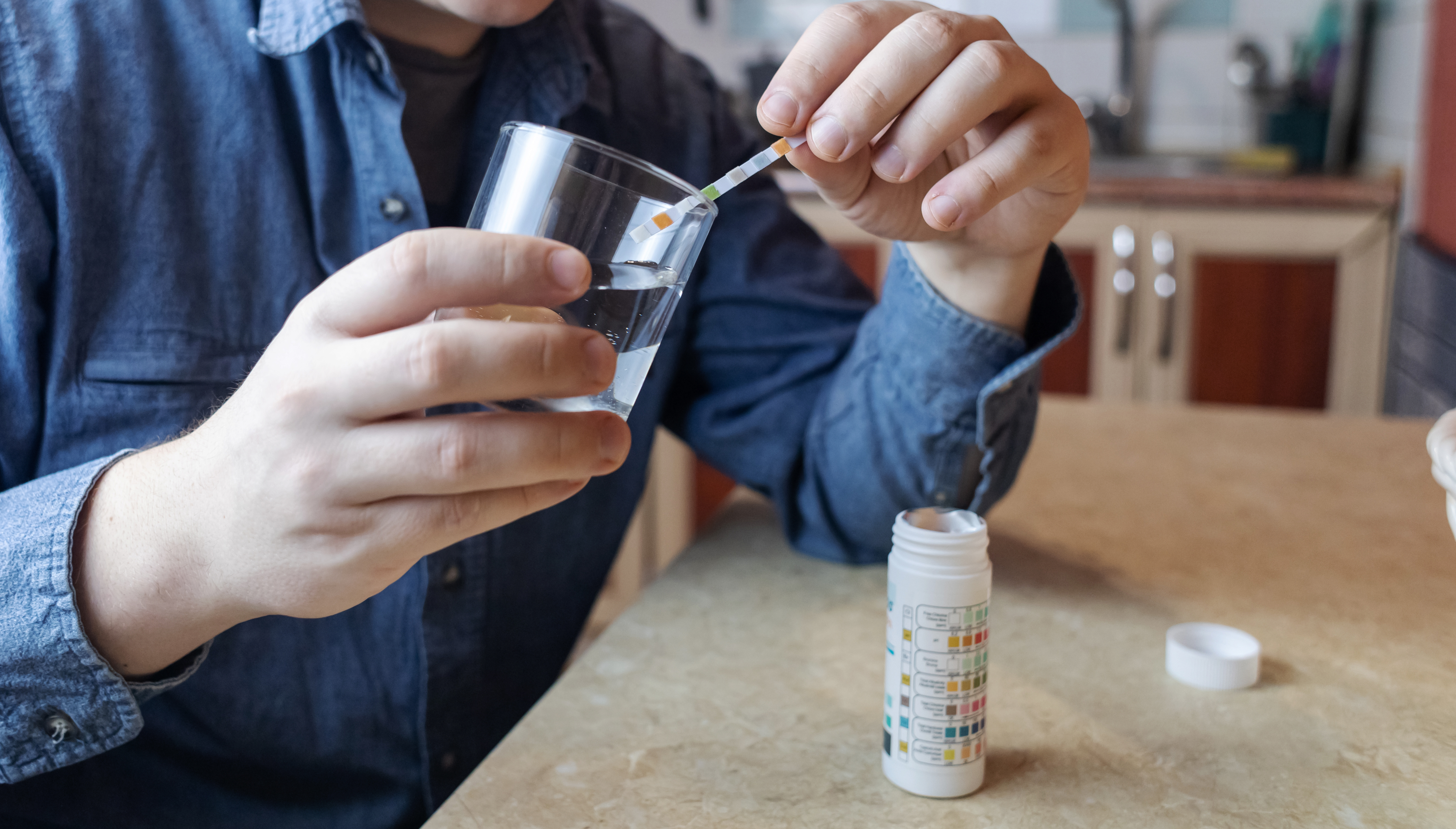
Quick Answer: Indiana has very hard water across most of the state, averaging 12–18 grains per gallon. Indianapolis draws from the White River, Eagle Creek, and Morse Reservoir at about 14 gpg. Fort Wayne relies on the Maumee River and groundwater at 15 gpg. Gary and Hammond in northwest Indiana near Lake Michigan see slightly softer water at 9–11 gpg. Indiana's glacial limestone terrain is one of the main factors in the state's widespread very hard water. A whole-home water softener is considered standard equipment in most Indiana homes.
Indiana Water Hardness at a Glance
Indiana Water Hardness Overview
Water Hardness by City in Indiana
The table below shows water hardness for major cities in Indiana. Values are approximate based on utility reports, USGS data, and regional geological surveys. Click "Read Guide" for cities with detailed water quality analysis.
| City | Hardness (gpg) | Hardness (ppm) | Classification | Full Guide |
|---|---|---|---|---|
| Indianapolis | 14 gpg | 240 ppm | Very Hard | Read Guide → |
| Fort Wayne | 15 gpg | 257 ppm | Very Hard | — |
| Evansville | 13 gpg | 223 ppm | Very Hard | — |
| South Bend | 14 gpg | 240 ppm | Very Hard | — |
| Carmel | 14 gpg | 240 ppm | Very Hard | — |
| Fishers | 14 gpg | 240 ppm | Very Hard | — |
| Hammond | 10 gpg | 171 ppm | Hard | — |
| Bloomington | 13 gpg | 223 ppm | Very Hard | — |
| Muncie | 15 gpg | 257 ppm | Very Hard | — |
Why Is Indiana Water Hard?
Indiana's extreme hardness is a product of its glacial history. Repeated glaciations left the state blanketed in thick deposits of calcareous till derived from grinding up the Silurian and Devonian limestone and dolomite that underlies much of the Great Lakes region. This till is exceptionally calcium-rich. Rivers throughout Indiana — the White, Wabash, Eel, Tippecanoe — drain through this calcareous landscape, picking up hardness continuously.
Indiana's groundwater is even harder than its surface water in many areas. The glacial sand and gravel aquifers, while permeable and productive, are in constant contact with calcareous till. Municipal wells in Fort Wayne, Muncie, and South Bend regularly pump water at 14–20 gpg. Southern Indiana transitions to the unglaciated Appalachian Plateaus with limestone caves (near Bloomington and Bedford), where groundwater is hard from karst dissolution. Only northwest Indiana near Lake Michigan enjoys somewhat softer conditions from lake influence.
Hard Water Effects in Indiana
Indiana's 14–18 gpg water causes aggressive hard water damage. Plumbers in Indianapolis report regularly replacing water heater heating elements and anode rods far ahead of schedule due to scale. Dishwashers leave heavy calcium deposits on the door interior, racks, and spray arms. Washing machines see scale accumulate on the drum and pump over 3–5 years. Indiana homeowners without softeners spend significantly more on cleaning products and appliance maintenance.
Best Water Treatment for Indiana Homes
Indiana homeowners need robust water softening. Indianapolis at 14 gpg warrants a 48,000 grain softener minimum for a typical family. Fort Wayne and Muncie at 15–16 gpg should look at 48,000–64,000 grain capacity. Use a metered valve that regenerates based on usage rather than time — this saves salt and extends resin life. An RO system under the kitchen sink provides excellent drinking water. Have your water tested for iron — Indiana aquifers often contain 1–3 ppm iron that must be treated before the softener.
For detailed recommendations matched to your hardness level, see our guide to the best water softeners for 2026, which includes models sized for light, moderate, and very hard water conditions.
City Guides for Indiana
We've published in-depth water quality guides for the following Indiana cities, covering contaminants, treatment options, and local data: