Quick Answer: Tennessee's water hardness varies significantly across the state. Nashville draws from the Cumberland River and Percy Priest Reservoir in limestone-rich Middle Tennessee, averaging about 8 gpg. Memphis is a notable outlier — it pumps from the Memphis Sand Aquifer, a deep sandstone aquifer that produces exceptionally soft, clean water at just 4 gpg, making it one of the best urban water supplies in the US. East Tennessee's TVA lakes and the Tennessee River produce moderately hard water in Knoxville and Chattanooga. Middle and West Tennessee generally see harder water than the east.
Tennessee Water Hardness at a Glance
Tennessee Water Hardness Overview
Water Hardness by City in Tennessee
The table below shows water hardness for major cities in Tennessee. Values are approximate based on utility reports, USGS data, and regional geological surveys. Click "Read Guide" for cities with detailed water quality analysis.
| City | Hardness (gpg) | Hardness (ppm) | Classification | Full Guide |
|---|---|---|---|---|
| Nashville | 8 gpg | 137 ppm | Hard | Read Guide → |
| Memphis | 4 gpg | 68 ppm | Moderately Hard | Read Guide → |
| Knoxville | 7 gpg | 120 ppm | Hard | — |
| Chattanooga | 6 gpg | 103 ppm | Moderately Hard | — |
| Clarksville | 9 gpg | 154 ppm | Hard | — |
| Murfreesboro | 8 gpg | 137 ppm | Hard | — |
| Jackson | 7 gpg | 120 ppm | Hard | — |
Why Is Tennessee Water Hard?
Tennessee's geological diversity creates its water hardness variation. Middle Tennessee sits on Nashville limestone (Ordovician carbonate rock), and the karst topography creates hundreds of caves and sinkholes. Water percolating through this limestone-rich terrain picks up calcium and magnesium heavily, giving Nashville and surrounding communities consistently hard water (7–12 gpg). The Nashville Basin has some of the highest groundwater hardness in the Southeast.
Memphis is geologically unique in Tennessee — the Memphis Sand Aquifer is an ancient sandstone formation dating to the Eocene epoch, completely isolated from surface contamination and relatively low in mineral content. Water drawn from 400+ feet deep produces just 4 gpg hardness and is consistently regarded as some of the best-tasting tap water in the South. East Tennessee's Ridge and Valley province has limestone geology as well but benefits from dilution by TVA reservoirs along the Tennessee River. West Tennessee communities relying on Mississippi River and alluvial aquifer water see moderate hardness.
Hard Water Effects in Tennessee
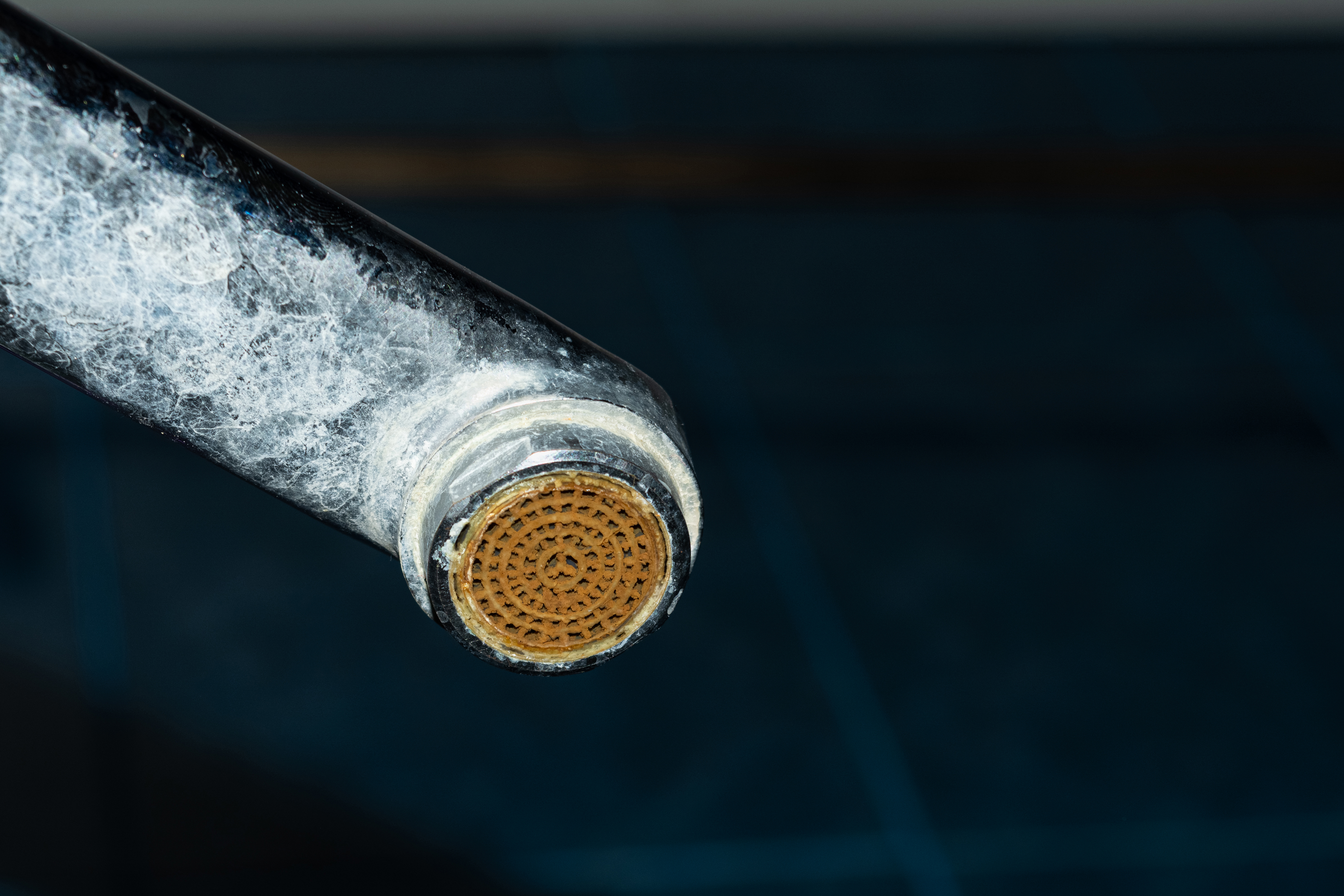
Nashville homeowners at 8+ gpg experience meaningful scale buildup in dishwashers, water heaters, and fixtures. The Nashville area's limestone water is particularly aggressive — kettles and coffee makers show scaling within weeks. Memphis residents are fortunate to have nearly ideal water hardness, experiencing minimal scale issues. Knoxville and Chattanooga fall in the middle range with moderate effects.
Best Water Treatment for Tennessee Homes
Nashville and Middle Tennessee homeowners benefit most from a water softener at 8–12 gpg. A 32,000–40,000 grain unit handles most family sizes well. Memphis homeowners with 4 gpg water from the Sand Aquifer don't need softening — but a carbon block filter is still recommended to improve any residual chlorine taste. East Tennessee homeowners should test their specific water before deciding.
For detailed recommendations matched to your hardness level, see our guide to the best water softeners for 2026, which includes models sized for light, moderate, and very hard water conditions.
City Guides for Tennessee
We've published in-depth water quality guides for the following Tennessee cities, covering contaminants, treatment options, and local data: