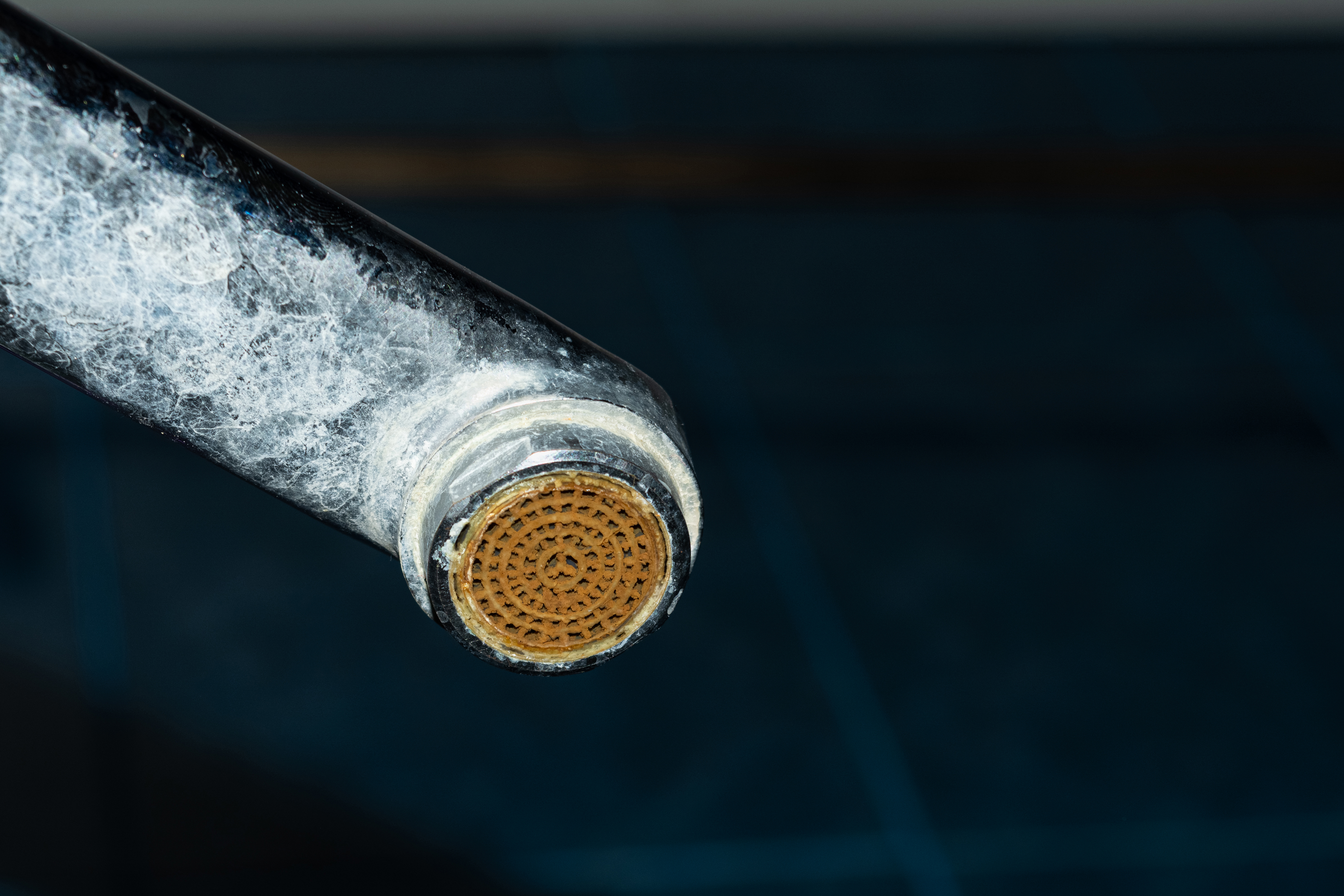
Quick Answer: New Mexico has some of the hardest water in the country, with Albuquerque averaging 16 gpg from a blend of San Juan-Chama Project water and groundwater. Santa Fe sees 14–16 gpg. Smaller communities in eastern New Mexico relying on Ogallala Aquifer groundwater may see 18–22 gpg. The Rio Grande, which flows through the state's population centers, picks up hardness from volcanic and calcareous terrain. New Mexico's arid climate concentrates minerals in both surface water and groundwater. A high-capacity water softener is essential for nearly all New Mexico homeowners.
New Mexico Water Hardness at a Glance
New Mexico Water Hardness Overview
Water Hardness by City in New Mexico
The table below shows water hardness for major cities in New Mexico. Values are approximate based on utility reports, USGS data, and regional geological surveys. Click "Read Guide" for cities with detailed water quality analysis.
| City | Hardness (gpg) | Hardness (ppm) | Classification | Full Guide |
|---|---|---|---|---|
| Albuquerque | 16 gpg | 274 ppm | Very Hard | Read Guide → |
| Las Cruces | 18 gpg | 308 ppm | Very Hard | — |
| Rio Rancho | 16 gpg | 274 ppm | Very Hard | — |
| Santa Fe | 15 gpg | 257 ppm | Very Hard | — |
| Roswell | 20 gpg | 342 ppm | Very Hard | — |
| Farmington | 16 gpg | 274 ppm | Very Hard | — |
| Clovis | 18 gpg | 308 ppm | Very Hard | — |
| Hobbs | 20 gpg | 342 ppm | Very Hard | — |
Why Is New Mexico Water Hard?
New Mexico's hard water stems from the state's diverse but predominantly calcareous geology. The Rio Grande Rift Valley — where Albuquerque and Santa Fe sit — is flanked by mountain ranges with carbonate rock (the Sandia and Manzano mountains contain significant Paleozoic limestone). The San Juan-Chama Project diverts Colorado River water into the Rio Grande basin. This water, already hard from Colorado's limestone canyons, picks up additional minerals as it transits New Mexico.
Eastern New Mexico sits on the Llano Estacado — a southern extension of the Great Plains underlain by the Ogallala Aquifer. Communities like Roswell, Artesia, and Carlsbad rely on groundwater that has percolated through calcareous sediments for thousands of years, producing hardness of 18–25 gpg. The Permian Basin geology (calcareous marine sediments) extends into southeastern New Mexico, contributing additional mineral hardness. Western New Mexico communities often draw from local groundwater influenced by volcanic and calcareous mixed terrain.
Hard Water Effects in New Mexico
New Mexico homeowners face severe hard water challenges. At 16–22 gpg, appliances scale rapidly. Albuquerque Water Resources Management Division has documented that untreated hard water costs households an average of $300–500 annually in extra energy costs, cleaning products, and appliance replacement compared to softened water scenarios. Evaporative coolers (swamp coolers), widely used in New Mexico for affordable summer cooling, require frequent cleaning and mineral buildup control — hard water makes this dramatically worse.
Best Water Treatment for New Mexico Homes
New Mexico homeowners need high-capacity water softeners. Albuquerque at 16 gpg calls for 48,000–64,000 grain capacity for a typical family. Eastern New Mexico at 18–22 gpg should look at the highest-capacity units available with efficient metered valves. New Mexico groundwater commonly contains manganese alongside hardness — test for manganese before installing and add appropriate filtration. RO systems are especially important here for drinking water given the high total dissolved solids in New Mexico water.
For detailed recommendations matched to your hardness level, see our guide to the best water softeners for 2026, which includes models sized for light, moderate, and very hard water conditions.
City Guides for New Mexico
We've published in-depth water quality guides for the following New Mexico cities, covering contaminants, treatment options, and local data: