Quick Answer: Louisiana water is moderately hard across most of the state, ranging from 5–10 grains per gallon. New Orleans and the greater New Orleans area draw from the Mississippi River, which arrives in Louisiana already carrying hardness from thousands of miles of upstream flow through calcareous Midwestern terrain — about 7 gpg. Baton Rouge uses Mississippi River water at similar levels. Northwest Louisiana communities on the Red River and Shreveport on the Red River tend to see slightly harder water. Louisiana's water is generally manageable without softening, but hardness is noticeable.
Louisiana Water Hardness at a Glance
Louisiana Water Hardness Overview
Water Hardness by City in Louisiana
The table below shows water hardness for major cities in Louisiana. Values are approximate based on utility reports, USGS data, and regional geological surveys. Click "Read Guide" for cities with detailed water quality analysis.
| City | Hardness (gpg) | Hardness (ppm) | Classification | Full Guide |
|---|---|---|---|---|
| New Orleans | 7 gpg | 120 ppm | Hard | Read Guide → |
| Baton Rouge | 8 gpg | 137 ppm | Hard | Read Guide → |
| Shreveport | 9 gpg | 154 ppm | Hard | — |
| Metairie | 7 gpg | 120 ppm | Hard | — |
| Lafayette | 7 gpg | 120 ppm | Hard | — |
| Lake Charles | 8 gpg | 137 ppm | Hard | — |
| Bossier City | 9 gpg | 154 ppm | Hard | — |
Why Is Louisiana Water Hard?
Louisiana's water quality is dominated by the Mississippi River system. The river collects runoff from 40% of the contiguous United States before reaching Louisiana, picking up dissolved calcium, magnesium, and other minerals from the limestone-rich Midwest and agricultural heartland. By the time the Mississippi reaches New Orleans, it carries moderate hardness (6–8 gpg) alongside sediment, agricultural chemicals, and industrial discharges from upstream states.
The alluvial plains of southern Louisiana have relatively flat, young sedimentary geology that doesn't dramatically concentrate groundwater hardness. The Mississippi River alluvial aquifer, which supplies many communities, has moderate hardness. North Louisiana communities sit on older geological formations including the Sabine Uplift and Ouachita Mountains foothills, where limestone-influenced groundwater may reach 10–14 gpg in some areas. The coastal parishes have water quality influenced by saltwater intrusion, a growing concern as sea levels rise.
Hard Water Effects in Louisiana
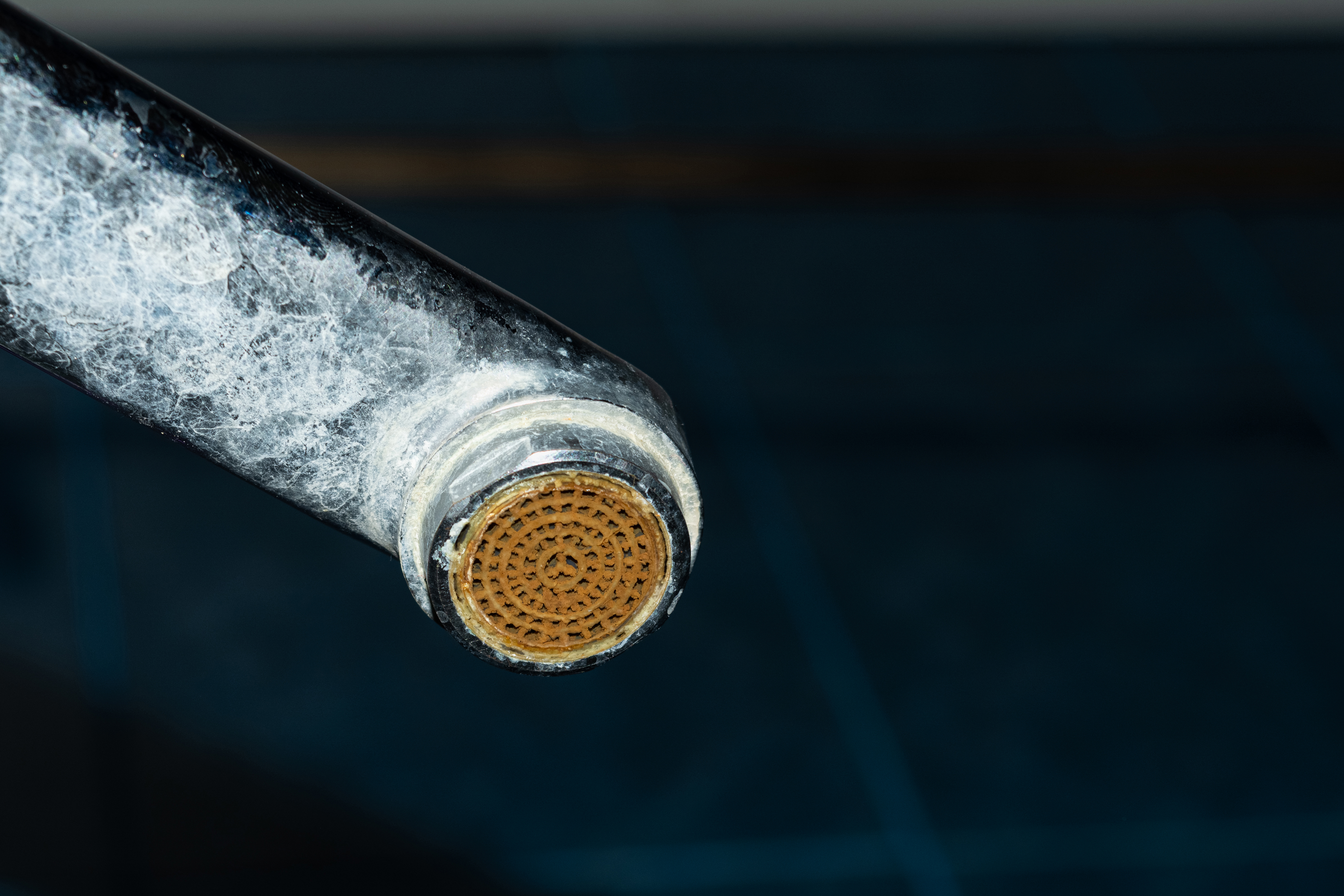
Louisiana's moderate hardness (5–10 gpg) causes gradual scale buildup in water heaters, dishwashers, and coffee makers over time, but it's not as aggressive as what Texans or Arizonans experience. New Orleans' main water quality concerns include chlorination byproducts, seasonal turbidity from Mississippi River flooding, and aging infrastructure — PFAS and lead are more pressing issues than hardness in many neighborhoods.
Best Water Treatment for Louisiana Homes
Louisiana homeowners in the 7–10 gpg range benefit from softening, though it's not as urgent as in hard-water states. A 32,000 grain softener handles most households. More important: invest in a whole-home carbon filtration system to address the Mississippi River's chlorine, disinfection byproducts, and taste issues. An under-sink RO system provides excellent drinking water quality by removing the range of contaminants present in Mississippi River-derived water.
For detailed recommendations matched to your hardness level, see our guide to the best water softeners for 2026, which includes models sized for light, moderate, and very hard water conditions.
City Guides for Louisiana
We've published in-depth water quality guides for the following Louisiana cities, covering contaminants, treatment options, and local data: